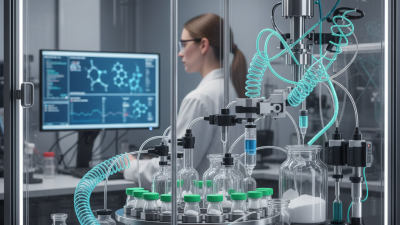
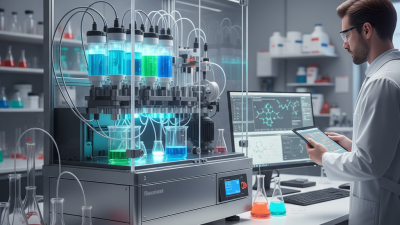
Automated Peptide Synthesis uses programmed instruments to assemble peptides from amino acids in a planned sequence. In many research and manufacturing workflows, solid-phase peptide synthesis is used: the growing chain remains attached to a resin while reagents are added and removed. The instrument repeats steps such as deprotection, amino-acid coupling, and washing. That matters. A technician can set reaction conditions, track cycles, and reduce repetitive manual handling, while still needing to check each stage carefully.
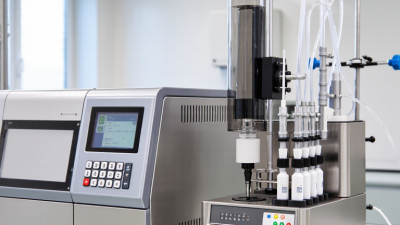
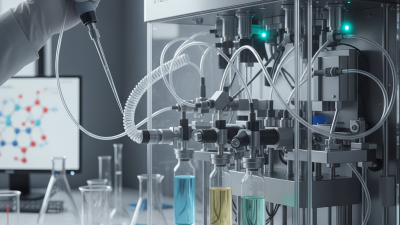
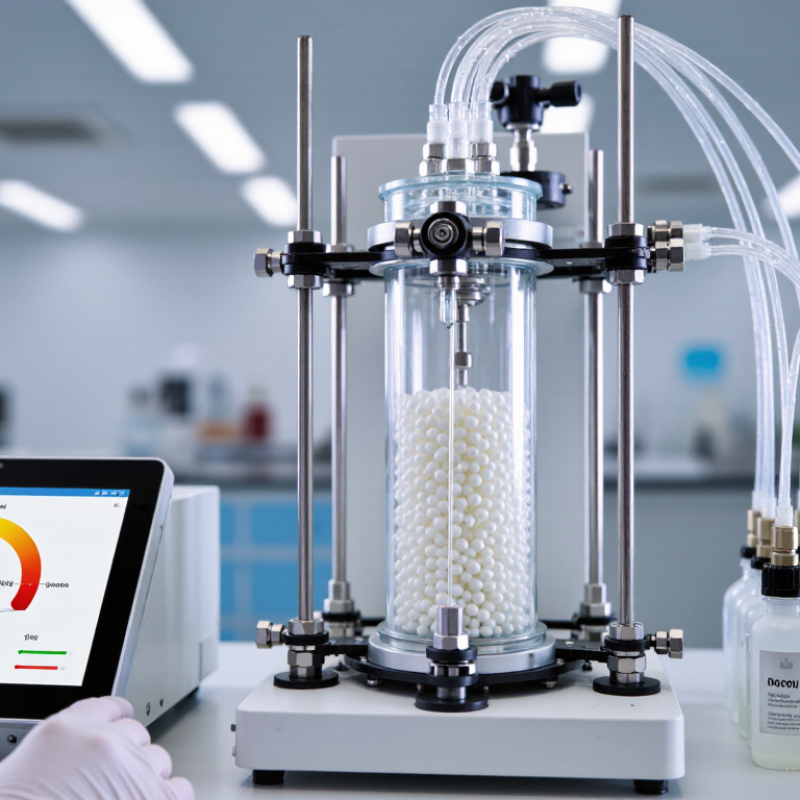
Picture a small resin-filled column, valves directing liquids, and a control screen recording each cycle. Automation can improve consistency and throughput, but it does not guarantee a correct or pure product. Difficult sequences may aggregate, couple incompletely, or require adjusted conditions. Even a well-run instrument can produce material that needs purification and analytical confirmation, often using methods such as chromatography and mass spectrometry. Results depend on the sequence, chemistry, instrument, and validation process. There is no single setting that fits every peptide. This is an important limitation, not a footnote.
This introduction explains how automated peptide synthesis works, what its main steps involve, and where its strengths and constraints appear. It also distinguishes automation from quality control: software can execute a protocol, but trained people must interpret data and investigate unexpected results. The technology is powerful. It is not infallible. Knowing both sides helps researchers evaluate whether an automated workflow fits a particular peptide project.
What Is Automated Peptide Synthesis?
Automated Peptide Synthesis: Building Chains from 20 Proteinogenic Amino Acids
Automated peptide synthesis uses programmed cycles to connect amino acids in a chosen order. In solid-phase synthesis, the growing chain remains attached to small resin beads inside a reaction vessel. The instrument adds a protected amino acid, forms a bond, and removes a temporary protecting group before the next cycle. Small steps matter.
The standard proteinogenic amino acids provide a versatile starting set, but their properties differ. Some are bulky, some carry charge, and some can make a growing chain harder to handle. Sequence order also matters. A machine can repeat precise steps, yet it cannot make every sequence equally easy to build. Automation is not magic.
Technicians monitor reaction performance and check the finished material with methods such as chromatography and mass spectrometry. These checks help reveal incomplete coupling, unwanted by-products, or the wrong molecular mass. A difficult sequence may need adjusted conditions or further purification. That part can be less tidy than the programmed cycle suggests. The twenty amino acids make a clear framework, but practical synthesis still depends on careful design, measurement, and interpretation.
Automated peptide synthesis builds a chain of amino acids on tiny, porous resin beads. In Fmoc/tBu solid-phase peptide synthesis, the growing chain stays attached to the resin while a machine repeats measured chemical steps. One cycle removes the temporary Fmoc protecting group from the chain’s exposed end. Washes then clear away the deprotection solution before the next amino acid is introduced.
The incoming amino acid is activated so it can form a peptide bond with the exposed end. After coupling, further washes remove residual reagents, and the cycle begins again. Small steps matter. Even a brief wash or incomplete reaction can affect the final chain, especially as it grows. Instruments control liquid delivery and timing, but they do not make every coupling equally successful. Not every cycle behaves. Laboratories may monitor reaction performance and adjust protocols when a sequence proves difficult. Once assembly is complete, the peptide is cleaved from the resin, and temporary side-chain protections are removed under suitable conditions. The process is repeatable, yet not perfectly uniform; that limitation deserves attention when interpreting purity and yield.
| Process Stage | Typical Operation | Purpose in Fmoc/tBu SPPS | Automated System Control | Practical Considerations |
|---|---|---|---|---|
| Resin preparation | Swelling and conditioning of the solid-phase resin in a compatible solvent. | Provides an accessible solid support for stepwise peptide-chain assembly. | Controls solvent delivery, contact time, mixing, and drainage. | Resin type and loading are selected according to the desired peptide and C-terminal form. |
| First amino acid attachment | The initial protected amino acid is attached to the resin, or a preloaded resin is used. | Establishes the starting point for chain growth; the sequence is assembled from the C-terminus toward the N-terminus. | Sequences reagent addition and washing; records the resin and synthesis method used. | Attachment strategy depends on the resin linker and the intended product terminus. |
| Fmoc deprotection | A basic solution, commonly piperidine in a suitable solvent, removes the temporary Fmoc group from the resin-bound chain. | Exposes the amino group required for the next coupling reaction. | Delivers deprotection solution, applies programmed contact and mixing, then washes the resin. | Reagent composition and exposure conditions are method-dependent; effective washing helps limit carryover. |
| Amino acid coupling | The next Fmoc-protected amino acid is activated, often using a coupling reagent, and brought into contact with the resin. | Forms a peptide bond and extends the growing chain by one residue. | Measures and dispenses amino acid and activation solutions, controls reaction time, and performs post-reaction washes. | Reagent equivalents, activation method, and coupling time may be adjusted for sequence and scale. |
| Cycle repetition | Deprotection and coupling are repeated for each remaining residue in the programmed sequence. | Builds the peptide in a defined order while side-chain protecting groups remain in place. | Follows the sequence file and logs cycle steps, reagent delivery, and process alerts. | Sequence features such as aggregation-prone segments or sterically hindered residues can affect coupling efficiency. |
| Intermediate washing | Solvent washes are applied between reaction steps to remove residual reagents and soluble by-products. | Reduces reagent carryover before the next deprotection or coupling operation. | Controls wash volume, number of washes, mixing, and drainage. | Wash settings depend on the resin, vessel, solvent system, and synthesis method. |
| Final Fmoc removal | The terminal Fmoc group is removed after the final residue is coupled when a free N-terminus is required. | Defines the N-terminal state of the resin-bound peptide before cleavage or further processing. | Runs the specified deprotection and wash sequence, with the endpoint determined by the selected method. | Some products require a different terminal modification, so the final deprotection step is sequence- and product-dependent. |
| Cleavage and side-chain deprotection | Acid treatment, commonly based on trifluoroacetic acid, cleaves the peptide from an acid-labile linker and removes many tBu-based side-chain protecting groups. | Releases the peptide from the resin and yields the deprotected product. | May automate reagent delivery and reaction timing; cleavage and collection may also be performed in dedicated equipment. | Exact cleavage composition depends on the protecting groups, linker, and peptide sequence. |
| Crude product recovery | The cleavage mixture is processed to recover the crude peptide, commonly followed by precipitation and washing. | Separates crude peptide from much of the cleavage reagent and soluble material before purification. | Can standardize transfer, collection, and recorded batch parameters; downstream purification is a separate operation. | Crude purity and recovery vary with sequence, synthesis performance, and work-up conditions. |
Note: This table describes a general workflow. Reagent choices, concentrations, cycle settings, and work-up conditions should be validated for the specific peptide sequence, resin, and synthesis scale.
What Is Automated Peptide Synthesis?
Inside an automated synthesizer, tiny resin beads provide the working surface for building a peptide one amino acid at a time. The resin sits in a reaction vessel while calibrated pumps deliver protected amino acids, activators, and washing solvents. Accurate delivery matters: small volume errors can leave some reactive sites uncoupled. The beads must also mix evenly, so fresh reagents reach the whole resin bed rather than just its edges. Small details matter.
After each coupling step, washing removes leftover reagents and by-products before the next amino acid arrives. Too little washing can carry unwanted material forward; too much can waste solvent and extend run time. A 99% coupling yield per step sounds high, yet across 50 steps, the theoretical full-length fraction is only about 61%, assuming independent steps. This calculation shows why consistent delivery and effective washing matter. Grand View Research’s 2023 peptide synthesis market report estimated the global market at USD 578.2 million in 2022, with projected annual growth of 7.5% through 2030. That market estimate reflects broad demand, not a guarantee that every automated run will succeed. Resin swelling, clogged lines, and imperfect mixing still deserve careful attention.
Representative time spent on each stage of one amino-acid addition cycle
A synthesizer delivers deprotection and coupling reagents to amino acids attached to a resin, mixes them, and washes away residual chemicals between steps. The durations shown are illustrative protocol-dependent values; actual times vary with the sequence, chemistry, and instrument settings.
Automated peptide synthesis uses a programmed cycle of deprotection, amino-acid coupling, and washing to build a chain on solid support. For a 30–50-residue peptide, that cycle repeats many times. Small losses can add up.
If each coupling succeeds 99% of the time, a 50-residue chain requiring 49 couplings has an idealized full-length fraction of about 61%. At 99.5% per coupling, it is about 78%. These figures are estimates, not guaranteed crude-product purities: they exclude incomplete deprotection, side reactions, cleavage losses, and purification. Still, they show why a half-percentage-point improvement can matter.
Automation helps make reagent volumes, timing, and washes more consistent. But it is not magic. A difficult sequence may aggregate on the resin, and a poorly matched cycle can leave truncated chains. Watch the details. In practice, coupling performance should be assessed alongside sequence-specific behavior and analytical data, such as chromatographic profiles and mass measurements. A clean instrument log is useful; it does not prove every residue coupled. For longer peptides, that distinction matters.
After automated synthesis, the peptide remains attached to a solid resin and may carry temporary protecting groups. Cleavage releases it, while a carefully selected reagent mixture removes those groups. Small differences matter. Water content, exposure time, and temperature can affect recovery or damage sensitive sequences. The crude sample should be checked rather than assumed to be usable just because the synthesis program completed.
Crude material often contains truncated peptides, leftover reagents, and related impurities. Reverse-phase HPLC separates compounds by how strongly they interact with the column as the solvent composition changes. A water-and-organic-solvent gradient helps move peptides through at different rates. Collected fractions can be assessed by ultraviolet absorbance and mass spectrometry. A sharp peak is reassuring, but it is not proof of purity; similar impurities may overlap.
Mass spectrometry compares the measured molecular mass with the expected value, helping confirm that the collected fraction contains a peptide of the intended size. It cannot, by itself, prove the full sequence or distinguish every structural variant. That limitation is easy to overlook. Reliable verification combines the chromatogram, mass data, and synthesis records, with extra investigation when results disagree.