skip to content

What Is a Peptide Synthesizer and How Does It Work?

A Peptide Synthesizer is a laboratory instrument designed to build peptides, one amino acid at a time. It follows a programmed sequence and uses repeated chemical cycles to connect protected amino acids. These cycles usually include deprotection, washing, coupling, and final cleavage. The process often takes place on a resin bed inside a small reaction vessel. Each cycle may last only a few minutes, but a complete peptide can require many cycles.

Modern systems automate liquid delivery, temperature control, mixing, and waste removal. This reduces repetitive handling and improves consistency between batches. However, automation does not remove the need for scientific judgment. Researchers must select suitable reagents, confirm amino acid quality, and monitor reaction performance. Even a minor delivery error can affect the final sequence. A clogged line may remain unnoticed until the product shows poor purity.

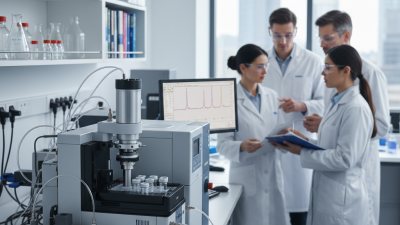
In practical use, operators review software settings before starting a run. They also inspect tubing, reagent bottles, and resin preparation. Analytical methods, such as high-performance liquid chromatography and mass spectrometry, help verify the product afterward. These checks are essential because a successful-looking synthesis may still contain deletion sequences or incomplete coupling products. No workflow is flawless. A reliable Peptide Synthesizer supports careful work, but it cannot replace trained researchers, validated procedures, or independent quality control. Understanding how the instrument works makes its results easier to evaluate, troubleshoot, and improve.
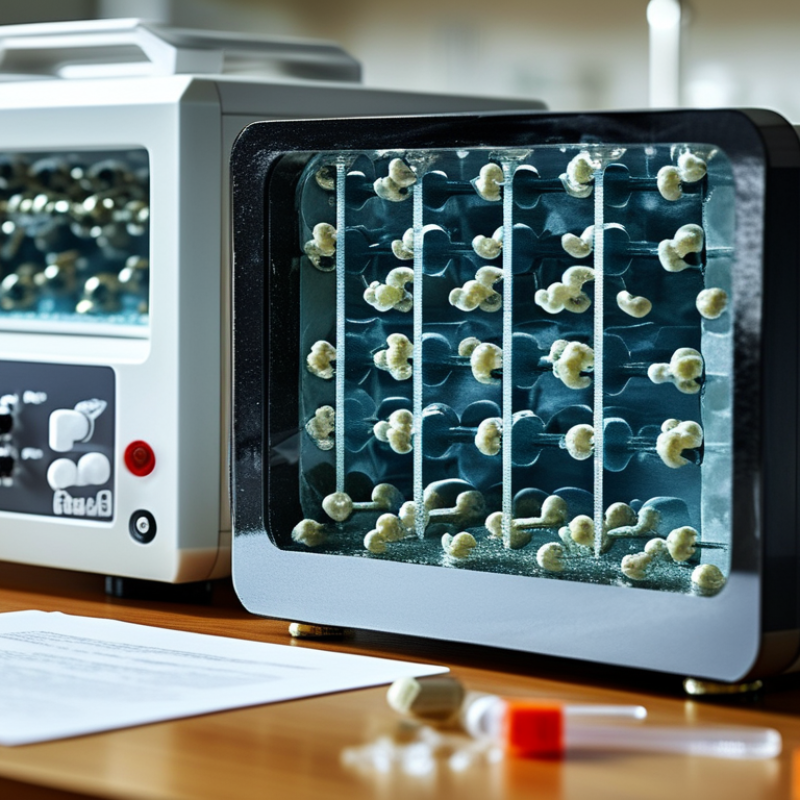
What Is a Peptide Synthesizer and How Does It Work?

Definition and Purpose of a Peptide Synthesizer

A peptide synthesizer is a laboratory instrument designed to build peptides, which are short chains of amino acids. Its main purpose is to automate the repeated steps needed to create a selected sequence accurately. Most systems use solid-phase peptide synthesis, where the growing chain remains attached to a resin inside a reaction vessel.

The instrument adds protected amino acids in a programmed order. Each cycle usually includes deprotection, washing, coupling, and another washing step. Careful temperature and fluid control support consistent reactions. Sensors may monitor pressure, liquid movement, or reagent delivery during the process. Small details matter. A blocked line or wet resin can affect the final product.

In practical laboratory work, a synthesizer reduces repetitive handling and improves record keeping. It can support research, analytical standards, and development of peptide-based materials. However, automation does not guarantee a perfect peptide. The operator must select suitable chemistry, verify reagent quality, and review each cycle. That assumption is too simple. Longer sequences may accumulate incomplete reactions, creating related impurities. The crude peptide often requires cleavage, purification, and analytical testing afterward. Experienced users treat the instrument as a controlled tool, not an independent scientist. Proper maintenance, validated procedures, and clear documentation help make its results more reliable.

Core Components and Their Functions

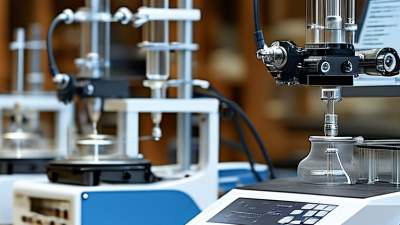
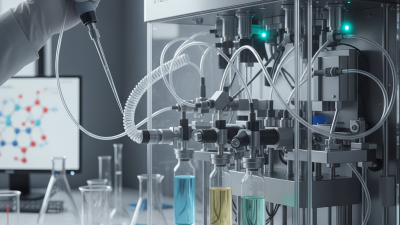
A peptide synthesizer is an automated laboratory system that builds peptides through repeated chemical cycles. Its core components work together inside a controlled reaction chamber. The vessel holds a resin, where the growing peptide remains attached. Amino acid reservoirs store protected building blocks. Valves and tubing deliver each solution with measured timing and volume.

A pump moves solvents, reagents, and washing fluids through the vessel. The control system coordinates deprotection, washing, coupling, and final rinsing. During deprotection, a temporary protective group is removed. The next amino acid can then attach to the exposed chain. Washing removes leftover chemicals between steps. Sensors may track pressure, flow, temperature, or liquid levels. These details matter because a small blockage can affect the entire sequence. The machine is precise, but not perfectly self-correcting.

Tips: Keep reagents properly labeled and check tubing for air bubbles before a run. Confirm valve movement and solvent flow with a safe test cycle. Review the program against the intended sequence, not memory. Regular cleaning reduces carryover between batches. A written maintenance log also supports reliable troubleshooting.

The reaction vessel, pump, valves, and software form one working system. If one component performs poorly, peptide quality may decline. This explanation simplifies some chemistry, and experienced users should still verify each protocol experimentally. Even a well-designed method can require adjustment.

Step-by-Step Peptide Synthesis Process

A peptide synthesizer is an automated system for building peptides on a solid support. It follows a repeated cycle called solid-phase peptide synthesis. The process begins when the first protected amino acid attaches to resin beads inside a reaction vessel. A temporary protecting group is removed. The next amino acid then enters with an activating reagent. The machine mixes, reacts, drains, and washes the resin. This cycle repeats until the target sequence is complete.

Small details matter. Incomplete coupling can create deletion sequences. The synthesizer may use color tests, conductivity readings, or ultraviolet monitoring to check reaction progress. However, these signals are not perfect. A clean-looking cycle can still hide a weak reaction. The operator must review reagent age, temperature, mixing, and resin swelling. According to the 2024 Global Peptide Synthesis Market report, the sector was valued at approximately US$480 million in 2023, showing strong demand for controlled production systems. That figure is a commercial estimate, not a laboratory performance standard.

After the final coupling, the peptide is cleaved from the resin. Strong cleavage conditions also remove side-chain protecting groups. The crude material is then precipitated, dissolved, and purified, commonly by preparative liquid chromatography. Analytical chromatography and mass spectrometry confirm purity and molecular mass. A second purification may be necessary. It is slower, but often safer. Experienced teams record every deviation, because automation reduces repetitive work but does not replace scientific judgment.

Chemical Reactions and Sequence Control

What Is a Peptide Synthesizer and How Does It Work?

A peptide synthesizer automates the repeated chemical steps used to build a peptide chain. Most systems support solid-phase peptide synthesis, where the growing chain remains attached to a resin. The instrument delivers protected amino acids, activators, and washing solvents through controlled fluid paths. Each cycle usually includes deprotection, washing, amino acid coupling, and another wash. During deprotection, a temporary protecting group is removed. The next amino acid can then react with the exposed amino group. Coupling reagents help form the new peptide bond efficiently. Capping may block unreacted sites. This reduces unwanted deletion sequences.

Sequence control depends on accurate programming and chemical timing. The software follows the selected amino acid order, while valves and pumps control volume and delivery. A single misplaced residue can change the peptide’s activity. Incomplete coupling can create impurities that become harder to remove later. Careful operators therefore review reagent identity, concentration, vessel position, and cycle records. Automation improves consistency, but it is not infallible. A blocked line or weak reagent can quietly affect several cycles. That possibility deserves respect.

Tips: Use fresh, properly prepared reagents and confirm their labels before loading. Keep reaction vessels clean and inspect tubing for bubbles or leaks. Include a small test sequence when introducing new chemistry. Monitor deprotection signals when available, but do not treat one reading as absolute proof. Analytical testing remains essential. Even experienced teams can miss a subtle failure. Reviewing the final data with healthy skepticism is part of good peptide synthesis.

What Is a Peptide Synthesizer and How Does It Work? - Chemical Reactions and Sequence Control

Process or Dimension What Happens Key Chemistry or Control Typical Monitoring Practical Purpose
Instrument definition A peptide synthesizer is an automated instrument that delivers reagents, solvents, and washes in a programmed order to assemble a peptide. Most laboratory systems use a solid-phase peptide synthesis workflow, in which the growing chain remains attached to an insoluble resin. Liquid volume, reagent position, valve status, pressure, temperature, and reaction time. Improves repeatability and reduces manual pipetting during multistep synthesis.
Resin loading The first amino acid is attached to functional groups on a polymeric resin through a linker. The linker determines how the peptide is released later. Common resin supports include polystyrene-based materials. Resin swelling, loading level, solvent compatibility, and reaction completion. Creates a stable attachment point while allowing reagents and by-products to be filtered away.
Temporary protecting-group removal A protecting group is removed from the amino terminus of the resin-bound peptide so the next amino acid can be added. In the widely used Fmoc strategy, Fmoc is commonly removed with a basic reagent such as piperidine in a polar aprotic solvent. Deprotection time, reagent delivery, wash efficiency, and in-process color or conductivity checks where applicable. Exposes one reactive amino group while protecting other amino groups from unwanted reactions.
Amino-acid activation The incoming protected amino acid is converted into a more reactive form before or during delivery to the resin. Carbodiimide or uronium/phosphonium-type coupling reagents can promote peptide-bond formation; additives may reduce side reactions. Reagent identity, concentration, mixing, temperature, and exposure time. Provides the reactive species needed for efficient coupling to the exposed amino group.
Coupling reaction The activated amino acid reacts with the free amino group on the resin-bound chain, forming a new peptide bond. The reaction is a condensation process that creates an amide bond and may generate coupling by-products. Reaction duration, reagent excess, temperature, agitation, and completion tests. Extends the peptide chain by one programmed residue.
Washing The resin is rinsed with solvent between chemical steps to remove excess reagents and soluble by-products. Common wash solvents are selected for resin swelling, reagent solubility, and compatibility with protecting groups. Number of washes, solvent volume, flow rate, and drain performance. Limits reagent carryover and helps prevent undesired reactions in the next cycle.
Capping Unreacted amino groups may be chemically blocked after coupling so they cannot continue into incorrect sequences. Capping converts residual free amino groups into nonreactive derivatives, reducing deletion-sequence propagation. Capping reagent delivery, contact time, and wash performance. Improves sequence fidelity by preventing incompletely coupled chains from reacting in later cycles.
Cycle repetition Deprotection, washing, coupling, optional capping, and additional washing are repeated for each residue in reverse order from the final sequence. Peptide synthesis proceeds from the C-terminus toward the N-terminus on the resin. Cycle count, step status, reagent usage, alarms, and reaction records. Enables automated construction of the programmed amino-acid sequence.
Sequence control Software translates a written sequence into an ordered reagent-delivery method and assigns amino-acid positions to each cycle. The instrument uses protected amino-acid reservoirs, defined protocols, valve-routing logic, and user-set cycle parameters. Sequence verification, vial mapping, reagent expiration, protocol version, and electronic run logs. Reduces transcription and dispensing errors and supports traceability.
Difficult residues and motifs Sterically hindered residues, aggregation-prone regions, long hydrophobic stretches, and repeated motifs can reduce coupling efficiency. Longer coupling, double coupling, modified solvent conditions, or specialized protecting groups may be used. Individual cycle results, resin behavior, reagent consumption, and analytical samples. Helps maintain quality when a sequence is chemically challenging.
Global cleavage and side-chain deprotection After chain assembly, the peptide is released from the resin and acid-labile side-chain protecting groups are generally removed. Strong acid systems, commonly based on trifluoroacetic acid, are selected according to the resin linker and protecting-group scheme. Cleavage time, temperature, reagent composition, and compatibility of sensitive residues. Produces the fully deprotected crude peptide for downstream processing.
Crude-peptide recovery The cleavage mixture is concentrated or treated to separate the crude peptide from resin fragments and soluble reagents. Precipitation, solvent exchange, filtration, or extraction may be used depending on peptide properties. Appearance, mass recovery, residual solvent, and sample solubility. Prepares the material for purification and analytical characterization.
Purification and verification The crude product is commonly purified by reversed-phase chromatography and evaluated using analytical methods. Analytical high-performance liquid chromatography can estimate purity, while mass spectrometry can verify molecular mass. Chromatographic profile, observed mass, retention behavior, water content, and final yield. Confirms whether the isolated material matches the intended peptide and quality requirements.
Main sources of error Incomplete coupling, incomplete deprotection, reagent contamination, incorrect sequence entry, poor resin swelling, and aggregation can create impurities. Errors accumulate across cycles; a small failure at one step can generate deletion or truncated sequences. Run logs, reagent checks, leak tests, cycle tests, in-process assays, HPLC, and mass spectrometry. Systematic monitoring supports troubleshooting, reproducibility, and improved sequence fidelity.
Core principle: A peptide synthesizer automates repeated chemical cycles while software controls the amino-acid order, reagent routing, timing, washing, and documentation required to build a defined peptide sequence.

Applications, Benefits, and Practical Limitations

A peptide synthesizer is an automated instrument for producing short chains of amino acids. It builds peptides through repeated chemical cycles. Each cycle adds one protected amino acid to a growing chain. The machine delivers reagents, controls reaction time, and removes temporary protecting groups. After each cycle, washing reduces leftover chemicals and possible impurities. The final peptide usually requires cleavage, purification, and analytical testing. Automation is not magic.

Peptide synthesizers support pharmaceutical research, diagnostic development, biochemical studies, and materials science. Research teams can produce many sequences with consistent timing and measured reagent volumes. This improves repeatability between experiments and reduces manual pipetting. Small-scale synthesis also helps laboratories test several designs while using limited starting material. It saves time, but not every step. Purification and quality checks still demand trained judgment.

Practical limitations deserve attention. Incomplete coupling can create deletion sequences and lower product purity. Longer peptides may fold, aggregate, or react poorly during synthesis. Reagent costs, solvent waste, maintenance, and instrument calibration can become significant. Scaling production may also change mixing and heat-transfer behavior. A skilled operator must inspect chromatograms and interpret analytical results. That part is easy to underestimate. A failed sequence may reflect chemistry, handling, or an unsuitable design, so automation should support careful reasoning rather than replace it.