Top Uses and Benefits of High Performance Liquid Chromatography in Research?
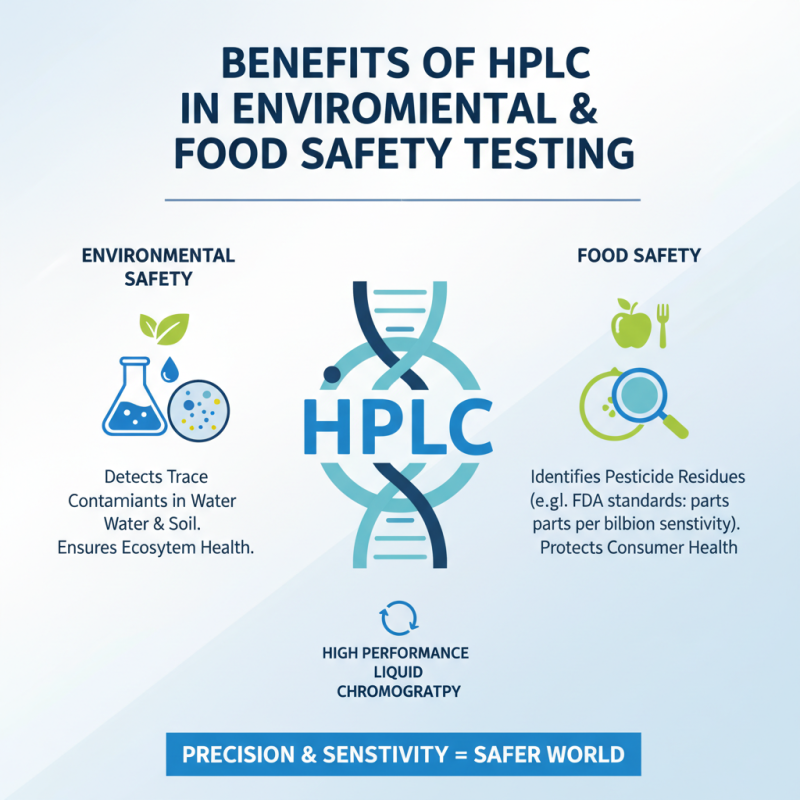
High Performance Liquid Chromatography (HPLC) is a cornerstone in analytical chemistry. Its applications span pharmaceuticals, environmental monitoring, and food safety. According to a recent report from MarketsandMarkets, the global HPLC market is projected to reach $4.9 billion by 2027, reflecting a compound annual growth rate of 6.9%. This growth indicates a rising reliance on this technique for detailed analysis.
Researchers credit HPLC for its high precision and efficiency. It enables the separation, identification, and quantification of compounds in complex mixtures. HPLC is vital for drug development, where it aids in ensuring the purity and potency of active ingredients. Notably, pharmaceutical companies increasingly adopt HPLC to comply with stringent regulatory standards.
However, while HPLC offers numerous advantages, it is not without challenges. Equipment costs can be significant, and method development may require substantial time and expertise. Researchers must invest in skilled personnel to navigate these complexities effectively. Balancing cost and efficiency remains a crucial consideration for many laboratories. As the field evolves, ongoing training and adaptation will be essential for maximizing HPLC benefits.
Overview of High Performance Liquid Chromatography (HPLC) Technology
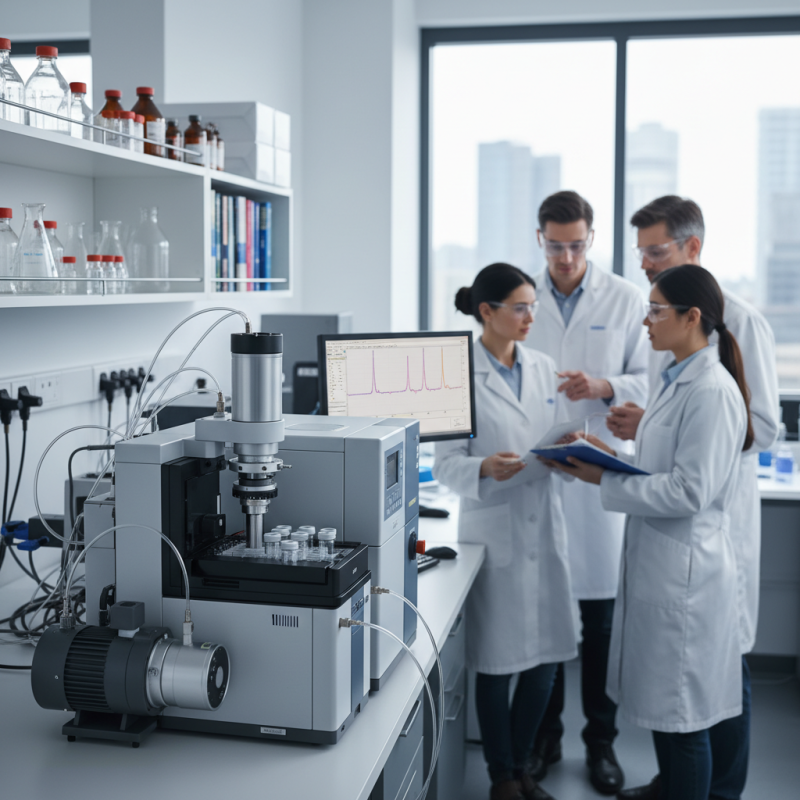
High Performance Liquid Chromatography (HPLC) is a critical analytical technique in research labs worldwide. Its ability to separate, identify, and quantify components in complex mixtures makes it indispensable. According to a recent industry report, the global HPLC market is expected to reach USD 3.7 billion by 2026, indicating a significant increase in demand for this technology.
HPLC operates by passing a sample mixture through a column packed with stationary phase material. The separation occurs due to differential partitioning between the stationary and mobile phases. This technology yields high-resolution results, often achieving separation in a matter of minutes. Continuous innovations in HPLC technology, such as ultra-performance liquid chromatography (UPLC), improve efficiency and reduce solvent consumption, aligning with environmental considerations.
Despite its advantages, HPLC presents challenges. Method development can be time-consuming and requires specialized expertise. Variations in results can occur due to equipment calibration or environmental conditions. Researchers must remain vigilant about these uncertainties to ensure reliable outcomes. Such considerations are part of the ongoing quest for accuracy in analytical chemistry, where constant refinement of techniques is necessary for breakthroughs.
Key Applications of HPLC in Pharmaceutical Research and Development
High Performance Liquid Chromatography (HPLC) is a crucial technique in pharmaceutical research and development. Its main role is to separate, identify, and quantify compounds in a sample. Researchers rely on HPLC for obtaining accurate results. This precision is essential for developing new drugs and ensuring safety in formulations.
One of the key applications of HPLC is in the analysis of drug purity. Ensuring that a pharmaceutical product meets regulatory standards is vital. HPLC helps detect impurities that may not be visible in other assays. The method provides fast and reliable results, which is critical in fast-paced development environments. However, achieving method validation can present challenges. Researchers must carefully optimize parameters to avoid errors.
Another significant use of HPLC is in bioanalytical studies. It is employed to analyze biological samples, like blood or urine, for drug concentration. These studies inform dosage recommendations and therapeutic monitoring. While HPLC offers many advantages, it requires skilled technicians for optimization and troubleshooting. Complex sample matrices can pose difficulties. Despite these challenges, HPLC remains an invaluable tool in the pharmaceutical industry.
Role of HPLC in Biochemical and Clinical Research Studies
High Performance Liquid Chromatography (HPLC) plays a crucial role in biochemical and clinical research. It's essential for analyzing complex mixtures of biological materials. Researchers often use HPLC to separate, identify, and quantify compounds effectively. This accuracy is vital for drug development and quality control.
In clinical studies, HPLC allows for the precise measurement of metabolites in blood or urine samples. For instance, it can identify biomarkers related to diseases. The technology supports personalized medicine by facilitating the monitoring of patient responses to treatments. Despite its benefits, researchers face challenges with method development and validation. It may take time to optimize conditions for specific applications, requiring patience and perseverance.
Furthermore, as the demand for quicker results rises, the pressure to enhance HPLC performance increases. Adapting to newer techniques, such as high-throughput screenings, can reveal gaps in current methodologies. This reality prompts ongoing reflection on best practices and innovative approaches in HPLC applications, highlighting the need for continuous improvement in research processes.
Future Trends and Innovations in HPLC Techniques and Applications
High-Performance Liquid Chromatography (HPLC) continues to evolve. Researchers seek faster and more efficient methods to separate compounds. Innovations in HPLC are on the rise, driven by the need for precision in analysis. New column technologies allow for better resolution. It is now easier to separate complex mixtures. Recent innovations also include microfluidic devices, which use less solvent and reduce waste.
The future is leaning towards automation. Automation minimizes human error and enhances reproducibility. Artificial intelligence is gradually making its way into HPLC. Predictive algorithms could optimize separation techniques in real-time. This shift opens new possibilities for rapid analysis in pharmaceuticals and environmental studies. However, challenges remain regarding the integration of AI with existing systems.
Advancements in detector technology play a vital role. Enhanced sensitivity and selectivity are crucial for detecting low-abundance compounds. Despite these advancements, researchers must remain cautious. Not all innovations deliver the promised improvements. Understanding limitations is essential for effective application. Continuous evaluation and feedback will be necessary as the field progresses further.
Top Uses and Benefits of High Performance Liquid Chromatography in Research
| Application |
Benefits |
Future Trends |
Innovations |
| Pharmaceutical Analysis |
High sensitivity and specificity in drug formulation |
Increased automation and integration with AI |
Development of miniaturized systems |
| Environmental Testing |
Effective detection of pollutants |
Real-time monitoring techniques |
Use of green solvents |
| Food Industry |
Quality control and contamination analysis |
Enhanced data analytics for quality assurance |
Advanced chromatographic techniques |
| Clinical Research |
Accurate biomarker profiling |
Personalized medicine approaches |
Integration with omics technologies |
| Biotechnology |
Purification of biomolecules |
Innovative column technology |
Use of bioinformatics for method development |