Why Choose a Pharmaceutical Lyophilizer for Your Facility?
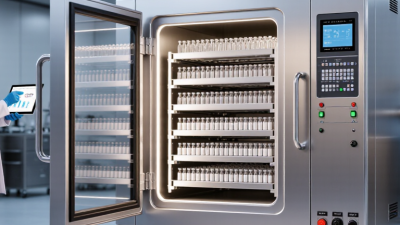
Choosing a Pharmaceutical Lyophilizer is a practical decision for facilities handling sensitive injectable products, vaccines, biologics, or diagnostic materials. Freeze-drying can improve product stability when liquid storage is unsuitable. It removes ice under controlled vacuum conditions. The process protects valuable formulations from heat and moisture.
A well-designed Pharmaceutical Lyophilizer gives operators control over shelf temperature, chamber pressure, condenser performance, and cycle timing. These controls support repeatable manufacturing results. They also help teams investigate deviations using recorded process data. In a real production room, details matter. A stable vacuum pump, clean shelves, reliable sensors, and an accessible loading system can influence daily performance. Small design choices become important during long cycles.
However, buying the largest unit is not always the best answer. Facility capacity, batch size, utility supply, cleaning procedures, and future expansion should guide the selection. Product development may also require several trial cycles before the process becomes dependable. That part is easy to underestimate. Teams should review validation needs, operator training, preventive maintenance, and technical support before committing to equipment. Independent testing and qualified suppliers can strengthen confidence, but neither replaces sound process knowledge.
This article explores why a Pharmaceutical Lyophilizer may suit your facility. It considers product protection, operational control, compliance expectations, and long-term cost. The goal is not to promote one machine. It is to help decision-makers ask better questions before installation. A careful choice today can reduce avoidable disruption later. Yet every facility has different risks, so the final decision should reflect documented process requirements and expert review.
Pharmaceutical Lyophilization: Definition and Core Operating Principles
Why Choose a Pharmaceutical Lyophilizer for Your Facility?
Pharmaceutical lyophilization removes ice from a frozen product under vacuum. It uses sublimation, not liquid evaporation. The cycle includes freezing, primary drying, and secondary drying. During freezing, ice crystals form inside each vial. Their size affects pore structure and drying resistance. Primary drying lowers chamber pressure and gently raises shelf temperature. Secondary drying removes bound moisture. This final step supports product stability during storage. WHO Technical Report Series No. 961, Annex 9, emphasizes validated temperature control, pressure monitoring, and aseptic handling. These controls matter for injectable products and sensitive biological materials.
Facility selection should match the product, batch size, and required cycle flexibility. A poorly designed cycle may cause collapse, meltback, or uneven residual moisture. A shorter cycle is not automatically better. Grand View Research’s 2024 lyophilization equipment report forecasts an 8.2% compound annual growth rate through 2030. That growth reflects increasing demand, but market estimates vary by report scope. The more useful question is operational: can the system repeatedly control shelf temperature, condenser performance, vacuum stability, and endpoint detection?
Tips: Begin with small-scale cycle development. Record product temperature, pressure, and appearance. Compare vial positions, not only average results. Build a design space before commercial production. Do not rely on one pressure reading. Review failed cycles honestly; equipment settings are rarely the only cause.
How a Pharmaceutical Lyophilizer Supports Product Stability
Why Choose a Pharmaceutical Lyophilizer for Your Facility?
A pharmaceutical lyophilizer supports product stability by removing water under controlled vacuum and low temperature. This process reduces hydrolysis, slows molecular movement, and protects sensitive biologics, peptides, and injectable formulations. A dry cake also improves handling during storage and transport. However, stability does not come from drying alone. Formulation design, container closure integrity, and reconstitution performance remain equally important.
ICH Q1A(R2) defines accelerated stability testing at 40°C and 75% relative humidity. These conditions can expose moisture-related degradation quickly. A well-controlled lyophilization cycle helps reduce that risk by managing freezing, primary drying, and secondary drying. Residual moisture must still be measured. Excess moisture can accelerate degradation, while excessive drying may damage structure or delay reconstitution. There is no universal target.
Small details matter.
Shelf temperature, chamber pressure, and loading patterns can change vial appearance and potency. Industry guidance from the Parenteral Drug Association also emphasizes cycle development, equipment qualification, and continued process verification. In practice, a stable-looking cake may hide incomplete drying. That is easy to miss. Facilities should combine moisture testing, potency data, visual inspection, and real-time stability studies. ICH recommends long-term studies at 25°C/60% relative humidity or 30°C/65% relative humidity. A lyophilizer is powerful, but it is not foolproof. Calibration records and operator experience often decide whether stability claims remain credible.
Key Facility Requirements for Safe and Efficient Freeze-Drying
Why Choose a Pharmaceutical Lyophilizer for Your Facility?
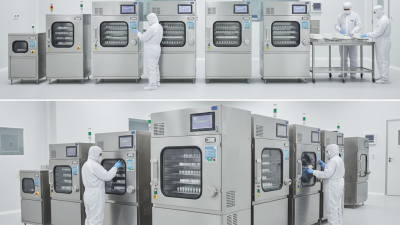
Choosing a pharmaceutical lyophilizer is not only an equipment decision. Facility conditions often determine whether a cycle is repeatable, safe, and easy to validate. The installation area needs controlled temperature, humidity, and air pressure. Stable HVAC performance protects partially stoppered vials during loading and unloading. A practical layout should separate material flow, personnel flow, and waste movement. Keep clearance around the chamber and shelves for inspection and maintenance. Small gaps become large problems during cleaning.
Product-contact surfaces should be smooth, drainable, and compatible with approved cleaning agents. The room should support documented cleaning procedures, environmental monitoring, and controlled access. Utilities deserve equal attention. Reliable power, clean gases, vacuum, chilled water, and backup systems support consistent operation. Vacuum lines need suitable filtration and condensate management. Poor drainage can create hidden contamination risks. Operators also need safe access to doors, shelves, controls, and lifting points. Hands-on reviews with operators often reveal awkward steps that drawings miss.
A robust facility includes calibrated sensors, alarm management, data integrity controls, and space for qualification activities. Cycle development should connect with chamber mapping and load-pattern studies. Validation teams need room to test worst-case conditions without disrupting routine production. Fire protection, emergency stops, and ergonomic handling should be considered before installation. No layout is perfect. A common project lesson is uncomfortable: maintenance clearance is often underestimated. Corrections can delay commissioning and consume budget. Review the design with engineering, quality, production, and safety personnel before construction decisions become expensive.
This representative cycle illustrates the operating conditions a pharmaceutical lyophilizer facility must control: deep freezing, stable vacuum during primary drying, and controlled shelf heating during secondary drying. Typical facility provisions include a condenser capable of approximately −70°C or below, a validated vacuum system, precise shelf-temperature control, continuous pressure monitoring, and automated data recording. Actual cycle parameters must be validated for each product and container system.
Factors for Selecting the Right Pharmaceutical Lyophilizer
Why Choose a Pharmaceutical Lyophilizer for Your Facility?
Factors for Selecting the Right Pharmaceutical Lyophilizer
Selecting a pharmaceutical lyophilizer starts with the product, not chamber volume. The FDA Drug Shortages Task Force reported that manufacturing and product-quality problems contributed to 62% of shortages studied between 2013 and 2017. Equipment reliability therefore deserves the same attention as purchase price. Review formulation sensitivity, fill volume, vial geometry, batch frequency, and target residual moisture. A pilot cycle with calibrated thermocouples can expose edge-vial risks that brochures rarely reveal. Those risks matter.
Match shelf area and condenser capacity to the real production schedule. Oversizing may increase capital cost and create inefficient low-load cycles. Undersizing can cause long queues and rushed maintenance. Check shelf-temperature uniformity, vacuum control, leak-rate testing, sterilization capability, and automatic recipe management. FDA process-validation guidance supports a lifecycle approach, so commissioning data should remain useful during continued process verification.
Facility integration is often underestimated. Confirm cleanroom interfaces, steam quality, cooling-water demand, electrical load, noise, and service access. The 2023 WHO Global Vaccine Market Report recorded about 16 billion vaccine doses supplied globally in 2022, showing the pressure for scalable and dependable manufacturing. Yet demand forecasts do not replace engineering evidence. I would challenge any selection based only on throughput claims. Operators need clear alarms, practical loading procedures, and accessible documentation. A technically impressive system can still fail when training is weak or maintenance access is poor.
Integration, Validation, and Maintenance in Pharmaceutical Production
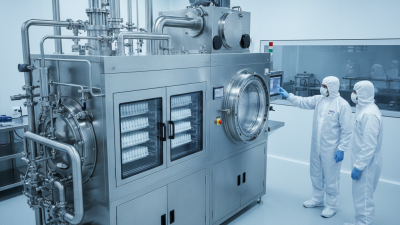
A pharmaceutical lyophilizer must integrate with clean utilities, sterile filling, and electronic batch records. Poor integration creates hidden delays at loading, unloading, and transfer points. FDA’s 2023 Drug Shortages Annual Report recorded 48 new shortages and 236 potential shortages prevented. Reliable freeze-drying capacity can support supply continuity, but it cannot replace broader manufacturing controls.
Validation should follow FDA’s process validation lifecycle: process design, process qualification, and continued process verification. Critical parameters include shelf temperature, chamber pressure, condenser performance, and endpoint detection. Mapping studies should examine edge vials, center vials, and different load patterns. EU GMP Annex 1 also emphasizes contamination control and documented environmental monitoring. The numbers matter.
Maintenance needs equal discipline. Operators should inspect door seals, vacuum sensors, refrigeration systems, and clean-in-place interfaces at defined intervals. Trend reviews can reveal gradual vacuum leakage before a failed batch appears. Calibration records must connect directly with batch data. That connection is easy to overlook. A useful maintenance plan also includes spare-part risk ranking and recovery drills. However, not every alarm indicates equipment failure; some reflect poor loading practice or incomplete operator training. That uncertainty deserves investigation, not a quick reset.