2026 Best High Performance Liquid Chromatography Machine Options to Consider?
The role of High Performance Liquid Chromatography Machines (HPLC) in scientific research cannot be overstated. These machines are integral to various industries, including pharmaceuticals and environmental monitoring. According to a recent report by Industry Research, the global HPLC market is expected to grow significantly, reaching approximately $3.5 billion by 2026. This growth is fueled by the increasing demand for high-quality analytical results.
In addition to accuracy, modern HPLC machines offer enhanced resolutions and quicker analysis times. Pharmaceutical companies are leveraging these advancements to speed up drug development. However, while HPLC technology excels in many applications, it is not without its challenges. Users often grapple with issues such as method development and maintenance costs.
Choosing the right HPLC machine requires careful consideration. Factors like sensitivity, throughput, and ease of use play crucial roles. Moreover, not every machine is equipped to handle all types of analyses. A thoughtful selection process can mitigate potential frustrations and enhance laboratory efficiency. This article aims to guide you through the 2026 best options in High Performance Liquid Chromatography Machines, highlighting what to prioritize and the qualities that matter most.
Overview of High Performance Liquid Chromatography (HPLC) Technology
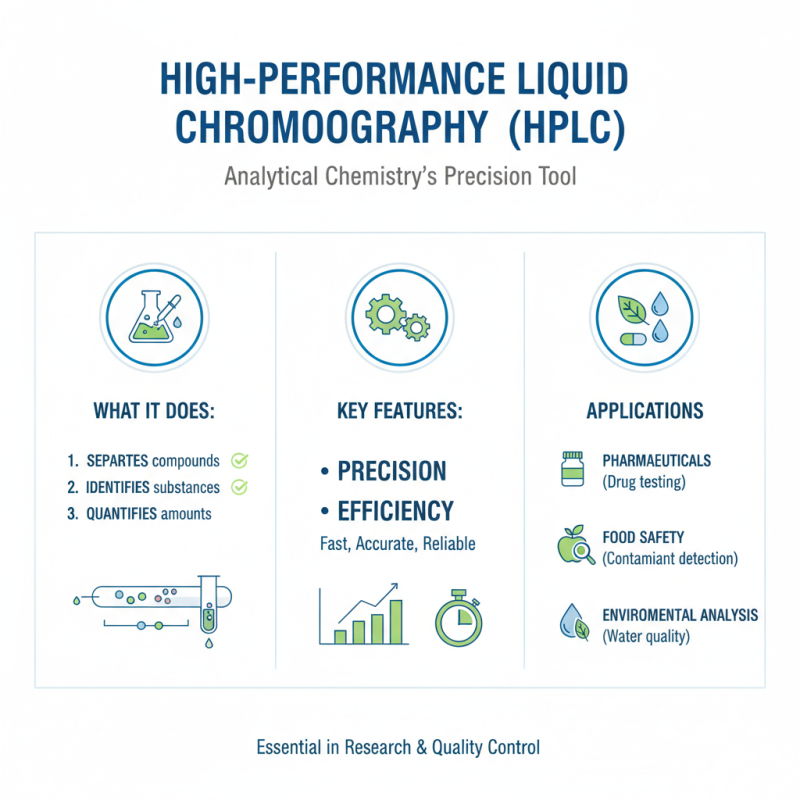
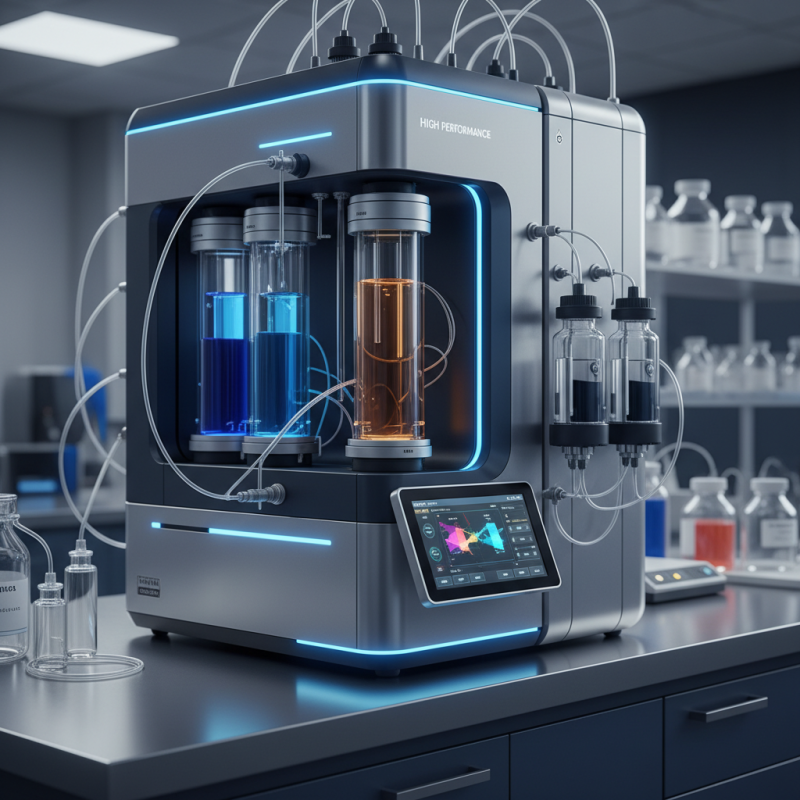
High-Performance Liquid Chromatography (HPLC) is a pivotal technique in analytical chemistry. It separates, identifies, and quantifies compounds in various samples. HPLC is renowned for its precision and efficiency, making it essential in pharmaceuticals, food safety, and environmental analysis.
When selecting an HPLC machine, consider the technology's various components. The pump is crucial for delivering the mobile phase under high pressure. The injector introduces the sample into the system. Detectors, such as UV or mass spectrometry, reveal the compounds' presence. The choice of columns also impacts separation efficiency. Different materials and sizes yield varied results, demanding careful selection.
Tips: Always calibrate your instruments regularly. This ensures consistent performance and reliable results. Don't overlook maintenance routines; they prolong equipment life and improve accuracy. Regularly evaluate your choice of columns based on sample types. Over time, some columns may degrade or become less effective.
Reflect on the machine’s operation. Inconsistent results can stem from environmental factors or human error. It's essential to track experimental conditions. Document changes and outcomes. This information can help scientists avoid future mistakes and improve methodologies. Fostering a culture of reflection enhances laboratory practices.
Key Features to Look for in a High Performance Liquid Chromatography Machine
When considering a high-performance liquid chromatography (HPLC) machine, key features make a significant difference. Resolution is crucial; it defines the machine's ability to separate compounds. Higher resolution leads to better analysis. Look for machines that utilize advanced detectors, like UV-Vis or mass spectrometry, which enhance sensitivity.
Another important factor is the column temperature control. Consistent temperature improves reproducibility and accuracy. It can be beneficial in creating stable baseline readings during experiments. Pay attention to the solvent delivery system as well. A precise and reliable pumping system minimizes pressure fluctuations, enhancing accuracy.
Tips: Regular calibration is vital for maintaining machine performance. Use qualified technicians for maintenance. Consider flexibility in software; it should easily adapt to your evolving research needs. Review reports on various models and identify common issues. This way, you can make a well-informed decision. Choosing the right HPLC machine can be complex. Engage with experts and seek their insights for more clarity.
Top HPLC Manufacturers and Their Leading Models for 2026
In 2026, selecting a high-performance liquid chromatography (HPLC) machine requires understanding the top manufacturers and their leading models. Renowned companies in the HPLC market offer devices with various features and capabilities. These machines are essential for various applications, from pharmaceuticals to environmental analysis.
Some manufacturers excel in user-friendly interfaces. Others focus on advanced gradient capabilities. Each model offers something unique. Some HPLCs are compact, perfect for limited lab space. Others are designed for high throughput, ideal for large-scale analyses. It is essential to consider the specific requirements of your lab.
While many machines promise high performance, the options can be overwhelming. Reviewing specifications and user reviews can provide valuable insights. It's not uncommon for users to feel uncertain about which model best suits their needs. Ultimately, investing time in research can lead to better decision-making.
2026 Best High Performance Liquid Chromatography Machine Options to Consider
| Model |
Max Pressure (bar) |
Flow Rate (mL/min) |
Detector Type |
Key Features |
| Model A |
400 |
5 |
UV/Vis |
Automatic sample injection, high sensitivity |
| Model B |
350 |
10 |
Fluorescence |
High resolution, low noise |
| Model C |
500 |
2 |
Mass Spectrometry |
Integrated software, multi-dimensional analysis |
| Model D |
300 |
1.5 |
Electrochemical |
Compact design, battery-operated options |
Cost Analysis: Budgeting for Your HPLC Equipment Purchase
When planning to purchase high-performance liquid chromatography (HPLC) machines, budgeting is essential. HPLC systems come with varying price tags, depending on their capabilities and features. You need to weigh the costs against your laboratory's requirements. A lower price might suggest limited functionality, leading to increased operational costs later.
Tips: Always list essential features before diving into price comparisons. This helps to avoid getting overwhelmed and ensures that all critical aspects are covered.
Consider costs beyond the initial purchase. Maintenance, consumables, and training can significantly add to your budget. A system’s long-term viability should be a priority. Research estimated running costs, as these often change over time. Seek advice from peers about unexpected expenses that arise.
Tips: Reach out to multiple suppliers for quotes. Don't hesitate to ask for support regarding installation and training packages. This can be beneficial in the long run.
Ultimately, achieving balance in budgeting for HPLC machines requires thoughtful consideration. Rushing the decision may lead to overspending or choosing an inadequate system. Consider multiple perspectives to ensure a well-rounded approach in your planning.
2026 Best High Performance Liquid Chromatography Machine Cost Analysis
Future Trends and Innovations in HPLC Technology for Optimal Performance
In the realm of high-performance liquid chromatography (HPLC), future trends and innovations are set to redefine the industry. Enhanced sensitivity and resolution are at the forefront. These advancements will improve the detection of trace-level compounds, crucial for pharmaceuticals and environmental analysis. Miniaturization is also gaining traction—smaller systems can now deliver high-quality results, which makes them more accessible for labs with limited space.
Integration of artificial intelligence is another exciting trend. AI algorithms can optimize methods and predict outcomes. This reduces trial-and-error time, enhancing efficiency. Innovations in materials for columns and stationary phases are ongoing as well. New, durable materials can withstand aggressive solvents, offering longevity and consistent performance. Easy-to-use interfaces and automated systems will also simplify complex processes.
However, the adoption of these innovations is not without challenges. Training staff to use advanced technologies takes time and resources. Moreover, the initial investment in new equipment may deter some laboratories. Balancing cost with the need for cutting-edge performance is a persistent concern. As the HPLC landscape evolves, laboratories must weigh these factors carefully.