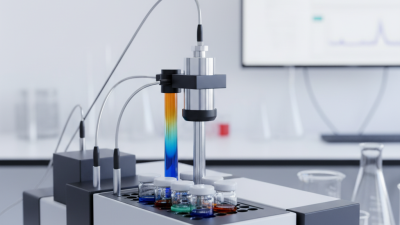
Choosing the right chromatography systems is crucial for efficient lab operations. A well-selected system enhances accuracy and productivity. However, the variety of options available can be overwhelming. Features such as resolution, speed, and capacity vary significantly between models.
Consider your lab's specific needs. Do you prioritize high throughput or precision separation? This decision can impact your research outcomes. Each chromatography system comes with its strengths and weaknesses. It’s essential to weigh these factors carefully. Not all systems are suitable for every application.
Evaluate the manufacturer’s reputation too. Experienced suppliers often provide reliable support and service. Additionally, peer-reviewed studies can shed light on system performance. Ensure you are making informed choices that align with your lab's goals. In the end, thoughtful consideration leads to better chromatography systems and successful research.
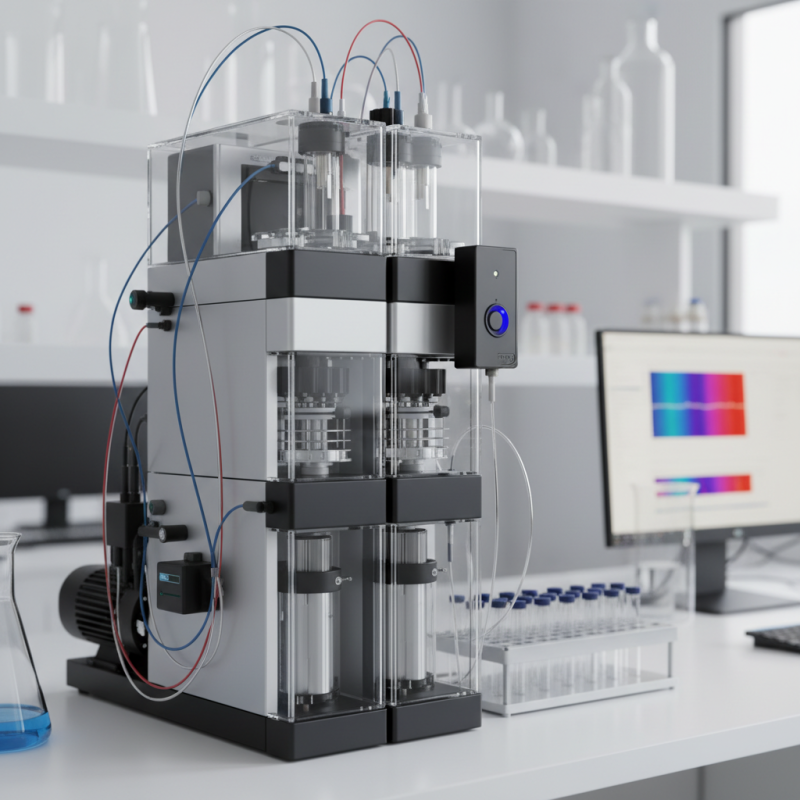
Choosing the right chromatography system for your lab demands careful consideration of several key factors. The type of applications you perform is paramount. High-resolution methods may require specific column types and detectors. If your work involves complex mixtures, a system with advanced capabilities is essential.
Sensitivity is another critical aspect. Analyze your detection needs thoroughly. Some methods may not detect low concentrations effectively. Try to engage with your peers to share insights on their experiences with various systems. Budget constraints are also a reality for many labs, impacting your options. It’s important not just to consider the initial costs, but also ongoing maintenance and consumables.
User-friendliness can greatly influence productivity. If a system is too complex, it may hinder rather than help your processes. Additionally, think about support and training availability from the manufacturer. This can prevent frustrations and enhance overall efficiency. Collect feedback from lab members to gauge their comfort with different systems. Balancing these aspects will guide you toward a suitable choice.
Chromatography is essential in laboratories. Various techniques exist, each suited for specific applications. Understanding these can guide your choice of system.
One common method is gas chromatography. It separates volatile compounds using a gas carrier. It's efficient for analyzing air samples or petrochemicals. However, it may not be ideal for large biomolecules. The choice depends on your target compounds.
Liquid chromatography is another popular technique. It handles a wide range of samples, from small organic molecules to large proteins. Though it's more versatile, it may require more maintenance. Reflection on your lab's specific needs can help here.
Consider high-performance liquid chromatography (HPLC) as well. It offers improved resolution and speed. But, the initial costs can be high. Prioritizing budget and potential returns on investment is crucial. Each technique offers unique advantages and challenges that deserve careful evaluation.
| Chromatography Type | Suitable Applications | Key Features | Considerations |
|---|---|---|---|
| HPLC | Pharmaceuticals, Biochemistry | High resolution, Speed, Versatility | Cost, Solvent compatibility |
| GC | Environmental testing, Forensics | High sensitivity, Fast analysis | Sample preparation, Volatile compounds only |
| Ion Chromatography | Water quality analysis, Food industry | Separation of ions, Low detection limits | Column life, Matrix effects |
| Affinity Chromatography | Protein purification, Biopharmaceuticals | Specificity, High capacity | Cost of ligands, Regeneration |
| Size Exclusion Chromatography | Polymer analysis, Biomolecules | Non-destructive, Molecule size determination | Resolution limitations, Sample compatibility |
Choosing the right chromatography system hinges on understanding key performance metrics.
Resolution is crucial; it defines how well two compounds can be separated.
A high resolution means cleaner data and more accurate results. Industry reports indicate that systems achieving a resolution of 1.5 or higher greatly enhance the quality of analytical outcomes.
Sensitivity is another vital factor. It measures how detectably small concentrations of a substance can be identified.
Many laboratories aim for a sensitivity of at least 0.1 μg/mL for effective analysis in complex mixtures.
This level of detection can be essential in industries such as pharmaceuticals and environmental testing. Yet, achieving this can be challenging, often requiring fine-tuning of parameters.
Speed also plays a significant role in chromatography. A system that delivers results swiftly allows labs to increase productivity.
Many chromatographers target run times of under 30 minutes, but real-world applications often reveal bottlenecks.
These could stem from inefficient sample preparation or column issues. Reflecting on these shortcomings can be as important as the metrics themselves.
Analyzing weaknesses in the current process can lead to significant improvements down the line.
Choosing the right chromatography system involves several critical budget considerations.
The initial cost can vary significantly based on system type and complexity.
A recent industry report indicated that high-performance liquid chromatography (HPLC) systems can cost anywhere from $20,000 to $100,000.
Considering the potential return on investment is essential.
Maintenance costs also impact long-term budgeting. These expenses can add up quickly.
Routine maintenance may cost around 10% of the purchase price annually.
Labs often overlook these costs, leading to unexpected financial strain.
Another factor is the total cost of ownership. This includes consumables like solvents and columns.
A study found that these costs might account for over 50% of the total budget devoted to chromatography over five years.
Evaluating the cost-effectiveness of a system must include these ongoing expenses.
The best choices balance up-front costs with long-term operational efficiency.
Many labs fail to analyze the potential for automation.
Automated systems can lead to significant savings and efficiency.
However, they often come with higher initial investments.
The decision should involve a thorough cost-benefit analysis.
An informed choice can make a substantial difference in a lab's financial health.
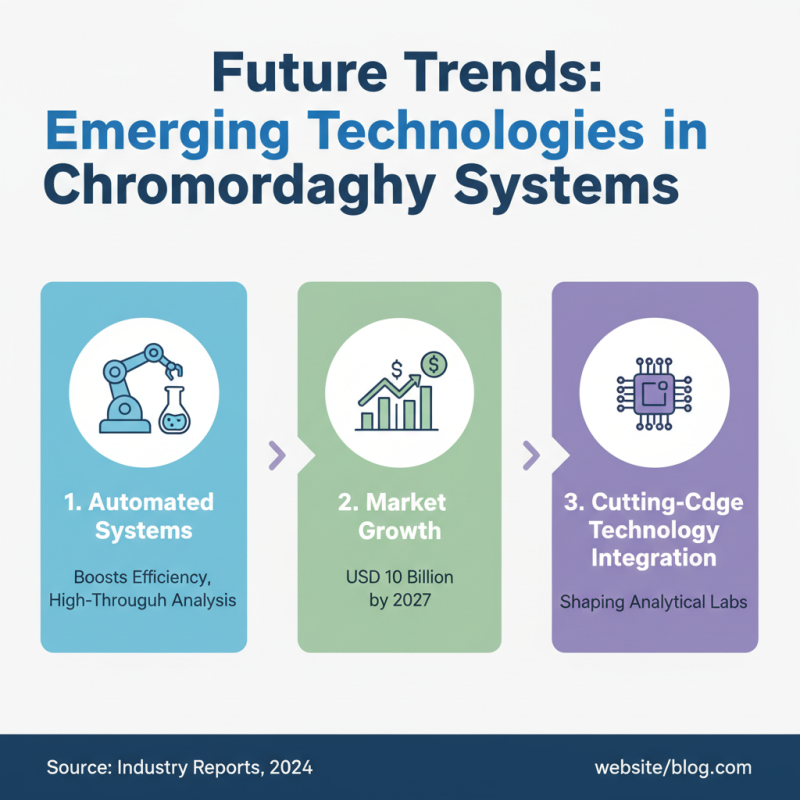
Emerging technologies in chromatography are shaping the future of analytical labs. Recent reports from industry leaders highlight a surge in automated systems. Automation boosts efficiency, allowing for high-throughput analysis. The global chromatography market is projected to grow significantly, reaching USD 10 billion by 2027. This growth underscores the importance of integrating cutting-edge technology.
One promising advancement is the introduction of artificial intelligence (AI) in chromatographic processes. AI can enhance data analysis, enabling more accurate interpretations. Labs using AI for chromatography report a 30% increase in productivity. However, limitations exist, such as the need for extensive training data. A cautious approach is essential for integrating AI seamlessly.
Another noteworthy trend is miniaturization. Microfluidic devices are revolutionizing sample processing. These devices reduce solvent use and waste generation. According to recent studies, labs can save up to 50% on solvent costs. Despite this, issues like device compatibility and the learning curve for new techniques still challenge widespread adoption. Embracing these tools requires careful consideration and ongoing training.