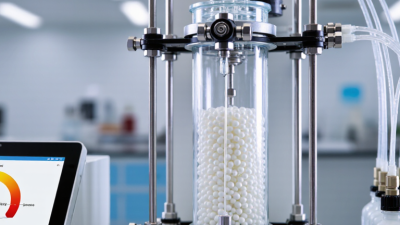
High Performance Liquid Chromatography Machine technology remains central to pharmaceutical quality control, environmental testing, food safety, and life-science research. Laboratories use these systems to separate, identify, and quantify compounds in complex samples. A single vial may contain active ingredients, impurities, preservatives, or degradation products. Reliable separation matters.
Market evidence supports continued investment. MarketsandMarkets estimates that the global HPLC market will grow from approximately USD 4.5 billion in 2023 to more than USD 6 billion by 2030, driven by pharmaceutical testing and biopharmaceutical development. Grand View Research reports a similar expansion, although its market boundaries and forecast values differ. That difference deserves attention. Market reports are useful indicators, not absolute measurements.
This 2026 guide examines leading instruments through practical laboratory criteria. These include pressure stability, detector sensitivity, gradient accuracy, carryover control, software usability, maintenance access, and total operating cost. An experienced analyst also considers solvent consumption, column compatibility, and service response time. A fast pump is not enough. The complete workflow must remain dependable.
Regulatory expectations also shape instrument selection. The U.S. Food and Drug Administration emphasizes validated analytical procedures, data integrity, and reliable documentation in pharmaceutical laboratories. United States Pharmacopeia standards provide widely recognized guidance for chromatographic performance and system suitability. However, no machine is automatically suitable for every method. Installation conditions, analyst training, sample chemistry, and validation practices can change real-world results. This comparison therefore focuses on evidence, measurable specifications, and practical limitations. Some rankings may remain debatable. That is honest.
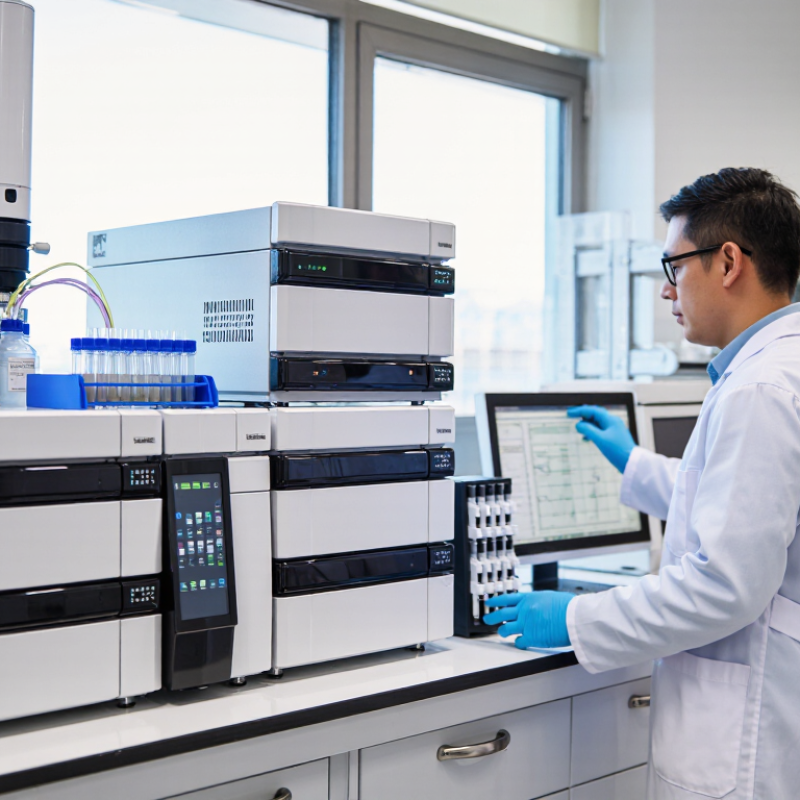
In 2026, a high-performance liquid chromatography machine is defined by more than pressure ratings. It must turn pressure, separation efficiency, and reliable data into repeatable laboratory results. Modern systems commonly support high-pressure gradients, low-delay volumes, precise temperature control, and sensitive detection. These features help analysts separate closely related compounds without wasting valuable samples. That matters.
In practical method development, I look for stable flow at low and high rates. I also examine injection precision, carryover, solvent compatibility, and maintenance access. A machine should recover quickly after routine cleaning and provide clear diagnostic information. Strong software is equally important. It should record instrument status, audit trails, calibration events, and method changes without hiding critical details.
Maximum pressure remains an incomplete measure of performance. A system may tolerate extreme pressure yet produce inconsistent results when solvents change or columns age. I have found that everyday stability often matters more than impressive specifications. Not always. Laboratory teams should verify performance with system suitability tests, real sample matrices, and long sequences. Automated leak checks can reduce interruptions, but they cannot replace careful review. Energy use, solvent consumption, modular design, and recyclable components also influence practical value in 2026. The best instrument is not simply the fastest one; it is the system that analysts can understand, maintain, and trust during difficult runs.
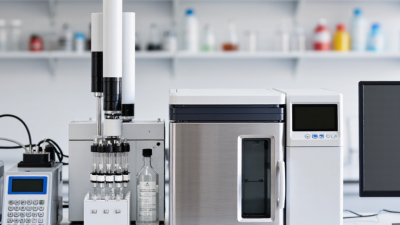
Modern high performance liquid chromatography systems separate compounds through controlled movement of a liquid mobile phase. A high-pressure pump drives the solvent through a packed column. The injector introduces a measured sample volume into this flow. Inside the column, compounds interact differently with the stationary phase. Those interactions create separate retention times.
The column is the system’s working chamber. Its particle size, internal diameter, temperature, and chemistry affect resolution and backpressure. A column oven improves thermal stability during long sequences. The detector then measures compounds as they leave the column. Ultraviolet detection suits many absorbing molecules, while other detectors respond to fluorescence, refractive index, or mass-related signals. The data system converts these responses into chromatograms and peak areas.
Practical operation depends on details that are easy to overlook. Filtered solvents reduce blockage risks, and degassing limits bubbles near the detector. I have found that a small leak can distort an otherwise careful analysis. Not dramatic, but costly. Analysts should verify flow rate, injection precision, pressure behavior, and calibration before trusting results. Gradient methods change solvent composition during separation, often improving performance for complex samples. Still, gradients require adequate equilibration time. A rushed sequence may produce shifting retention times. Even advanced instruments need disciplined maintenance, clean connections, and documented observations. The weak point is sometimes not the machine, but the assumption that yesterday’s settings remain reliable.
Comparing HPLC machines requires more than checking maximum pressure. Flow accuracy, gradient precision, detector stability, and injection repeatability directly affect reported results. The 2024 HPLC market analysis by MarketsandMarkets projects continued growth through 2029, driven partly by stricter analytical quality requirements. That growth makes careful instrument selection increasingly important.
Pressure matters, but it should match the column and method. A system rated near 1,000 bar may offer flexibility, yet excessive pressure can shorten column life. Evaluate flow precision at low rates, especially below 0.5 mL/min. Check gradient delay volume too. Small differences can shift early peaks and distort impurity measurements. USP General Chapter <621> emphasizes system suitability, while ICH Q2(R2) expects methods to demonstrate precision, accuracy, and robustness. A practical test uses repeated injections of the same solution. Many methods target an area %RSD near 2%, although the required limit depends on the method.
Detector noise and drift deserve equal attention. A stable baseline should remain calm during a long sequence, not only during a showroom demonstration. Autosampler carryover is another hidden weakness. Test a blank after a concentrated sample and inspect late-eluting peaks. Service records, software audit trails, and temperature control also affect reliability. Lower cost is tempting. It is not always economical. One overlooked weakness can create weeks of investigation, and even experienced laboratories occasionally choose impressive specifications over useful evidence.
| Performance Criterion | High-Pressure Analytical UHPLC | Bio-Inert UHPLC | Microflow LC | Preparative HPLC | Two-Dimensional LC |
|---|---|---|---|---|---|
| Primary use | Fast, high-resolution analysis of small molecules, pharmaceuticals, and environmental compounds | Analysis of proteins, peptides, oligonucleotides, and metal-sensitive biomolecules | Low-flow separations coupled with mass spectrometry and limited-volume samples | Purification, fraction collection, and isolation of milligram-to-gram quantities | Complex samples requiring orthogonal separation mechanisms and increased peak capacity |
| Typical maximum pressure | Up to approximately 1,000–1,300 bar | Up to approximately 600–1,000 bar | Typically 600–1,300 bar, depending on the flow module | Typically 400–600 bar | Approximately 600–1,300 bar in each compatible dimension |
| Useful flow-rate range | About 0.05–5.00 mL/min | About 0.05–5.00 mL/min | Approximately 1–1,000 µL/min | Approximately 1–200 mL/min, depending on the pump configuration | Typically 0.01–5.00 mL/min per dimension |
| Compatible column formats | Approximately 1.0–4.6 mm internal diameter; sub-2 µm and superficially porous particles | Approximately 1.0–4.6 mm internal diameter; bio-inert hardware and polymeric or hybrid phases | Approximately 0.1–1.0 mm internal diameter; packed-capillary and microbore columns | Approximately 4.6–50 mm internal diameter; larger-particle preparative media | Analytical columns in two different chemistries, dimensions, or separation modes |
| Injection-volume capability | Approximately 0.1–100 µL, with selectable partial-loop and full-loop modes | Approximately 0.1–100 µL; low-adsorption flow paths preferred for biomolecules | Approximately 1–20 µL, with optimized low-dispersion injection paths | Approximately 0.1–10 mL, depending on the injection valve and sample loop | Typically 0.1–100 µL, with valve coordination between dimensions |
| Gradient accuracy and precision | Suitable for sub-2 µm separations; low-composition error and stable dwell volume are important | High repeatability for aqueous-organic gradients and protein-focused methods | High precision required because small dwell-volume changes can affect retention | Adequate for robust purification gradients; mixing performance must remain stable at high flow | Coordinated gradient control and reproducible transfer between first and second dimensions |
| System dwell volume | Low to moderate, commonly optimized for fast gradient methods | Low to moderate; method transfer should account for system volume | Very low, commonly in the microliter range | Moderate to high because of larger tubing and mixer volumes | Precisely characterized for reliable modulation and fraction transfer |
| Temperature control | Column temperature control commonly around 5–90 °C | Commonly around 5–90 °C, with biologically compatible materials | Commonly around 5–80 °C, with low thermal gradients across narrow columns | Commonly around 5–80 °C, depending on purification chemistry | Independent or coordinated temperature control for both dimensions |
| Detector compatibility | UV, photodiode array, fluorescence, refractive index, aerosol, and mass spectrometry | UV, photodiode array, fluorescence, mass spectrometry, and protein-oriented detectors | Especially suitable for electrospray mass spectrometry and high-sensitivity optical detection | UV, photodiode array, refractive index, light-scattering, and fraction-triggered detection | Multiple synchronized detectors, commonly UV and mass spectrometry |
| Typical extra-column dispersion | Very low; preferably below approximately 10–20 µL for narrow-bore UHPLC methods | Low; tubing and fittings should minimize biomolecule adsorption and band broadening | Extremely low; often targeted below approximately 5–10 µL | Less critical than sample recovery and throughput, but should remain controlled | Low and accurately characterized to preserve two-dimensional peak capacity |
| Automation features | Large sample capacity, barcode support, dilution, injection scheduling, and system suitability testing | Automated sample handling with low-carryover and biologically compatible flow paths | Automated nanospray or microflow support, low-volume handling, and solvent monitoring | Automated fraction collection, peak-based triggering, and large-volume solvent management | Automated valve switching, modulation, data synchronization, and multidimensional method control |
| Key selection advantage | Best balance of speed, resolution, throughput, and routine quantitative performance | Reduced interaction with sensitive biological samples and improved recovery for biomolecules | Low solvent consumption and strong sensitivity when connected to mass spectrometry | High sample-loading capacity and practical product recovery | Maximum separation power for highly complex mixtures |
| Main limitation | Higher solvent pressure and operating demands than conventional HPLC | Higher acquisition and maintenance cost for specialized inert components | More sensitive to leaks, dead volume, clogging, and connection quality | Lower chromatographic efficiency and greater solvent consumption than analytical UHPLC | Complex method development, data processing, and system synchronization |
| Note: The specifications above are representative capability ranges for modern high-performance liquid chromatography configurations. Actual limits vary with pump, injector, column dimensions, solvent composition, temperature, detector, and system configuration. Confirm final specifications through the applicable technical documentation before purchase or method validation. | |||||
2026 Top High Performance Liquid Chromatography Machines
In 2026, high-performance liquid chromatography machines are best chosen by application, not appearance or detector count. Analytical HPLC systems suit routine quality testing, pharmaceutical assays, and impurity measurement. Reversed-phase systems handle many polar and moderately nonpolar compounds. UV, diode-array, fluorescence, and mass-sensitive detectors provide different levels of confirmation. Small details matter. Autosampler temperature control can protect unstable samples during long sequences.
Preparative HPLC machines focus on purification rather than simple measurement. They use larger columns, stronger pumps, and carefully managed fraction collection. These systems support natural product isolation, peptide purification, and process development. Size-exclusion systems estimate molecular-size distribution in polymers and biomolecules. Ion-exchange machines separate charged proteins, peptides, and inorganic species. The method must match the sample chemistry.
UHPLC machines use smaller particles and higher pressure for faster, sharper separations. They can reduce solvent use, but they demand clean samples and stronger method control. Chiral HPLC systems distinguish molecular mirror images in specialized chemical and pharmaceutical research. Analysts should verify resolution, recovery, precision, and carryover before trusting results. A fast chromatogram is not automatically a reliable one. That point is easy to forget. Regular calibration, documented maintenance, and suitable reference materials remain essential. Even advanced equipment can produce misleading data when sample preparation is inconsistent.
Leading HPLC Machine Categories and Their Applications
The chart presents representative flow-rate windows commonly used during HPLC method development. Actual operating conditions depend on column internal diameter, particle size, mobile-phase viscosity, system pressure, and sample load.
Routine quality control, pharmaceutical assays, impurity profiling, and environmental testing.
High-resolution separations, fast screening, metabolomics, and high-throughput bioanalytical workflows.
Purification of target compounds, natural-product isolation, and recovery of laboratory-scale samples.
Large-scale purification for process development, active ingredients, peptides, and specialty chemicals.
Selecting the right high-performance liquid chromatography machine begins with your laboratory’s actual workload. A system for pharmaceutical assays may need precise gradient control, low carryover, and dependable ultraviolet detection. A quality-control laboratory may value fast injections, rugged pumps, and simple maintenance. Match the instrument to your methods, not an impressive specification sheet.
In routine method development, I examine pressure limits, flow-rate accuracy, detector range, autosampler temperature, and software usability. Small details matter. A noisy baseline can obscure a weak peak. A poorly sealed vial can damage results. My earlier selections focused too heavily on maximum pressure, but daily reproducibility mattered more. Review sample volume, solvent compatibility, column dimensions, and future testing plans. Ask for documented precision data under conditions similar to yours.
Tips: Request a live demonstration using a representative sample. Check how quickly an operator can replace seals, purge lines, and review audit trails. Confirm training, preventative maintenance, spare-part availability, and response times. Calculate total ownership costs, including solvents, columns, service, and downtime. Do not accept vague claims. Request certificates, validation support, and written performance specifications. A compact system may fit the bench beautifully, yet limited expansion options can become frustrating later. Leave room for uncertainty. Methods change. Your instrument should adapt without creating unnecessary complexity.