Choosing a Preparative Hplc Column is a practical decision, not simply a matter of selecting the largest diameter or lowest price. The right column must match the sample, separation goal, instrument, and expected production scale. Particle size, pore characteristics, stationary-phase chemistry, and column dimensions can all affect resolution, pressure, loading capacity, and run time. Small differences matter.
This guide introduces ten preparative HPLC columns for buyers comparing options across global markets. It focuses on the details that shape real purchasing decisions: available chemistries, operating limits, documentation, supplier support, and compatibility with existing systems. A column suited to a crude extract may not be ideal for a purified intermediate, even when both applications use similar solvents. That distinction is easy to overlook.
There is no universal winner. Product specifications and availability can vary by region, and published performance may depend on sample composition and method conditions. Buyers should confirm current datasheets, pressure limits, dimensions, and recommended cleaning procedures with the manufacturer or authorized supplier. Where possible, review application data or test a representative sample before committing to scale-up. Those checks take time. They can also prevent costly surprises, though no checklist replaces careful method development. The comparisons ahead are intended to support informed evaluation, not to promise identical results across laboratories.
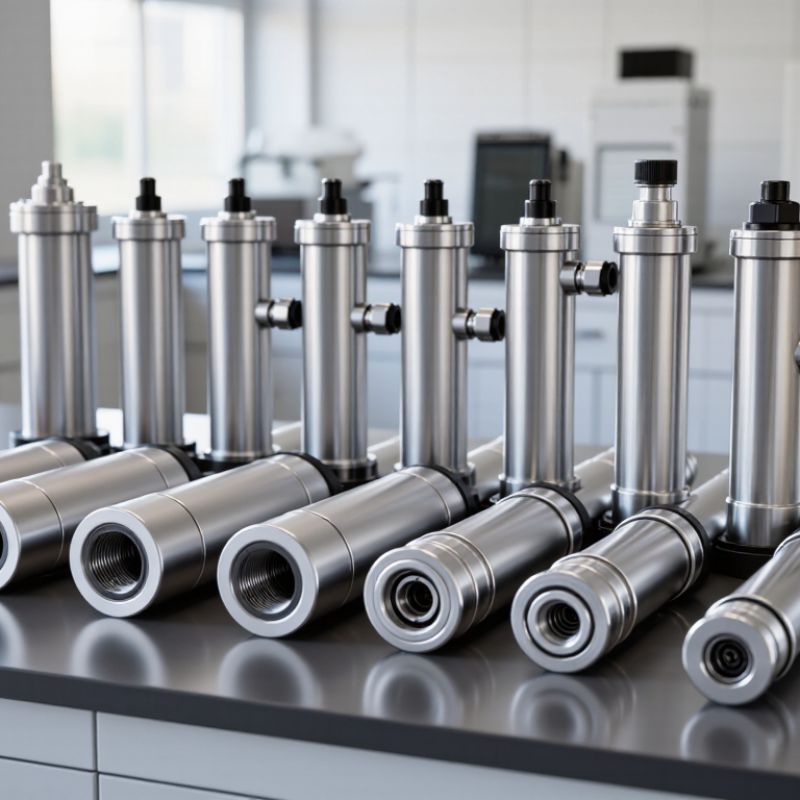
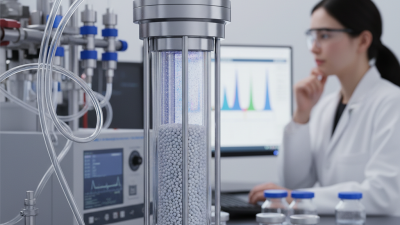
A preparative HPLC column separates useful compounds from a mixture so they can be collected, not merely measured. Inside its packed tube, a stationary phase presents a vast surface of tiny particles. A liquid mobile phase carries the sample through. Compounds interact differently with the surface, so they travel at different speeds. One fraction may emerge early; another appears later in a separate collection vessel. That physical detail matters: the column must handle enough sample without losing clear separation.
Column performance depends on packing chemistry, particle size, dimensions, flow rate, and sample loading. Overload the bed, and neighboring peaks can merge. Use a longer column, and separation may improve, but processing can take longer and pressure may rise. In practice, teams often balance purity, recovery, throughput, and solvent use. There is no effortless setting.
MarketsandMarkets’ 2023 Chromatography Instruments Market report valued the global market at US$9.3 billion in 2023 and projected US$12.2 billion by 2028. This broad market figure signals sustained investment in separation technology, but it does not measure preparative-column performance specifically. That distinction is worth keeping in view. A column that works well at analytical scale may not scale directly; pilot testing and careful loading studies remain important.
A preparative HPLC column should be compared against the separation task, not just a specification sheet. Start with stationary-phase chemistry, since selectivity determines whether closely related compounds separate. Chemistry comes first. Two columns with similar dimensions can produce different peak spacing because their surface interactions differ. Check the sample’s solubility and the mobile phases you expect to use. Small differences matter.
Compare column length, internal diameter, particle size, and pore size together. A wider column may handle more sample, but it also requires more solvent. Smaller particles can improve efficiency, while increasing backpressure. Check that the instrument can operate within the column’s pressure limits. Capacity matters. Overloading may broaden peaks or reduce resolution, even when a small test injection looks clean.
Look for documented loading guidance, batch consistency, and recommended cleaning conditions. If possible, test a representative sample at increasing loads and record recovery, peak shape, and run time. A spreadsheet helps, but it can create false confidence when conditions differ between labs. Scale-up deserves a real trial. A column that performs well analytically may behave differently at preparative loads, so leave room for method adjustment.
Ten Preparative HPLC Columns for Global Buyers
Useful starting points include ten chemistries: silica normal-phase, C18, C8, phenyl-hexyl, cyano, HILIC, ion-exchange, size-exclusion, chiral, and polymeric reversed-phase. These are not interchangeable. MarketsandMarkets’ 2023 HPLC market report estimated the global market at USD 4.5 billion and projected USD 6.4 billion by 2028. That figure covers HPLC broadly, not preparative columns alone, but signals sustained investment in separation workflows. Fit matters.
For bulk purification, compare particle size, pore size, bed dimensions, pressure limits, and packing stability against the sample and instrument. A 10-millimeter analytical column cannot simply be scaled by widening it; flow distribution and loading behavior change. Test sample solubility and loading with a small-scale method before committing valuable material. One uncomfortable caveat: catalog capacity is not a guarantee. Measure actual recovery and purity under your gradient, then check how the bed performs across repeated runs. Also compare solvent compatibility, cleaning requirements, and local technical support. Procurement teams sometimes overlook these details. They matter at scale.
| No. | Column Type | Typical Stationary Phase | Separation Mode | Typical Preparative Dimensions | Common Particle Size | Operating Considerations | Typical Applications |
|---|---|---|---|---|---|---|---|
| 1 | C18 (ODS) | Octadecyl-bonded silica | Reversed-phase | About 10–50 mm I.D. × 100–250 mm | 5–20 µm | Silica-based phases are commonly used around pH 2–8; check the specific packing’s limits. | Small molecules with moderate to high hydrophobicity; widely used for general-purpose purification. |
| 2 | C8 | Octyl-bonded silica | Reversed-phase | About 10–50 mm I.D. × 100–250 mm | 5–20 µm | Typically used within the pH limits specified for the silica-based packing, often about pH 2–8. | Compounds that are strongly retained on C18 or require a less hydrophobic reversed-phase surface. |
| 3 | Phenyl | Phenyl- or phenyl-alkyl-bonded silica | Reversed-phase with aromatic selectivity | About 10–50 mm I.D. × 100–250 mm | 5–20 µm | Silica-based versions commonly operate around pH 2–8; allowable conditions vary by phase. | Aromatic compounds and samples needing selectivity different from alkyl-bonded phases. |
| 4 | Amide HILIC | Amide-functionalized polar silica | Hydrophilic interaction chromatography (HILIC) | About 10–50 mm I.D. × 100–250 mm | 5–20 µm | Uses a high-organic mobile phase; buffer and water content can strongly affect retention. Check phase-specific pH limits. | Polar compounds that show weak retention in conventional reversed-phase methods. |
| 5 | Bare Silica | Unmodified porous silica | Normal-phase adsorption | About 10–50 mm I.D. × 100–250 mm | 5–20 µm | Usually run with nonpolar-to-polar organic solvent systems; moisture can alter selectivity. | Isomers, lipids, and other compounds suited to normal-phase solvent systems. |
| 6 | Cyano (CN) | Cyano-propyl-bonded silica | Normal-phase or reversed-phase | About 10–50 mm I.D. × 100–250 mm | 5–20 µm | Can be used with different solvent modes; silica-based pH limits are commonly around pH 2–8. | Alternative selectivity for polar or moderately polar analytes and method development. |
| 7 | Amino (NH₂) | Aminopropyl-bonded silica | Normal-phase, HILIC, or weak anion-exchange behavior | About 10–50 mm I.D. × 100–250 mm | 5–20 µm | Selectivity depends on solvent and pH; follow the packing’s limits and avoid unvalidated conditions that may affect bonded phases. | Sugars, polar compounds, and analytes that benefit from amino-phase interactions. |
| 8 | Ion-Exchange | Strong or weak cation- or anion-exchange groups on a porous support | Ion exchange | About 10–50 mm I.D. × 100–250 mm | 5–20 µm | Usable pH range depends on the support and ligand; polymeric supports may tolerate broader pH ranges than silica. | Charged molecules, peptides, proteins, and other ionic analytes. |
| 9 | Size-Exclusion (SEC) | Porous silica or polymer with a defined pore-size distribution | Size exclusion | About 10–50 mm I.D. × 150–300 mm | 5–20 µm | Choose pore size for the target molecular-size range; compatible solvents and pH depend on the support. | Polymer and biomolecule fractionation by hydrodynamic size, with minimal reliance on chemical binding. |
| 10 | Chiral | Chiral selector immobilized or coated on a porous support | Chiral chromatography | About 10–30 mm I.D. × 100–250 mm | 5–20 µm | Solvent compatibility, pH limits, and loading capacity are selector-specific; screen conditions before scale-up. | Resolution and preparative purification of enantiomers. |
Dimensions and particle sizes are indicative ranges commonly encountered in preparative HPLC, not specifications for every column. Actual pressure limits, pH stability, loading capacity, and solvent compatibility depend on the specific packing and column hardware.
Preparative HPLC performance depends on matching column chemistry and dimensions to the sample. A C18 phase often retains nonpolar compounds, while phenyl phases can offer different selectivity for aromatic molecules. Polar phases may suit more hydrophilic compounds. These are useful starting points, not guarantees; solvent composition and sample conditions can change retention noticeably. Small choices matter.
Column dimensions shape both separation and throughput. A wider internal diameter can accept more sample and support higher flow, but it also consumes more solvent. Longer columns may improve resolution, though they usually take more time and pressure. Smaller particles can sharpen peaks, provided the instrument can handle the added backpressure. For larger molecules, pore size deserves attention because restricted access can reduce useful separation. In practice, screening a few chemistries at analytical scale can help guide preparative selection. Then increase loading carefully and watch for broadened peaks or shifting retention. One detail is easy to overlook: sample solubility in the starting mobile phase. A poorly dissolved injection can distort results before the column has a fair chance. Decisions still involve trade-offs, and a neat specification sheet cannot replace testing the actual sample.
A preparative HPLC column should be selected around the separation, not a generic ranking. Define the sample’s chemistry, target purity, and expected batch size before comparing options. For a crude mixture, test a small sample on a suitable stationary phase and inspect peak shape, retention, and recovery. Particle size and column dimensions affect resolution, flow rate, and backpressure. Check that the system can handle the pressure. Small details matter.
When sourcing, request clear specifications for packing material, particle size, pore size, dimensions, and pressure limits. Ask for a certificate of analysis and information about batch-to-batch consistency. Confirm recommended loading conditions, cleaning procedures, and availability of replacement columns. Test before scaling. A supplier’s technical response can be as useful as its price: ask how the proposed column fits your sample and operating conditions. Compare total costs, including shipping, lead time, and any method redevelopment. Teams can overfocus on price; I would treat that as a risk, not a rule. A short evaluation run can expose poor recovery or unstable pressure before a larger purchase. Keep the results, even when they are inconclusive.
Use column internal diameter as a starting point when scaling flow. The estimates below are calculated for a superficial linear velocity of 1 mm/s using Q = π(d/2)² × 0.06, where diameter is in millimeters and flow is in mL/min. Actual operating flow depends on particle size, column length, mobile phase, pressure limits, and the application.