skip to content

China Best Dynamic Axial Compression Column Supplier

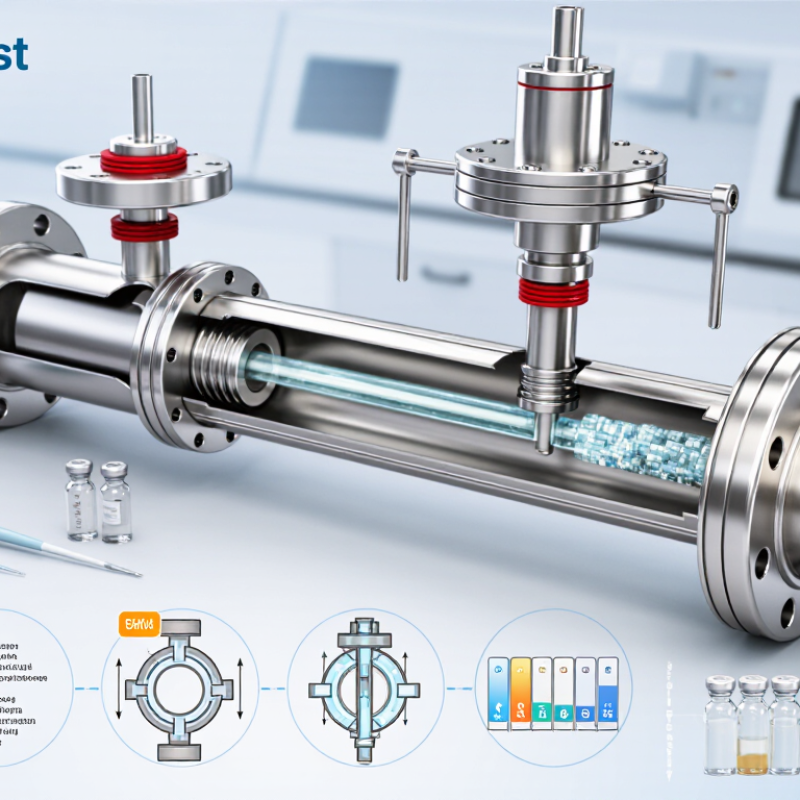
China has become a significant manufacturing base for laboratory and industrial chromatography equipment. In this market, a Dynamic Axial Compression Column supports stable bed packing, controlled compression, and repeatable separation performance. These details matter when laboratories handle valuable samples or demanding purification cycles.

Grand View Research identifies chromatography as a growing analytical and bioprocessing market, supported by pharmaceutical research, food testing, and environmental analysis. MarketsandMarkets also reports continuing demand for preparative chromatography in biomanufacturing. These reports suggest strong equipment potential, but market growth alone does not prove supplier quality. Buyers should examine evidence.

A reliable China supplier should provide pressure ratings, column volume ranges, wetted-material specifications, and documented compatibility with common packing media. Look closely at seals, piston movement, flow distribution, and cleaning access. A small seal defect can create channeling. That problem may appear only after repeated compression cycles.

Good suppliers connect design claims with practical testing. They may provide factory inspection records, packing demonstrations, dimensional drawings, and batch traceability. Compliance with relevant ASTM, ISO, or validated internal procedures can strengthen confidence, although certification names should never replace test evidence. This is where many product pages remain too vague.

Choose carefully.

An experienced manufacturer should discuss your resin, operating pressure, sample viscosity, and cleaning method before recommending a model. The best China Dynamic Axial Compression Column supplier is not simply the lowest-cost option. It is the partner that delivers stable mechanics, clear documentation, responsive engineering support, and consistent performance after installation. Supplier evaluation still requires judgment. No report can replace a controlled trial with your actual process.

China Best Dynamic Axial Compression Column Supplier

What Is a Dynamic Axial Compression Column?

A dynamic axial compression column is a test machine or structural assembly designed to study rapid compressive loading. Unlike a slow compression test, it applies force over a short time. This can imitate impacts, sudden equipment loads, or fast structural movement. The column records force, displacement, acceleration, and deformation during the event. That difference matters.

A typical system includes a rigid frame, a hydraulic or electromechanical actuator, load sensors, displacement measurement, and high-speed data acquisition. Engineers place a specimen between the loading plates and check its alignment carefully. Even a small offset can create bending and distort the results. The test speed must also remain consistent. Otherwise, comparisons between specimens become unreliable.

In practical testing, technicians inspect bolts, guides, cables, and sensor connections before each run. They also verify calibration and protect the measurement area from loose fragments. Dynamic behavior may reveal buckling, cracking, permanent deformation, or energy absorption that static tests cannot show. Real setups are never perfectly ideal. Temperature, friction, and imperfect alignment can influence the data. A reliable supplier should provide clear specifications, repeatable control, safety features, and usable test records. More sensors do not automatically mean better results. The measurement plan must match the engineering question.

How Dynamic Axial Compression Columns Work

China Best Dynamic Axial Compression Column Supplier

How Dynamic Axial Compression Columns Work

A dynamic axial compression column applies controlled vertical force to a test specimen. An actuator moves through programmed loading cycles. The column transfers force along the specimen’s central axis. This arrangement helps engineers study strength, stiffness, buckling, and energy absorption.

Load cells measure force continuously. Displacement sensors record shortening and lateral movement. A control system compares measured data with the target waveform. It then adjusts actuator speed and pressure within milliseconds. This feedback loop keeps the test responsive during sudden deformation. Even small alignment errors can change the result.

In practical testing, technicians inspect connections before loading. They also check sensor calibration and specimen seating. A steel sample may shorten visibly, while a concrete column can crack without warning. The machine must capture both events accurately. Test speed matters greatly. Slow loading reveals stiffness, while rapid cycles expose rate-dependent behavior.

The ideal force curve rarely appears.

Friction, temperature, and uneven surfaces can interfere. Experienced operators repeat questionable tests instead of hiding unusual data. That approach protects reliability. It also improves future test plans. A capable supplier should provide suitable capacity, control accuracy, safety protection, and technical guidance. Buyers should examine actual test requirements, not rely on impressive specifications alone. Calibration records and service response deserve equal attention.

Key Design and Performance Specifications

China Best Dynamic Axial Compression Column Supplier

Key design starts with the specimen, not the catalogue. A suitable system should match column height, cross-section, expected buckling mode, and target load rate. For reinforced concrete or steel columns, verify load capacity, actuator stroke, frame clearance, lateral restraint, and platen stiffness. A practical machine should also record force, displacement, strain, and video signals with synchronized sampling. ASTM E4 and ISO 7500-1 provide useful guidance for force verification, although dynamic testing needs additional calibration.

The scale of production makes reliable testing important. The World Steel Association’s 2024 World Steel in Figures reports about 1.89 billion tonnes of crude steel production in 2023. That volume increases the need for repeatable column performance data. Specify a closed-loop hydraulic actuator, high-resolution displacement sensors, and overload protection. Check alignment carefully; even a small eccentricity can distort buckling results. A higher loading speed is not automatically better. It may create hydraulic lag, vibration, or unrealistic failure behavior. This detail is often underestimated.

Tips: Ask for calibration records, control-frequency data, and an alignment test before purchase. Request raw data from a comparable column test, not only polished charts. Confirm whether the supplier measures actuator force or specimen force. I would also leave room for improvement; a perfectly rigid frame may still produce imperfect results when fixtures or sensors are poorly installed.

China Best Dynamic Axial Compression Column Supplier - Key Design and Performance Specifications

The chart presents calculated elastic Euler buckling loads for representative circular hollow steel columns at different effective lengths. Values are based on E = 200 GPa, pinned-pinned end conditions, and an effective length factor K = 1.00. Actual dynamic working loads should include safety factors, imperfections, end restraints, loading rate, and fatigue requirements.

As effective length increases, elastic buckling resistance decreases approximately with the inverse square of length. Larger section diameter and wall thickness provide higher axial stability, making these parameters important when specifying a dynamic axial compression column.

How to Evaluate China-Based Suppliers

China Best Dynamic Axial Compression Column Supplier

How to Evaluate China-Based Suppliers

Evaluating a China-based supplier starts with technical evidence, not a polished website. Request drawings showing column dimensions, maximum axial load, dynamic frequency, stroke, and control accuracy. Ask how the frame handles vibration during repeated compression cycles. A rigid column should not visibly sway under test conditions. Check the steel grade, weld inspection records, hydraulic or servo system details, and emergency protection design. Small omissions can become expensive problems.

Ask for calibration certificates from qualified laboratories and recent factory acceptance test results. The supplier should explain its measurement method clearly. During a video inspection, request a live demonstration with a reference specimen, load cell, displacement sensor, and data acquisition screen. Compare the displayed curve with the exported test file. Inconsistent data deserves attention. Technical answers should come from engineers, not only sales staff.

I once underestimated after-sales support because the equipment specifications looked complete. That was a mistake. Confirm installation guidance, spare-parts availability, response time, software updates, and operator training in writing. Visit the production site when possible. Inspect machining quality, cable routing, seals, and protective covers. A low quotation may hide weak documentation or limited commissioning support. A supplier may also make small errors; what matters is whether it acknowledges them, explains the cause, and corrects them with verifiable records.

China Best Dynamic Axial Compression Column Supplier - How to Evaluate China-Based Suppliers

Evaluation Dimension Recommended Reference Data What to Verify Weight Evaluation Result
Load Capacity and Stability Select a rated capacity that provides at least 20% reserve above the maximum test load. Common laboratory configurations cover approximately 100–1,000 kN. Rated load, overload protection, frame deformation data, calibration certificate, and a witnessed full-load test. 18% Pass / Review / Fail
Dynamic Control Performance The supplier should state controllable displacement, force, frequency, waveform, and cycle-count ranges for the intended test method. Closed-loop control architecture, response-time data, waveform accuracy, frequency stability, and performance under representative loads. 16% Pass / Review / Fail
Measurement Accuracy A practical procurement target is force and displacement measurement accuracy of approximately ±1% of full scale or better, subject to the applicable test standard. Sensor specifications, traceable calibration records, uncertainty statement, linearity, repeatability, and zero-drift results. 14% Pass / Review / Fail
Data Acquisition and Software The system should record force, displacement, time, frequency, cycle count, and test status with exportable CSV or equivalent open-format files. Sampling rate, synchronization between channels, raw-data access, audit trail, automatic reports, and software update policy. 12% Pass / Review / Fail
Applicable Standards The supplier must identify the exact test standard and edition used for design, calibration, safety, and acceptance testing. ASTM, ISO, EN, or applicable Chinese GB/T requirements may apply depending on the specimen and test purpose. Standards compliance matrix, clause-by-clause response, test procedure, factory acceptance criteria, and customer approval of deviations. 10% Pass / Review / Fail
Structural and Mechanical Design The column, platens, guides, fixtures, and foundation interface must be sized for the specified load, stroke, frequency, and specimen geometry without unsafe instability. Engineering drawings, material certificates for critical parts, finite-element analysis where applicable, alignment tolerance, and fixture interchangeability. 10% Pass / Review / Fail
Safety and Compliance A complete system should include guarding, emergency stop, travel limits, overload protection, electrical protection, and safe shutdown behavior. Risk assessment, electrical schematic, safety circuit test, emergency-stop response, interlock verification, and user safety documentation. 8% Pass / Review / Fail
Quality Management and Traceability A documented quality system aligned with ISO 9001 or an equivalent quality-management framework is a useful baseline for custom test equipment. Certificate validity, issuing body, production inspection records, serial-number traceability, nonconformance process, and final inspection checklist. 6% Pass / Review / Fail
Factory Acceptance and Testing Acceptance testing should use a written protocol covering empty-load, static-load, dynamic-load, repeatability, emergency-stop, and data-recording checks. FAT procedure, test instruments and their calibration status, sample data files, punch-list process, and customer sign-off requirements. 3% Pass / Review / Fail
After-Sales Support and Spare Parts Prefer documented remote support, training, maintenance instructions, recommended spare-parts lists, and a defined response process for critical failures. Warranty terms, support hours, response time, spare-parts availability, training scope, service records, and escalation contacts. 3% Pass / Review / Fail
Total Evaluation Weight 100% Use documented evidence for final scoring
Scoring guidance: Award full points only when the requirement is supported by drawings, certificates, test records, or a witnessed demonstration. Reference ranges are procurement benchmarks and should be adjusted to the required specimen type, load level, frequency, stroke, and applicable test standard.

Manufacturing, Testing, and Quality Assurance

China Best Dynamic Axial Compression Column Supplier

Manufacturing a dynamic axial compression column requires controlled steel forming, precise welding, and verified dimensional accuracy. Engineers inspect plate thickness, column straightness, weld penetration, and actuator mounting surfaces. Each component receives an identification record. This supports traceability from raw material to final inspection. Machined interfaces must remain clean and aligned. Small offsets can distort test results.

Testing uses calibrated load cells, displacement transducers, and a servo-hydraulic system. Technicians apply repeated axial loads at defined frequencies and amplitudes. They monitor force, displacement, vibration, and temperature during every cycle. Before testing, the team checks sensor zero values and connection stability. After testing, measured data is compared with the approved test procedure. A result may look convincing while hiding an alignment problem. That risk deserves more attention than it usually receives.

Tips: Request calibration certificates, material records, weld inspection reports, and complete test curves. Confirm the supplier can explain its acceptance limits clearly. Ask how unexpected noise, drift, or fixture movement is handled. Quality assurance should include visual checks, dimensional inspection, functional testing, and documented corrective actions. No process is flawless. A responsible supplier records deviations instead of quietly ignoring them. Independent review can also strengthen confidence, especially for demanding laboratory or structural applications.