Top 5 Water Disinfection Tips for Global Buyers
Water Disinfection is a crucial aspect of ensuring safe drinking water for communities worldwide. With growing concerns over waterborne diseases, buyers are increasingly seeking effective solutions to enhance water safety. Understanding the best practices for water disinfection can empower individuals and organizations to make informed choices.
In this guide, we will explore the top five tips for successful water disinfection. We aim to provide practical insights backed by expert knowledge in the field. Water disinfection methods vary, and it’s essential to recognize the strengths and limitations of each. This knowledge can help buyers navigate their options and select the most appropriate methods for their specific needs.
While many solutions exist, not every method is perfect. Each carries potential challenges and requires careful consideration. Regular evaluation and adaptation are necessary to maintain effective disinfection protocols. Ultimately, understanding water disinfection is vital for safeguarding public health and promoting a cleaner environment.
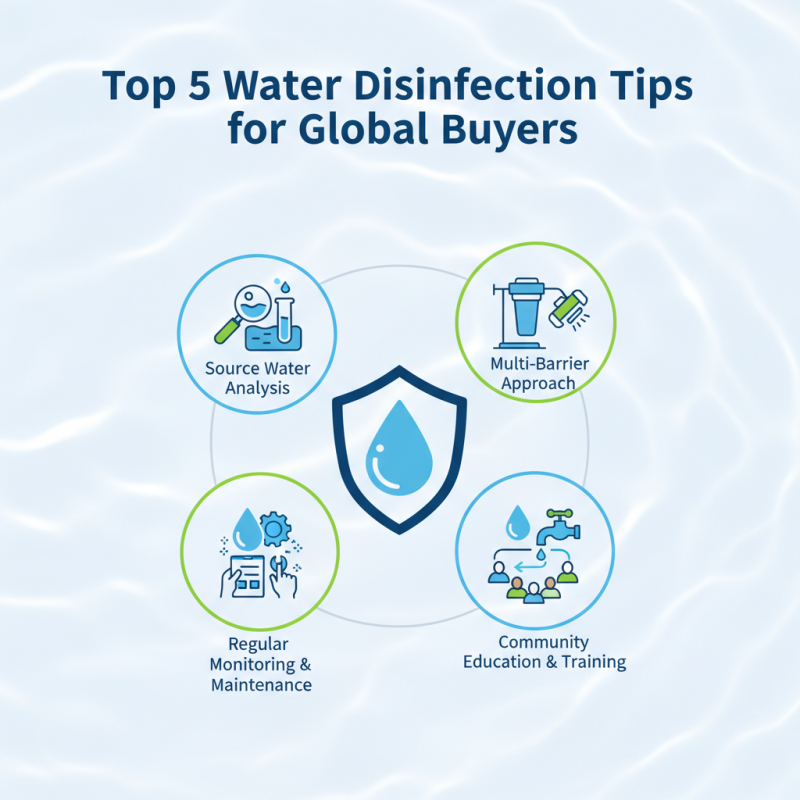
Top Five Methods for Effective Water Disinfection Integrating Global Standards
Ensuring clean water is crucial for health. There are various methods for water disinfection that align with global standards. These methods not only provide safety but also account for different local contexts.
Chemical disinfection remains popular worldwide. Chlorine is a common choice, effective against many pathogens. However, it can leave harmful byproducts. Care must be taken to balance safety and efficacy. UV treatment is another method, using light to kill microbes. It's chemical-free and effective but may not eliminate all contaminants.
Filtration techniques are essential, especially in areas with heavy sediment. They can improve water clarity and reduce microbial loads. Solar water disinfection uses sunlight to purify water, an inexpensive method ideal for rural settings. Despite their potentials, each method has limitations. Continuous research and community input are vital to refine these processes. The goal is to find solutions that fit the diverse global landscape.
Understanding the Role of Chlorine in Water Treatment and Its Impacts
Chlorine plays a vital role in water treatment. It effectively kills bacteria and viruses, ensuring safe drinking water. Many municipalities use chlorine because it is cost-efficient and reliable. However, over-reliance on chlorine can lead to some issues. For instance, chlorine can react with organic materials in water, creating disinfection byproducts that might be harmful.
Understanding the science behind chlorine is essential. While it is effective, chlorine’s smell and taste can deter some people from drinking tap water. There’s a need for balance in its use. Alternative disinfection methods such as UV light are gaining attention but may not be a perfect substitute.
Users should regularly test their water quality, especially if relying on chlorine. It is important to ensure the levels are safe for consumption. Regular feedback from consumers can also highlight areas for improvement in the disinfection process. Ultimately, learners in the field should explore various methods to enhance water safety while being aware of their potential downsides.
Emerging Technologies: UV Radiation and Its Efficacy in Disinfection
UV radiation has emerged as a powerful method for water disinfection, especially in recent years. Reports indicate that UV systems can effectively inactivate up to 99.99% of bacteria, viruses, and protozoa in water. This technology uses short wavelengths to disrupt the DNA of microorganisms, preventing their reproduction. As global buyers consider disinfection methods, UV radiation stands out due to its efficiency and reliability.
When implementing UV disinfection, proper water quality assessment is crucial. Factors like turbidity and organic matter can affect UV efficacy. Aim for water clarity to maximize the disinfection process. Regular maintenance of UV systems is essential, as lamp intensity diminishes over time. This ensures that water remains safe and free from harmful pathogens.
Monitoring water quality consistently is vital. Consider using additional testing methods alongside UV systems. This can help identify potential contaminants that UV may not address. As emerging technologies improve, further research on UV disinfection is necessary. Aim to stay informed about innovations in this field, which can enhance water safety globally.
Evaluating Ozonation: Benefits and Limitations for Large Scale Use
Ozonation is an effective method for water disinfection. It utilizes ozone gas to eliminate pathogens and contaminants. This process is especially beneficial for large-scale water treatment facilities. The high oxidation potential of ozone makes it powerful against bacteria and viruses. However, it also has limitations that need consideration.
One significant advantage of ozonation is its ability to reduce chemical usage. Unlike chlorination, it doesn’t leave harmful residues. This can improve water quality and safety. Additionally, ozone treatment can break down organic materials effectively. The result is cleaner, purer water. However, the handling of ozone requires caution. It is a strong oxidant and can be hazardous in high concentrations.
Large-scale applications also face challenges. Generating ozone is energy-intensive. The cost of equipment and maintenance can be high. These factors must be weighed against the benefits. While ozonation presents significant advantages, operators should evaluate its feasibility. Balancing effectiveness with safety and cost is crucial for optimal water treatment solutions.
Top 5 Water Disinfection Tips for Global Buyers - Evaluating Ozonation: Benefits and Limitations for Large Scale Use
| Criteria | Description | Benefits | Limitations |
| Effectiveness | Ozone is effective against a wide range of pathogens. | Rapid disinfection; strong oxidizing agent. | Less effective in the presence of organic material. |
| Operational Cost | Costs associated with ozone generation and system maintenance. | Lower long-term costs compared to chlorine. | Higher initial setup costs. |
| Regulatory Compliance | Must adhere to specific water quality standards. | Emerging technology; gaining regulatory acceptance. | Strict regulations on ozone levels in drinking water. |
| Environmental Impact | Consideration of the by-products generated during use. | No harmful residuals if used correctly. | Potential formation of harmful by-products. |
| Technical Expertise | Requires skilled personnel for proper operation. | Offers advanced technology for effective disinfection. | May require ongoing training and education. |
Best Practices for Ensuring Safe Drinking Water Supply in Rural Areas
Access to safe drinking water remains a challenge in many rural areas. Implementing effective water disinfection methods is essential for health and wellbeing. Local authorities must prioritize education on safe practices. Awareness programs can guide communities on how to use basic techniques like boiling and filtration. These are simple but effective methods for disinfection.
Organizing regular workshops can support skill development. Involving the community fosters a sense of ownership. Encouraging the use of solar disinfection (SODIS) is another viable option. This method utilizes sunlight to purify water. People should be advised to use clear, flat containers. This method is low-cost and accessible to many.
Regular assessments of water sources are necessary. However, communities often overlook this step. Engaging trained volunteers can help in this regard. They can identify risks and provide tailored solutions. Collaboration between local leaders and health experts enhances the impact of these efforts. Adapting to specific local needs is crucial for success.
Top 5 Water Disinfection Methods and Their Effectiveness
This chart illustrates the effectiveness of various water disinfection methods commonly used in rural areas. Boiling water is the most effective method at 100%, while UV disinfection is slightly lower at 99%. Other methods like chlorination and ozonation also show high effectiveness, making them valuable options for ensuring safe drinking water supply.
