skip to content

What Is a Water Cooled Condenser?

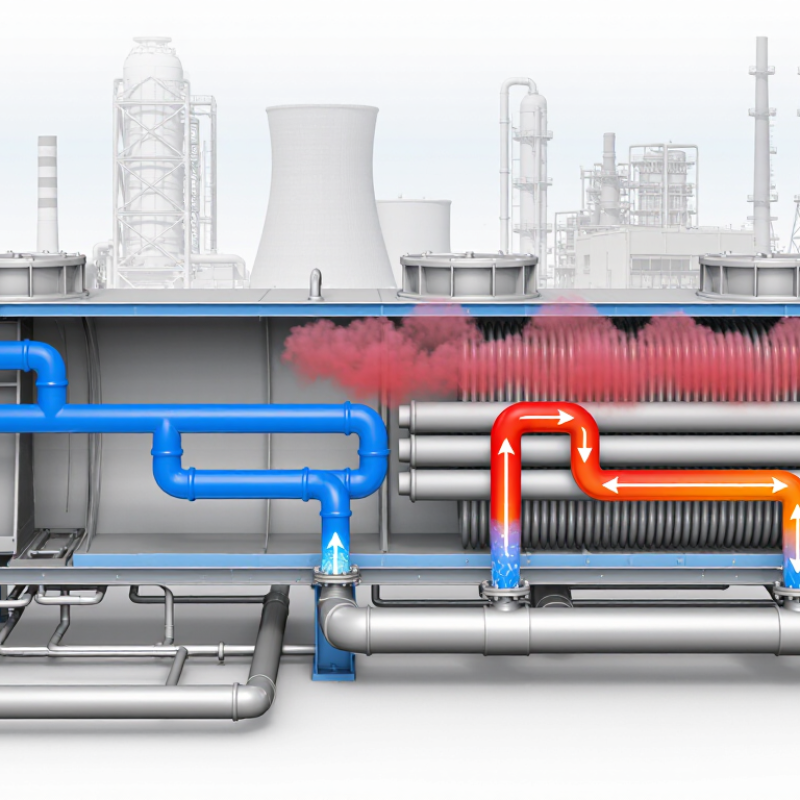
What Is a Water Cooled Condenser? The answer begins with heat transfer. A Water Cooled Condenser removes heat from refrigerant vapor and transfers it into circulating water. The refrigerant enters hot and pressurized. Inside the condenser, it meets a cooler surface. Heat moves through the metal tubes. The vapor then changes into a high-pressure liquid.

It sounds simple. The engineering is not. Industrial refrigeration specialist Andy Pearson offers a practical reminder: “Heat has to go somewhere.” This principle explains the condenser’s purpose clearly. Cooling does not destroy heat. It moves heat from one place to another. In a water-cooled system, a cooling tower, dry cooler, or water circuit usually receives that rejected energy.

A well-designed Water Cooled Condenser can provide stable performance in demanding facilities. It may serve a chiller, cold-storage plant, process system, or commercial building. Water often carries heat more effectively than air, allowing compact equipment and controlled operating conditions. However, water quality matters. Scale can coat tube surfaces. Corrosion can weaken them. Poor flow can reduce capacity and increase compressor pressure.

Real-world inspection is essential. Technicians check approach temperature, water flow, pressure readings, and tube cleanliness. Small changes can reveal larger faults. Still, no condenser performs perfectly under every condition. Design assumptions may fail during unusually hot weather or maintenance problems. That is why engineers should review operating records, manufacturer data, and site conditions together. A reliable explanation must include both the benefits and the limitations of this important heat-rejection device.
What Is a Water Cooled Condenser?

What Is a Water-Cooled Condenser?

What Is a Water-Cooled Condenser?

A water-cooled condenser removes heat from refrigerant by transferring it into circulating water. The refrigerant enters as a hot, high-pressure vapor and leaves as a liquid. Inside a shell-and-tube or plate heat exchanger, metal surfaces separate the two fluids. Heat moves through these surfaces while the water carries it away.

In practical service work, technicians check water temperature, flow rate, pressure, and refrigerant readings together. A small change in entering water temperature can affect condensing pressure and system efficiency. Cooling towers often reject this heat outdoors, while pumps maintain steady circulation. The arrangement is compact and usually quieter than air-cooled equipment. It also needs a dependable water supply.

Water quality deserves close attention. Scale can form inside tubes, especially when minerals concentrate through evaporation. Dirt and biological growth can reduce flow across the heat-transfer surface. The condenser may still look normal from outside. That can be misleading. Regular inspection, filtration, controlled water treatment, and careful tube cleaning help protect performance. However, excessive cleaning can damage tubes or coatings, so technicians should follow measured procedures rather than guess.

A useful field check compares the refrigerant condensing temperature with the leaving-water temperature. This difference, often called the approach temperature, can reveal fouling or poor water flow. Yet readings can mislead when sensors drift or valves remain partly closed. Accurate instruments matter. So does recording trends over time. A single reading rarely explains the whole condition.

What Is a Water-Cooled Condenser?

A water-cooled condenser removes heat from a refrigerant by transferring it to circulating water. The chart shows the calculated heat-rejection capacity at different water flow rates when the water temperature rises by 5°C.

Calculation basis: Heat rejection = water mass flow × specific heat capacity × temperature rise. The calculation uses water density of approximately 1 kg/L and a specific heat capacity of 4.186 kJ/kg·K.

How a Water-Cooled Condenser Works

What Is a Water Cooled Condenser?

How a Water-Cooled Condenser Works

A water-cooled condenser transfers refrigerant heat into a separate water circuit. Hot, high-pressure refrigerant enters the condenser shell. Cooling water flows through tubes inside it. Heat moves through the tube walls, while the refrigerant changes from vapor into liquid. The liquid then travels toward the expansion device. The loop is simple. Control is not.

In practical commissioning, technicians compare entering and leaving water temperatures, refrigerant pressure, and condenser approach temperature. A rising approach often signals scaled tubes, weak water flow, or poor heat rejection. The cooling tower then releases collected heat into outdoor air through evaporation. This arrangement can maintain lower condensing temperatures than many air-cooled systems, especially during hot weather. However, it needs pumps, water treatment, and regular tube cleaning. Water savings and energy savings can conflict.

The International Energy Agency’s The Future of Cooling report states that cooling equipment and electric fans use about 20% of building electricity worldwide. That figure explains why condenser performance matters. ASHRAE’s HVAC Systems and Equipment guidance also emphasizes water quality, flow control, and heat-transfer maintenance. A clean condenser can reduce compressor workload, but the exact benefit depends on climate and system design. That assumption is not always safe. Poor tower operation may erase the expected efficiency gain. Managers should verify results with measured kW, flow, pressure, and temperature data, rather than relying only on rated efficiency.

Key Components of a Water-Cooled Condenser

What Is a Water-Cooled Condenser?

Key Components of a Water-Cooled Condenser

A water-cooled condenser transfers refrigerant heat into circulating water. Most units use a shell-and-tube heat exchanger. Hot refrigerant vapor enters the shell and condenses around copper or steel tubes. Cooling water flows inside these tubes. Tube sheets keep both fluids separated. The water box distributes flow evenly through the tube bundle. Refrigerant connections, water nozzles, gaskets, and pressure controls complete the assembly. Small leaks can create large efficiency problems.

A connected cooling-water system usually includes pumps, strainers, valves, sensors, and a cooling tower. The International Energy Agency reports that space-cooling electricity demand could more than triple by 2050 without stronger efficiency measures. The U.S. Department of Energy also notes a practical rule: evaporation removes roughly 1% of circulating tower water for each 10°F of cooling range. Water quality therefore matters. Scale, corrosion, and trapped air can raise condensing pressure. Commissioning checks often reveal this. A clean exterior does not prove good heat transfer.

Tips: Record entering and leaving water temperatures, pressure drop, and approach temperature. Inspect strainers regularly. Clean tubes according to measured fouling, not habit. Trend readings over time. Even experienced teams can miss gradual performance loss.

Common Types of Water-Cooled Condensers

What Is a Water Cooled Condenser?

A water-cooled condenser removes heat from refrigerant by transferring it into a flowing water circuit. The refrigerant changes from vapor into liquid inside the condenser. This process supports stable cooling performance, especially where outdoor air temperatures are high.

Common Types of Water-Cooled Condensers

Shell-and-tube condensers are widely used in commercial and industrial systems. Refrigerant usually surrounds tubes, while cooling water flows through them. Their strong construction suits larger heat loads and regular service access.

Plate condensers use thin, corrugated plates to create efficient heat transfer paths. They are compact and often respond quickly to changing loads. However, narrow passages can collect scale when water treatment is poor.

Double-pipe condensers use one tube inside another. They fit smaller systems, but their capacity is more limited. No type wins every application.

Tips: Check water quality, flow rate, pressure, and leaving-water temperature during operation. Inspect tubes or plates for scale and corrosion. A condenser can appear clean outside while losing efficiency internally. In my experience, maintenance records reveal problems earlier than comfort complaints. Selection also deserves a second look. A compact design may save space, yet cleaning access can become frustrating. The best choice depends on load, water conditions, service habits, and available space.

Benefits, Limitations, and Maintenance Requirements

What Is a Water Cooled Condenser?

Benefits, Limitations, and Maintenance Requirements

A water cooled condenser removes refrigerant heat through circulating water. The water carries heat away from condenser tubes. Compared with air cooled equipment, it can operate more steadily during hot weather. It also needs less installation space and often produces less outdoor noise. In large buildings, stable condensing temperatures may improve cooling efficiency. That advantage matters when equipment runs for long hours.

However, water is not free. These systems require pumps, piping, and a reliable heat rejection system. Minerals can form scale inside the tubes. Corrosion and biological growth may reduce heat transfer. Poor water treatment can increase energy use and shorten equipment life. A hidden limitation is water consumption. The choice is not automatically better. Local climate, water quality, and operating costs should guide the decision.

Maintenance must be planned, not improvised. Technicians should check water flow, pressure, temperature, and unusual vibration. Tube surfaces need periodic inspection and cleaning. Water chemistry requires regular testing, especially for hardness and corrosion control. Filters, pumps, valves, and cooling tower components also need attention. Small warning signs matter. A slight temperature increase may indicate fouling before a major failure appears. Even well-designed systems can perform poorly when records are incomplete. Maintenance logs should document readings, cleaning dates, chemical tests, and replaced parts.

What Is a Water Cooled Condenser? - Benefits, Limitations, and Maintenance Requirements

Category Data Dimension Reliable Description Practical Consideration
Definition Basic Function A water-cooled condenser removes heat from a refrigerant or process fluid and transfers that heat to a circulating water stream. It is commonly used where a stable water supply and heat-rejection system are available.
Definition Typical Heat-Transfer Arrangement Common designs include shell-and-tube, brazed-plate, and plate-and-frame heat exchangers. The refrigerant and cooling water remain separated by heat-transfer surfaces. The selected design affects cleanability, pressure drop, footprint, and resistance to fouling.
Benefit Heat-Rejection Efficiency Water generally has a higher heat capacity and better heat-transfer performance than air, allowing efficient heat removal in a compact heat exchanger. Actual performance depends on water temperature, flow rate, fouling level, refrigerant conditions, and condenser design.
Benefit Compact Equipment Size For an equivalent heat-rejection duty, water-cooled equipment can require less heat-transfer surface area than many air-cooled alternatives. The overall installation may still need cooling towers, pumps, piping, water treatment, and auxiliary controls.
Benefit Stable Operating Conditions A properly controlled water loop can provide more consistent condensing conditions than systems directly exposed to changing outdoor air temperatures. Cooling-tower approach temperature, wet-bulb temperature, flow control, and water quality remain important.
Benefit Noise and Visual Impact The condenser itself usually does not require a large outdoor fan, which can help reduce local fan noise and external equipment dimensions. Pumps, cooling-tower fans, and water-flow equipment can still produce sound and vibration.
Limitation Water Consumption Open cooling-tower systems can consume water through evaporation, blowdown, and drift. Closed-loop systems reduce consumption but still require heat rejection and periodic maintenance. Water availability, discharge rules, drought conditions, and operating cost should be evaluated before selection.
Limitation Corrosion and Scaling Dissolved minerals, suspended solids, unsuitable pH, oxygen, and biological growth can cause scale, corrosion, or deposits on water-side surfaces. Water treatment, filtration, controlled blowdown, and material compatibility are essential for reliable operation.
Limitation Higher System Complexity Compared with a basic air-cooled arrangement, a water-cooled system typically needs pumps, water piping, valves, controls, and often a cooling tower or dry cooler. Installation planning should include pump head, flow balancing, freeze protection, access, drainage, and water-treatment equipment.
Limitation Freeze Risk Water trapped in exposed piping or heat exchangers can freeze during low-temperature conditions and may damage components. Use insulation, heat tracing, low-temperature controls, suitable antifreeze solutions where permitted, or complete draining procedures.
Maintenance Water-Side Inspection Inspect strainers, valves, piping, joints, insulation, and heat-exchanger surfaces for leaks, deposits, corrosion, and abnormal temperature differences. Inspection frequency should reflect water quality, operating hours, load variation, and the system manufacturer’s service instructions.
Maintenance Cleaning and Descaling Remove sediment, biological deposits, and mineral scale using mechanical or chemical cleaning methods compatible with the heat-exchanger materials. Cleaning is needed when pressure drop rises, water flow falls, or the condensing temperature increases relative to normal operation.
Maintenance Water Quality Control Monitor key parameters such as conductivity, pH, hardness, corrosion indicators, suspended solids, and microbiological activity according to the water-treatment program. Poor water chemistry can reduce capacity, increase energy use, and shorten heat-exchanger service life.
Maintenance Performance Monitoring Record entering and leaving water temperatures, refrigerant condensing pressure, water flow, pressure drop, and approach temperature. Trending these values helps identify fouling, insufficient flow, air entrainment, control faults, or refrigerant-side problems.
Maintenance Cooling-Tower Service Where a cooling tower is used, maintain the basin, fill, spray nozzles, drift eliminators, fan, gearbox or motor, water distribution system, and biological-control program. Follow applicable safety and public-health requirements, including procedures for controlling biological hazards.
Selection Best-Fit Applications Water-cooled condensers are often suitable for large commercial or industrial refrigeration, process cooling, and installations with high or relatively constant heat-rejection loads. A life-cycle comparison should include water, energy, maintenance, treatment, installation, and replacement costs.