Top 10 Trends Shaping Biopharma Manufacturing Today?
Biopharma manufacturing is experiencing transformative changes. The industry faces challenges and opportunities that shape its future. Advanced technologies and novel processes are at the forefront of this evolution.
Emerging trends are influencing how drugs are developed and produced. For instance, automation and data analytics are improving efficiency. However, there are concerns about high costs and regulatory hurdles. These challenges require careful consideration.
The demand for personalized medicine is rising. Biopharma manufacturing must adapt to meet this shift. Companies are exploring innovative solutions to stay competitive. This landscape is dynamic, requiring constant reflection and adjustment. The future of biopharma manufacturing is intriguing yet complex.
Emerging Technologies Revolutionizing Biopharma Manufacturing
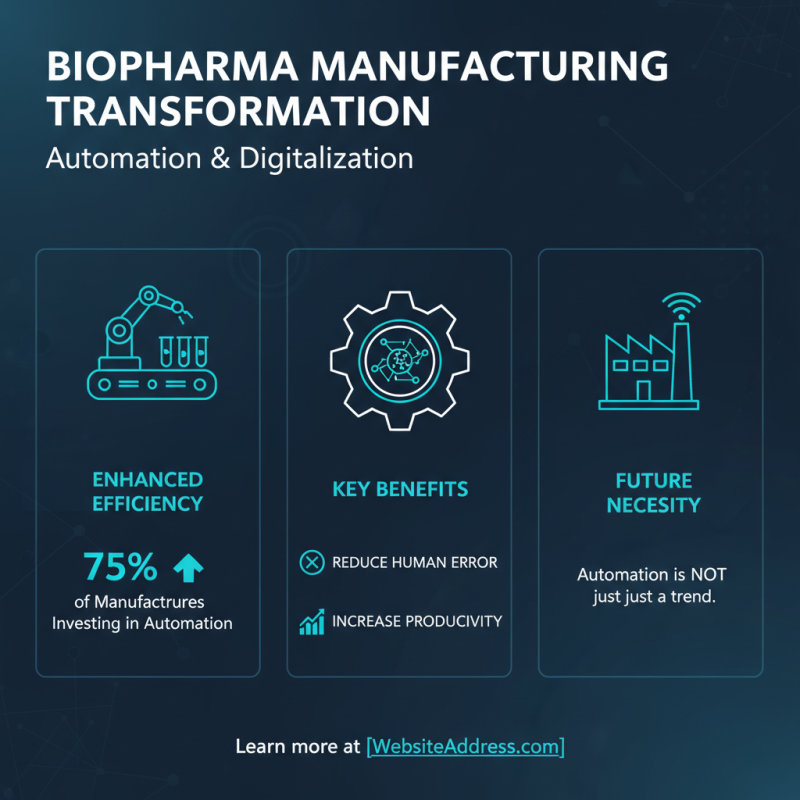
Emerging technologies are truly transforming biopharma manufacturing. Automation and digitalization are paving the way for enhanced efficiency. Recent reports indicate that up to 75% of manufacturers are investing heavily in automation technology. This is not just a trend; it is a necessity. Manufacturers are looking to reduce human error and increase productivity.
Another significant development is the adoption of AI and machine learning. These technologies assist in predictive maintenance and streamline production processes. It helps companies to make real-time decisions, leading to better resource management. According to industry forecasts, AI could save the biopharma industry up to $100 billion by 2025.
Tips: Start small with automation. Pilot projects can help you assess success before scaling. Consider data analytics tools that can provide crucial insights into process inefficiencies. And don’t forget to train your workforce. Technology is only as good as the people using it. Remember, innovation requires constant reassessment. Build a culture of adaptability to meet the evolving landscape.
The Role of Automation in Increasing Production Efficiency
In today's biopharma manufacturing landscape, automation is driving significant changes. Advanced robotic systems streamline production processes. These systems reduce the risk of human error, enhancing overall product quality. Automated solutions can operate around the clock, increasing output while lowering labor costs.
However, the integration of automation is not without challenges. Staff must adapt to new technologies. Training is essential, as unfamiliarity can lead to inefficiencies. Not every plant is ready to embrace these changes; infrastructure may require upgrades. Balancing human and machine collaboration remains crucial for optimal results.
Data analytics is another critical component of automation. Real-time monitoring provides insights into production metrics. Despite its benefits, reliance on data can create blind spots. Human judgment is still vital in complex decision-making scenarios. Embracing automation means embracing a new way of thinking, which can be daunting for many manufacturers.
Sustainability Initiatives in Biopharma Production Processes
Sustainability initiatives are reshaping biopharma production processes. Companies are increasingly focusing on reducing waste and energy consumption. They aim to create greener and more efficient manufacturing methods.
Adopting eco-friendly technologies is crucial. For instance, using renewable energy sources can minimize carbon footprints. Many biopharma facilities are now implementing solar panels and wind turbines. This shift not only benefits the environment but can also reduce operating costs.
Tips for enhancing sustainability include assessing current waste management practices. Identify areas where waste can be reduced. Engage employees in sustainability efforts. Encourage innovative ideas from your team. Small steps can lead to significant changes over time. Overall, while challenges exist, the journey toward sustainability in biopharma is essential for a healthier planet.
Personalized Medicine and Its Impact on Manufacturing Practices
Personalized medicine is transforming biopharma manufacturing. Tailoring drugs to individual patient needs requires flexibility in production. Manufacturers must adapt processes efficiently to handle varying demands. This demands innovative practices in scaling, quality control, and supply chain management.
One key aspect of personalized medicine is the increasing use of smaller batches. Large-scale production isn’t as effective anymore. Each batch must fit specific patient profiles. There are challenges, such as maintaining consistency across different formulations. Manufacturers often grapple with how to ensure quality while being agile.
Another important trend is data integration. Utilizing real-time data helps in decision-making. However, many manufacturers struggle with outdated systems. They can't keep up with the rapid advancements. Companies need to invest in technology to streamline operations. Yet, not all have the resources or understanding to do so efficiently. Adapting to these changes is crucial for staying competitive in the evolving landscape.
Top 10 Trends Shaping Biopharma Manufacturing Today
Regulatory Changes Influencing Biopharma Manufacturing Standards
The biopharma manufacturing landscape is rapidly changing, driven by evolving regulatory standards. Recent data indicates that over 75% of biopharma companies are adapting to new regulations set by various health authorities. These changes demand more transparency and efficiency in manufacturing processes. For instance, in 2022, the FDA introduced guidelines that emphasize continuous manufacturing over batch production. This approach can lead to faster drug approvals.
Adopting new technologies is vital for compliance. Many companies are integrating automation and data analytics to streamline operations. Tips for success include investing in training for staff to handle advanced machinery. Additionally, consider engaging with regulatory bodies to understand upcoming changes. This proactive approach will help mitigate risks.
Biopharma firms face challenges, such as outdated facilities that struggle to meet new standards. In a recent survey, 40% of companies reported needing significant upgrades. It’s essential to regularly assess manufacturing capabilities. Evaluate if current practices align with the latest guidelines. Embracing flexibility in manufacturing can foster innovation while ensuring compliance with regulatory demands.