skip to content

What Are the Top Range Exhaust Types in 2026?

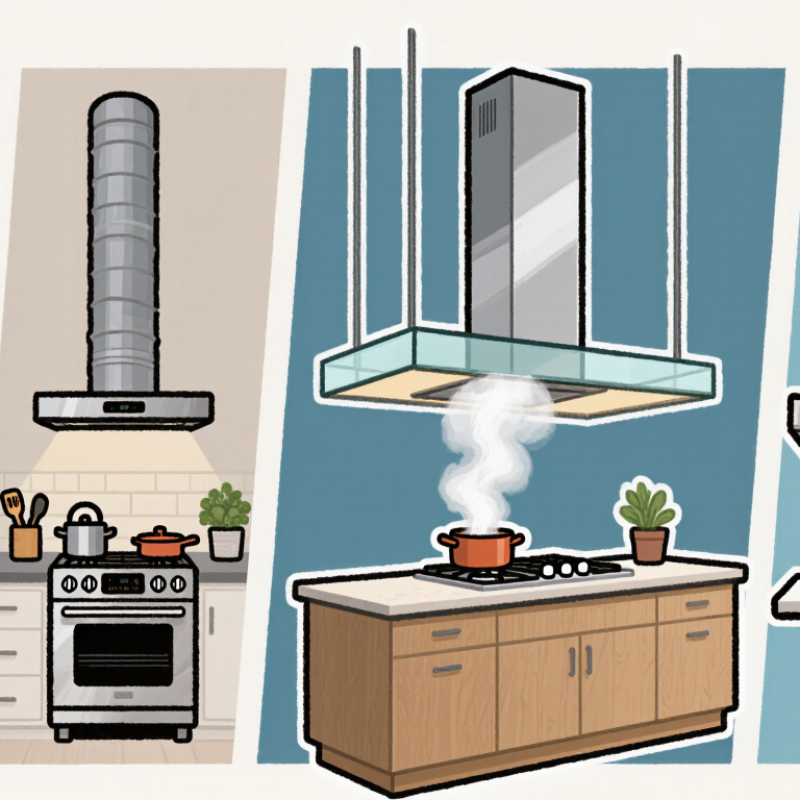
Choosing a Range Exhaust system in 2026 is not just a style decision. It affects how cooking smoke, grease, heat, and odors leave the kitchen. The main options include under-cabinet, wall-mounted chimney, island, insert, and downdraft models. Each suits a different layout. A wide island hood, for example, must capture rising cooking plumes from several feet above the cooktop. A compact under-cabinet model may fit a tighter kitchen, but its performance depends on its design and installation.

The market is expanding, but that alone does not identify the best hood. Grand View Research estimated the global range hood market at US$15.05 billion in 2023 and projected a 5.3% compound annual growth rate from 2024 to 2030. That forecast signals continued demand, not a guarantee of better performance. For a more useful comparison, check the Home Ventilating Institute’s certified product listings for airflow and sound ratings, then confirm that the figures match your cooking needs. Quiet matters. So does effective capture. Duct size, duct length, and make-up air can also change real-world results. That distinction is easy to miss. Even a powerful hood may disappoint if the duct run is restrictive or the canopy does not cover the cooking surface. The following guide compares the leading Range Exhaust types, their practical strengths, and the trade-offs worth checking before you buy. No single design fits every kitchen.
What Are the Top Range Exhaust Types in 2026?

How Range Hoods Capture and Vent Cooking Exhaust

A range hood captures cooking exhaust by pulling rising air, smoke, grease, and odors toward its intake. Its capture area matters: a shallow hood may miss fumes from a wide pan, especially when burners are near the front. Keep the hood low enough to catch rising air, while following the installation clearances specified for the appliance and cooktop. Strong airflow helps, but more is not always better; noise and poor duct design can make a powerful hood unpleasant to use.

Ducted hoods carry exhaust outdoors through a duct. Short, smooth duct runs with fewer bends generally help air move efficiently.

Recirculating models pass air through grease and odor filters, then return it to the kitchen. They can reduce some cooking smells, but they do not remove moisture or heat from the room. Filters need regular cleaning or replacement. No hood catches everything. Even a well-sized one can miss a quick puff of steam when a pan sits outside its capture zone.

Tips: Turn the hood on before cooking, and leave it running briefly afterward. Clean metal grease filters as directed; a sticky filter can restrict airflow. If smoke lingers, check the filter, duct path, and hood position before assuming the fan needs more power.

Which Range Hood Types Are Available in 2026?

Range hoods in 2026 come in several forms, and the right one depends on your cooktop, cabinetry, and ventilation route. An under-cabinet hood fits beneath existing cupboards and suits many compact kitchens. A wall-mounted chimney hood becomes a visible feature above a range, while an island hood hangs from the ceiling over a freestanding cooktop. These models need careful placement; a hood that sits too high may capture less steam and smoke.

An insert, sometimes called a hood liner, is built into a custom cabinet or canopy. It keeps the appliance less visible, but the enclosure still needs enough space for the unit and its ductwork. Downdraft systems draw cooking fumes downward, which can help where overhead space is limited. Their performance depends on the layout and how far air must travel.

Look, too, at whether a hood vents outdoors or recirculates filtered air. Ducted systems carry air outside; recirculating models pass it through filters and return it to the room. Check duct size, noise ratings, filter access, and installation requirements before choosing.

Small details matter. A filter that is awkward to remove may be cleaned less often, and that can affect everyday performance. Even a quiet hood can disappoint if its capture area is too narrow for your burners.

How Under-Cabinet, Wall-Mount, and Island Hoods Differ

Under-cabinet, wall-mount, and island hoods suit different kitchens, and installation position changes how well each captures cooking fumes. Under-cabinet models fit beneath existing cupboards, keeping the hood close to the cooktop without taking extra wall space. They work well in compact kitchens, though a shallow canopy may miss rising smoke from front burners. Wall-mount hoods attach above a range without cabinets overhead. Their larger canopies can offer better coverage, but the duct route and mounting height matter. Measure before choosing.

Island hoods hang over a cooktop surrounded by open space. They need a broad capture area because cross-drafts can push steam and grease sideways. That detail is easy to miss.

ASHRAE Standard 62.2-2022 specifies kitchen local exhaust of at least 100 cubic feet per minute for intermittent operation, or 25 for continuous operation. These are baseline ventilation rates, not proof that a hood will capture fumes effectively. The Home Ventilating Institute’s certified product directory can help shoppers compare tested airflow and sound ratings. In practice, check duct size, turns, and discharge location too; a powerful fan connected to restrictive ductwork may disappoint. I would not choose by airflow alone. Cooktop width, burner position, and how often you sear food should guide the final fit.

How Insert, Downdraft, and Microwave-Combination Hoods Work

What Are the Top Range Exhaust Types in 2026? How Insert, Downdraft, and Microwave-Combination Hoods Work

Insert hoods fit inside a custom cabinet or canopy, with the fan and filters hidden above the cooktop. They can offer strong capture when sized and ducted correctly, but a shallow insert may miss rising steam from front burners. The Home Ventilating Institute’s sizing guidance suggests about 100 CFM per linear foot for wall-mounted hoods; island installations may need more. Real kitchens vary.

Downdraft systems pull cooking fumes down through a vent beside or behind the cooktop. Their low profile suits open sightlines, but rising heat can escape before the fan draws it away. Microwave-combination hoods save space and use underside filters to capture smoke and grease. Their coverage can be limited, especially over front burners. ASHRAE Standard 62.2-2022 specifies 100 CFM for intermittent kitchen exhaust or five air changes per hour for continuous operation. That is a ventilation benchmark, not proof that every hood captures pollutants equally. Placement matters.

Tips: Match hood width to the cooking surface, and check the manufacturer’s airflow and duct requirements. Use the fan while cooking, then leave it running briefly afterward. A quieter hood is easier to use—but noise ratings rarely tell the whole story.

What Are the Top Range Exhaust Types in 2026? — How Insert, Downdraft, and Microwave-Combination Hoods Work
Feature Insert Hood Downdraft Hood Microwave-Combination Hood
How it works A ventilation unit is fitted inside a cabinet, decorative hood, or custom enclosure above the cooktop. It draws cooking fumes upward through filters. A vent rises from behind or beside the cooktop, then pulls air downward into ductwork or a recirculating filter system. A microwave mounted above the range incorporates a fan and filters that draw air from the cooking surface into the appliance.
Typical location Above the cooktop, concealed within a custom hood or cabinetry. At cooktop level, usually behind or beside the burners; some models retract when not in use. Above the range, commonly replacing a separate over-the-range hood.
Air capture Captures rising heat, smoke, grease, and odors from above the cooking area. A correctly sized hood can provide broad coverage. Draws fumes sideways and downward. Because hot air naturally rises, capturing smoke and heat can be more challenging, especially from tall pots or high-heat cooking. Captures rising fumes from below the microwave. Coverage and capture can be limited by the appliance’s size and the distance from the cooktop.
Venting options Often available for exterior ducting; some configurations can recirculate air through filters. Check the unit’s installation requirements. May vent outdoors through floor, wall, or cabinet ductwork, depending on the model and kitchen layout. Some versions recirculate filtered air. Many models can be configured for exterior ducting or recirculation. Recirculating setups return filtered air to the kitchen rather than exhausting it outdoors.
Installation considerations Requires compatible cabinet or hood dimensions, suitable mounting support, and planned duct routing if vented outdoors. Needs space below or behind the cooktop for the vent mechanism and ductwork. Installation may be difficult with drawers, ovens, or other equipment underneath. Requires appropriate mounting height, cabinet support, electrical access, and a compatible vent route if ducted outdoors.
Main advantages Can be concealed for a streamlined design; offers flexibility in hood appearance and can provide effective capture when properly sized and installed. Useful where an overhead hood is impractical or not desired; can preserve an open sightline above an island cooktop. Combines two appliances in one space-saving unit and provides convenient access to a microwave above the range.
Main limitations May require a custom enclosure and careful planning. Performance depends on hood coverage, fan capacity, duct design, and installation. Downward airflow can be less effective for rising heat and smoke. It can also take up valuable cabinet space and may add installation complexity. Typically offers less capture area than a suitably sized dedicated hood. The microwave’s position may also make cleaning and reaching the controls less convenient for some users.
Filter care Clean reusable grease filters regularly; replace odor filters as directed if the unit is set up for recirculation. Clean grease filters regularly and maintain any recirculating filters according to the manufacturer’s instructions. Clean the grease filters regularly; replace charcoal or other odor filters when required for recirculating operation.
Best suited for Kitchens where an integrated look, custom hood design, or discreet ventilation is a priority. Kitchens where overhead ventilation is not practical and the cooktop layout can accommodate a downdraft system. Kitchens where saving space and combining microwave and ventilation functions are more important than maximizing hood coverage.
Selection note: Actual airflow, noise, capture performance, and installation requirements vary by model. For effective ventilation, check the appliance’s specifications and installation guide, and consider cooktop size, cooking habits, duct length, duct diameter, and the number of bends. Outdoor ducting removes cooking air from the home; recirculation filters air and returns it to the room.

How Ducted, Ductless, and Convertible Venting Compare

Ducted, ductless, and convertible hoods differ in where they send cooking air. A ducted hood carries it outdoors, helping remove smoke, odors, heat, and moisture. It works best with a short, smooth duct and a hood that covers the burners. Poor installation can weaken performance. A Lawrence Berkeley National Laboratory field study found capture efficiency ranged from about 15% to 98% across installed kitchen exhaust devices, depending on the equipment and cooking position (Singer et al., “Performance of Installed Cooking Exhaust Devices,” 2012). That spread matters more than a headline airflow number.

Ductless models pull air through filters and return it to the room. They can suit apartments where exterior ducting is impractical, but charcoal filters need regular replacement, and these units do not exhaust moisture or heat. You may still smell dinner later.

Convertible hoods can operate either way, offering flexibility during a remodel or move. Their ducted mode needs a compatible outdoor route; in recirculating mode, they inherit ductless limits. For any type, check independently tested airflow and sound ratings, then match the hood width to the cooktop. The overlooked detail is daily use: a powerful hood left off cannot capture much. Running it during cooking—and briefly afterward—often matters as much as the model chosen.