Top HPLC Chromatography Techniques for Effective Separation Methods?
HPLC chromatography stands as a vital technique in modern analytical chemistry. This method excels in separating, identifying, and quantifying components in complex mixtures. Its widespread use in pharmaceuticals, environmental studies, and food analysis showcases its versatility. By leveraging high pressure to push solvents and samples through a column, HPLC achieves remarkable separation efficiency.
Many researchers struggle to optimize conditions for effective separation. Factors such as column choice, mobile phase selection, and flow rate significantly influence outcomes. Each decision can affect resolution and retention time. Understanding these variables is essential for success.
Experts recommend continuous learning and adaptation. New developments in HPLC chromatography techniques may reveal better separation methods. However, this field evolves rapidly; staying current requires diligence. Embracing latest trends can enhance method reliability and accuracy.
Overview of HPLC Chromatography Techniques for Separation
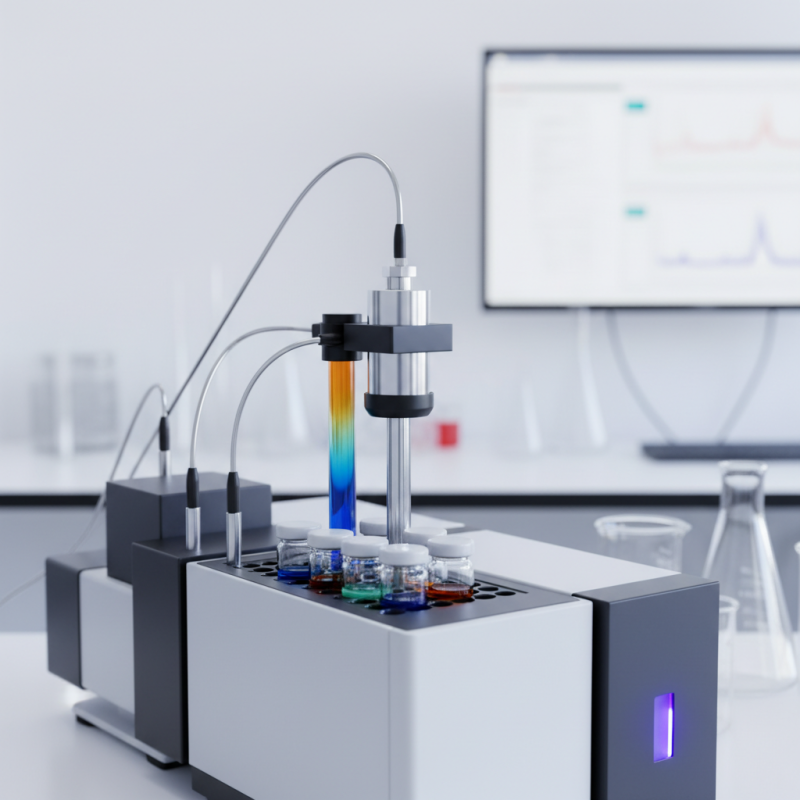
High-Performance Liquid Chromatography (HPLC) plays a vital role in analytical chemistry. It is widely used for the separation, identification, and quantification of compounds. Understanding the different techniques within HPLC can significantly enhance separation efficiency.
There are various HPLC techniques tailored for specific applications. Reverse-phase HPLC is the most common method. It effectively separates non-polar compounds using a polar mobile phase. However, it can struggle with very polar analytes. Normal-phase HPLC, on the other hand, separates polar compounds using a non-polar mobile phase. This method can be less efficient for complex mixtures.
Other techniques include size-exclusion chromatography and ion-exchange chromatography. Size-exclusion chromatography separates based on molecular size, which is useful for proteins. Ion-exchange chromatography targets charged species, providing high resolution. Each technique has its strengths and limitations, often requiring optimization for best results. Selecting the right HPLC method is crucial, as the wrong choice can lead to inefficiencies and poor separation outcomes.
Top HPLC Chromatography Techniques for Effective Separation Methods
| Technique |
Description |
Application |
Advantages |
Limitations |
| Reversed Phase HPLC |
Uses a non-polar stationary phase with a polar mobile phase. |
Commonly used for pharmaceuticals and biochemical compounds. |
High efficiency and versatility. |
May require longer run times for complex mixtures. |
| Normal Phase HPLC |
Utilizes a polar stationary phase and a non-polar mobile phase. |
Effective for separating non-polar compounds. |
Simple elution with minimal mobile phase usage. |
Limited to fewer types of compounds. |
| Size Exclusion Chromatography (SEC) |
Separates molecules based on size using porous beads. |
Used for proteins, polysaccharides, and polymers. |
Gentle separation that preserves biological activity. |
Low resolution for closely sized molecules. |
| Ion Chromatography (IC) |
Separates ions and polar molecules based on charge. |
Common in water and environmental analysis. |
Highly sensitive detection of ionic species. |
Requires specific mobile phase conditions. |
| Affinity Chromatography |
Uses specific interactions between an analyte and a ligand. |
Purification of biomolecules, such as antibodies. |
High specificity and purity of target compounds. |
Limited to specific analyte-ligand pairs. |
Types of HPLC Columns and Their Impact on Separation Efficiency
In high-performance liquid chromatography (HPLC), the choice of column significantly affects separation efficiency. There are various types of HPLC columns, each designed for specific applications. For instance, reversed-phase columns are commonly used in pharmaceuticals, while normal-phase columns suit polar compounds better. Understanding the chemical attributes of your sample is crucial.
Tips: Always consider column dimensions and particle size. Smaller particles often yield better resolution, but they can increase backpressure. Be mindful of the flow rate, as this can also influence the separation quality.
Additionally, column temperature plays a vital role in separation. Higher temperatures can enhance the kinetics of the separation process. However, not every sample withstands heat well. Testing at different temperatures may help find the optimal setting. Always document your findings for future reference; it is easy to overlook previous successful conditions.
In the pursuit of effective separation, don’t rely solely on theoretical knowledge. Practical experience often leads to valuable insights. Perform regular maintenance and calibration of your HPLC system. This ensures reproducible results and mitigates unexpected issues during analysis. Being methodical in your approach will enhance both efficiency and reliability in your chromatographic techniques.
Optimization of Mobile Phases for Enhanced HPLC Performance
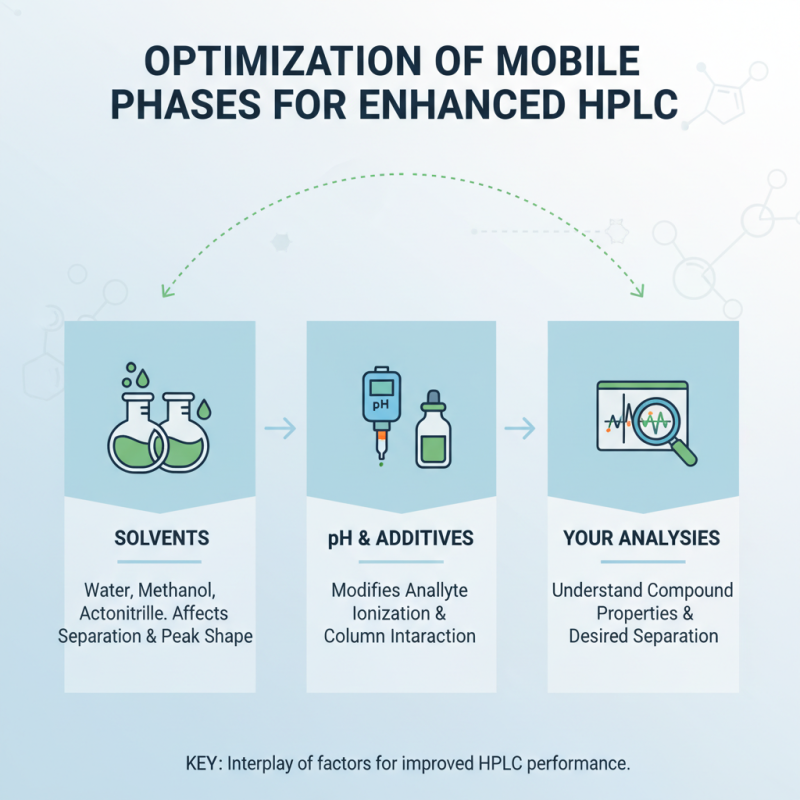
When optimizing mobile phases for HPLC, it’s essential to understand the interplay of solvents, pH, and additives. The choice of solvent directly affects separation efficiency and peak shape. Common solvents include water, methanol, and acetonitrile. Each solvent has unique properties that impact solubility and retention times. Therefore, a deep understanding of your analytes is critical.
Tips: Start with a simple binary solvent system. This can simplify initial experiments. Gradually introduce modifiers like salts or buffers to enhance resolution. Always analyze the system’s stability during experiments to ensure reliable results.
pH adjustments can affect the ionization state of analytes, thus impacting retention times. It’s often beneficial to use pH levels around the pKa values of analytes for optimal retention. However, frequently measuring pH is necessary, as it can drift over time, affecting reproducibility.
Tips: Use a reliable pH meter with regular calibration. Consider starting with a phosphate buffer to achieve stability. Finally, document all adjustments. It’s crucial to reflect on your methods and results, noting any inconsistencies or unexpected outcomes. This practice encourages continual improvement in HPLC techniques.
Common Applications of HPLC in Various Scientific Fields
High-Performance Liquid Chromatography (HPLC) has become a vital tool in various scientific fields. In pharmaceutical research, HPLC is crucial for drug formulation and stability studies. According to the Pharmaceutical Research Institute, about 70% of drugs are analyzed using HPLC to ensure purity and dosage accuracy. This technique offers reliable separation, making it indispensable for quality control.
In environmental science, HPLC helps analyze pollutants in water and soil. The Environmental Protection Agency (EPA) indicates that HPLC methods are essential for detecting trace levels of contaminants. Advanced techniques enable researchers to identify compounds at lower concentrations, which is pivotal for risk assessment.
**Tip:** Regular calibration of HPLC equipment can enhance result accuracy.
In food and beverage industries, HPLC ensures that products meet safety standards. It plays a key role in identifying additives and verifying ingredient authenticity. Various studies show that over 80% of quality tests in this sector involve HPLC methods.
**Tip:** Consider using gradient elution to improve separation efficiency.
Despite its advantages, HPLC has limitations, such as high operational costs and complex methodologies. Continuous training is vital for effective use. Understanding the intricacies of this technique is essential for accurate results and ongoing research advancement.
Top HPLC Chromatography Techniques for Effective Separation Methods
This bar chart illustrates the common applications of HPLC (High-Performance Liquid Chromatography) across various scientific fields. The pharmaceutical industry leads with 35% of applications, followed by environmental testing at 25%, food & beverage analysis at 20%, chemical applications at 15%, and biotechnology at 5%.
Future Trends and Innovations in HPLC Separation Techniques
Recent advancements in High-Performance Liquid Chromatography (HPLC) signal a new era for separation techniques. A report by Research and Markets highlights that the HPLC market is projected to reach $4.2 billion by 2027, with a significant focus on technological innovations. One major trend is the incorporation of artificial intelligence for optimizing chromatographic methods. AI can analyze complex datasets, leading to improved method development and enhanced efficiency.
The demand for more sustainable and efficient separation methods is increasing. Innovations like microfluidics and monolithic columns are gaining traction. These technologies offer faster analysis times and reduced solvent consumption. According to a study published in the Journal of Chromatography A, using monolithic columns can reduce solvent usage by up to 70%. There is a noticeable need to evaluate the limitations of these methods, such as cost implications and scalability in laboratory settings.
Emerging methods like ultra-high-performance liquid chromatography (UHPLC) also show promise. They can provide better resolution and speed. However, they require more sophisticated equipment and understanding. The learning curve may hinder widespread adoption among smaller laboratories.
Balancing these innovative techniques with practical application is essential for the future of HPLC. The industry's focus on adaptability and sustainability will shape the future of chromatography, even as challenges remain.