skip to content

China Top Chicken Cage Manure Belt Manufacturers

China’s poultry sector continues to expand, increasing demand for cleaner and more efficient manure-handling systems. The OECD-FAO Agricultural Outlook 2024-2033 identifies poultry as a major growth area in global meat production. This trend places greater pressure on farms to manage waste consistently, especially in high-density layer houses. A reliable Chicken Cage Manure Belt can remove droppings from beneath cages, reduce accumulation, and support better barn hygiene.

The IPCC 2019 Refinement recognizes manure management as an important factor in agricultural greenhouse-gas emissions. Proper belt operation may help shorten storage time and improve manure collection. However, equipment performance depends on more than a low purchase price. Buyers should examine belt thickness, tensile strength, width tolerance, edge finishing, corrosion resistance, and compatibility with cage frames. Small details matter. A poorly aligned belt can fold, slip, or collect wet manure near the drive roller.

China has become a significant manufacturing base for poultry equipment and replacement components. Leading suppliers typically support customized dimensions, sample testing, installation guidance, and export documentation. Their experience with different cage layouts can reduce commissioning problems. Still, “top manufacturer” should not be judged by factory images alone. Production records, material specifications, quality-control procedures, and customer references deserve careful review.

This guide introduces China’s leading Chicken Cage Manure Belt manufacturers and compares their practical strengths. It also considers delivery capability, technical support, service responsiveness, and long-term operating value. Some supplier information may change over time. Buyers should verify current certificates, test samples, and contract terms before making a final decision.
China Top Chicken Cage Manure Belt Manufacturers

Definition and Role of Chicken Cage Manure Belts in Modern Poultry Farms

China Top Chicken Cage Manure Belt Manufacturers

Definition and Role of Chicken Cage Manure Belts in Modern Poultry Farms

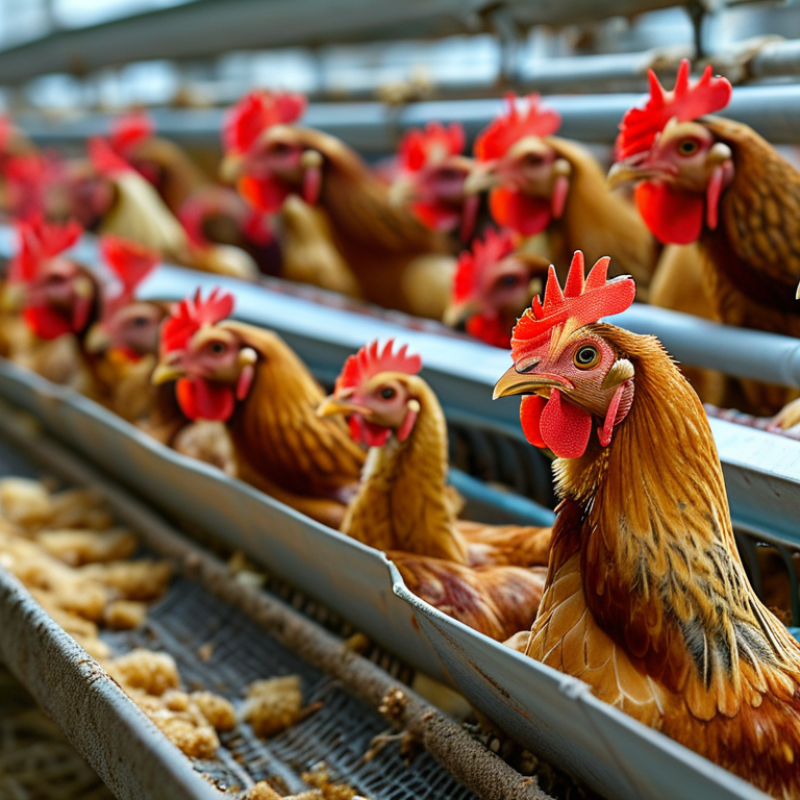
A chicken cage manure belt is a moving, flexible surface placed beneath tiered cages. It collects droppings and carries them toward a discharge point. Unlike open-floor systems, the belt keeps manure away from birds, eggs, and feeding areas. This separation can make daily work cleaner and more controlled.

In practical farm use, belt speed matters. A slow belt may hold wet manure too long, while excessive speed can increase dust and uneven loading. Many operators schedule removal after feeding, when house activity is lower. A properly aligned belt should run smoothly, without folding, slipping, or scraping the frame. Small details matter. Even a loose side guide can leave manure on the floor.

The belt also supports ventilation and manure management. Faster removal reduces moisture exposure beneath cages, which may help limit ammonia formation. However, a belt cannot correct poor airflow or leaking drinker lines. This is where my own early assumption was wrong. I once treated the belt as a complete sanitation solution, but maintenance proved equally important. Workers should inspect joints, rollers, tension, and buildup every day. In humid conditions, cleaning intervals may need adjustment. Material choice also deserves attention, since temperature, manure weight, and repeated washing affect service life. A dependable system saves labor, yet careless operation still creates avoidable problems.

Key Features of China’s Top Chicken Cage Manure Belt Manufacturers

China’s top chicken cage manure belt manufacturers typically focus on stable removal, clean construction, and practical farm maintenance. Their systems often use corrosion-resistant frames, smooth manure belts, and reinforced drive rollers. These parts must withstand moisture, ammonia, and repeated loading. A well-designed belt should move evenly without folding at the return point. Small details matter. Maintenance matters.

Experienced manufacturers usually offer belt widths and lengths for different cage layouts. They may adjust scraper angles, roller spacing, and motor capacity after reviewing the farm drawing. This is more reliable than selling one standard model. Factory inspection should include belt tension, welding quality, emergency stops, and trial operation under load. Clear installation drawings also reduce mistakes during assembly. Ask for material certificates and test records when available.

Reliable suppliers provide spare belts, bearings, fasteners, and operating guidance. Their engineers should explain cleaning intervals and safe tension settings in practical language. Site feedback is valuable. A belt that performs well in a dry house may need changes in a humid coastal farm. Not every supplier checks this difference. Buyers should examine service response, production consistency, and replacement availability before ordering. A lower initial price can become expensive when a worn roller stops an entire manure line. Some specifications still need improvement after the first season. Good manufacturers accept that reality and use field data to refine future designs.

China Top Chicken Cage Manure Belt Manufacturers - Key Features of China’s Top Chicken Cage Manure Belt Manufacturers

Key Feature Typical Specification Why It Matters Quality Indicators to Check
Belt Material Polypropylene (PP) or equivalent agricultural-grade plastic Provides resistance to moisture, manure, routine washing, and common farm chemicals. Uniform surface, stable color, low odor, and no visible fillers, cracks, or brittle areas.
Belt Width Approximately 1,000–3,000 mm, depending on cage-system layout Allows the belt to match single-tier, multi-tier, and customized poultry housing systems. Dimensional tolerance, compatibility with rollers, and correct fit for the manure-transfer route.
Belt Thickness Commonly about 0.8–2.0 mm Balances flexibility, carrying strength, installation performance, and service life. Consistent thickness across the full roll and reinforced edges where required.
Surface Design Smooth or lightly textured surface with sealed, low-absorption finish Reduces manure adhesion and makes scraping, washing, and disinfection easier. No deep grooves, pinholes, open weave, delamination, or irregular surface marks.
Tensile Performance Designed for continuous conveying under normal poultry-house loading conditions Helps prevent stretching, tearing, tracking problems, and unplanned downtime. Test results for tensile strength, elongation, tear resistance, and welded-joint strength.
Operating Temperature Typically suitable for approximately −10°C to 60°C in poultry-house applications Supports operation in cold-weather transport areas and warm, ventilated manure rooms. Manufacturer’s temperature data and confirmation that the belt will not become brittle or excessively soft.
Joint Method Heat-welded joint or mechanically fastened joint A properly finished joint improves tracking and reduces the risk of manure leakage. Flat joint profile, aligned edges, strong bonding, and no sharp protrusions.
Roll Length Commonly supplied in long rolls, often around 50–150 m per roll Longer rolls can reduce the number of joints required in large poultry installations. Accurate roll length, protective packaging, moisture prevention, and clear identification labels.
Dimensional Customization Custom width, length, thickness, edge treatment, and joint configuration Enables integration with different cage dimensions, conveyor lengths, and farm layouts. Approved technical drawing, sample confirmation, and pre-production dimensional inspection.
Cleaning Compatibility Compatible with routine water washing and approved farm cleaning agents Supports hygiene management and helps reduce residue buildup between cleaning cycles. Chemical-resistance information, cleaning recommendations, and post-wash surface inspection.
Tracking Stability Manufactured with consistent width and flatness for roller-guided transport Stable tracking reduces edge wear, belt folding, and contact with cage components. Flatness, edge straightness, roller alignment requirements, and trial-run performance.
Export Packaging Rolled, moisture-protected, and secured with suitable outer packaging Protects the belt from deformation, contamination, and moisture during long-distance transport. Water-resistant wrapping, stable pallets or supports, loading protection, and packaging photos.
Technical Support Installation guidance, jointing instructions, and application-based sizing support Proper installation improves service life and helps prevent avoidable operating failures. Written installation instructions, replacement guidance, inspection records, and responsive after-sales support.

Note: Specifications are typical industry ranges for poultry manure conveyor belts. Final dimensions and performance requirements should be confirmed against the cage system, conveyor design, operating environment, and supplier test documentation.

Major Types of Manure Belts and Their Suitable Farm Applications

China Top Chicken Cage Manure Belt Manufacturers

Global poultry production now exceeds 140 million tonnes annually, according to the FAOSTAT 2023 statistical yearbook. USDA NASS also reported about 9.2 billion dozen U.S. table eggs in 2023. These figures show why manure removal must be planned with cage density, belt length, and cleaning frequency in mind.

Solid flat manure belts suit A-type and H-type layer cages. They provide simple daily removal and work well on small or medium farms. Perforated belts improve airflow beneath the cages. They are useful where farms need drier manure and reduced sticking. Inclined or cleated belts handle longer transport routes. They fit high-rise houses and centralized collection rooms. Belt-dryer systems require stronger ventilation and careful moisture control.

The EU Best Available Techniques Reference Document links frequent manure removal with better odor and ammonia management. That principle is practical, not decorative. A belt that appears economical may perform poorly when manure piles remain overnight. Small details matter. Belt tension, scraper pressure, and discharge height can change maintenance costs noticeably. In my experience, operators often choose by price first, then reconsider after winter clogging. The better choice matches the farm’s cage layout, labor capacity, and expected manure moisture. No belt type is universal.

China Top Chicken Cage Manure Belt Manufacturers – Major Types of Manure Belts and Their Suitable Farm Applications

The chart compares the practical suitability of commonly used manure belt materials for different poultry cage systems. Ratings range from 1 (limited suitability) to 5 (high suitability), based on durability, moisture resistance, cleanability, and compatibility with routine manure removal.

PP woven belts are widely used for standard layer and H-type cage systems, while PVC and HDPE belts are suitable where smooth cleaning, moisture resistance, and frequent manure removal are priorities. Ratings are general application guidance and do not represent any specific company or brand.

Manufacturing Standards, Materials, and Quality Control Processes

China Top Chicken Cage Manure Belt Manufacturers

Manufacturing Standards, Materials, and Quality Control Processes

China’s leading manure belt manufacturers should be judged by process control, not catalog photos. FAOSTAT reported global egg production above 90 million tonnes in 2022. That scale demands stable belt performance. Manufacturers commonly use polypropylene or polyethylene, selected for moisture resistance and chemical tolerance. Virgin resin usually offers more predictable strength than uncontrolled recycled blends. Material batches should carry traceable lot numbers.

Standards matter. ISO 9001:2015 supports documented purchasing, production, inspection, and corrective actions. The ISO Survey 2022 recorded more than 1.2 million ISO 9001 certificates worldwide. Certification helps, but it is not proof of a durable belt. I would still request test records. Tensile testing can follow ISO 527 or equivalent national standards. Width, thickness, hole spacing, and belt elongation need measured tolerances. Small errors create tracking problems.

Quality control should include seam-pull tests, roller-bending tests, and thermal exposure. Inspectors should check every welded joint, not only random samples. A practical factory will also test belt alignment under realistic manure loads. Clean surfaces can hide weak welds. That happens. Good suppliers retain samples from each production batch and record corrective actions. Buyers should ask for inspection videos, material declarations, and replacement policies. A factory that avoids basic questions deserves closer review.

How to Evaluate and Select a Reliable Chinese Manure Belt Manufacturer

China Top Chicken Cage Manure Belt Manufacturers

How to Evaluate and Select a Reliable Chinese Manure Belt Manufacturer

Choosing a Chinese manure belt manufacturer requires more than comparing prices. Review their production experience, engineering team, and actual poultry equipment projects. Ask for factory videos, installation photos, and customer references from farms with similar cage layouts. A reliable supplier should explain belt width, thickness, tensile strength, and suitable cleaning methods clearly.

Inspect material quality in detail. Polypropylene belts should have even weaving, stable edges, and no visible cracks. Request test samples before placing a large order. Check belt flexibility after repeated folding and examine joining methods under tension. Small defects can become serious failures in a humid poultry house. That part is often underestimated.

Supplier communication also matters. Can the technical team provide accurate drawings and replacement guidance? Do they record batch numbers and maintain quality inspection reports? Confirm production capacity, lead time, packaging protection, and export documentation in writing. A responsible manufacturer will discuss limitations instead of promising everything. No supplier is perfect. I would still question unclear answers, inconsistent measurements, or pressure to pay quickly. Ask how they handle damaged goods and installation errors. Their response may reveal more than a polished catalog.