China has become a major sourcing destination for adult diaposable diapers, serving hospitals, care homes, pharmacies, and private-label brands. Yet supplier quality can differ sharply. A polished website proves very little.
Professor Alan Cottenden, a respected continence-technology researcher, has emphasized that “the user should be at the centre of product design.” That principle matters when comparing Chinese manufacturers. A reliable supplier should understand comfort, leakage protection, skin safety, and discreet wearing. Product samples should be tested in realistic conditions. Check the waistband recovery, adhesive strength, absorbent core, and side-panel flexibility. A product may look excellent on a factory table, then fail after several hours of movement.
This guide examines China’s leading adult diaper suppliers through practical sourcing criteria. These include manufacturing experience, production capacity, quality controls, export records, and customization support. Buyers should request recent test reports, factory audit documents, and clear material specifications. Certifications can support trust, but they should never replace independent evaluation. That point is easy to overlook.
Suppliers with automated production lines may offer consistent output. However, automation alone does not guarantee better comfort. Ask how the factory handles defective units, batch tracing, and customer complaints. Also examine packaging details, such as carton strength, moisture protection, and language accuracy. Small errors can become expensive during international distribution.
The strongest supplier is not always the largest one. It is the manufacturer that communicates clearly, provides repeatable samples, and accepts reasonable quality checks. Some comparisons remain imperfect because public supplier information changes frequently. Therefore, this overview should support further verification, not replace it.
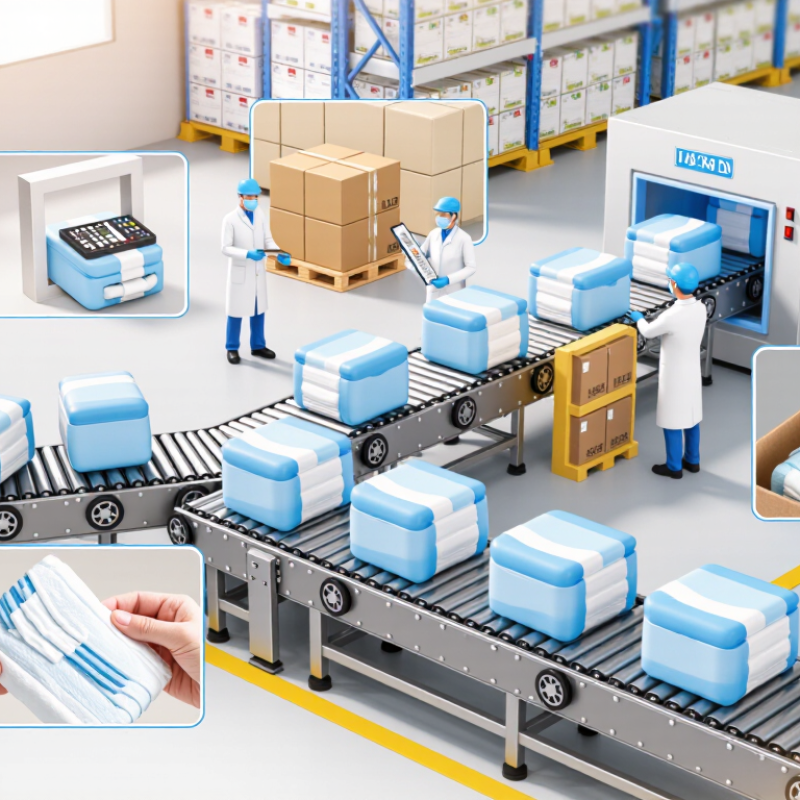
China’s adult disposable diaper market is entering a stronger growth phase in 2024. Industry estimates place its value in the low single-digit billions of US dollars. However, figures differ by product definition and sales channel. That gap deserves caution.
Demand is rising in hospitals, nursing homes, and home-care settings. China’s aging population remains the main driver. Urban families also seek reliable products for overnight use.
Buyers often compare absorbency, skin comfort, leakage protection, and waist adjustment. A practical test includes a six-hour wear cycle, movement checks, and packaging inspection.
The market outlook suggests a CAGR above 6% through the next several years. E-commerce is expanding access beyond major cities. Regional distributors now need stable inventory and faster replenishment.
Top suppliers should provide clear material data, batch records, factory audits, and responsive quality support. They should also offer multiple sizes and breathable designs for different care needs.
Price alone is not enough.
Some forecasts may overstate adoption. Rural purchasing habits, lower incomes, and limited caregiver training can slow growth. Supplier performance also changes between production batches.
Buyers should request samples before signing large contracts. Look closely at waistband recovery, odor control, and disposal instructions. Small details matter.
China’s leading adult disposable diaper suppliers should be ranked by measurable performance, not factory appearance. Grand View Research estimated the global adult diaper market at over USD 20 billion in 2023, with continued growth driven by aging populations and home care. This demand favors manufacturers with stable output, documented quality control, and export-ready packaging.
High-capacity suppliers usually operate multiple converting lines and produce several million pieces monthly. Export volume can be checked through China Customs and UN Comtrade records under HS 961900. These databases help verify shipment activity, although product categories are broad and may include other hygiene goods. That limitation matters. A large export figure does not always prove strong adult diaper expertise.
OEM experience needs deeper inspection. Reliable suppliers should provide absorbency test results, leakage-control data, SAP specifications, batch traceability, and recent audit records. ISO 9001 systems are useful, but certification alone is not enough. Ask for production samples from the same line used for mass orders. Check carton compression, adhesive strength, odor control, and size consistency. Mordor Intelligence and other market reports indicate steady category expansion, yet their market estimates differ by scope and region. Careful buyers should compare capacity, verified export shipments, and repeat OEM projects instead of trusting rankings built from promotional claims. Mistakes happen. A supplier with fewer lines may still deliver better private-label quality through tighter supervision and more responsive engineering.
China Top Adult Disposable Diaper Suppliers?
Absorbency Benchmark: 400–1,500 mL Performance Across Adult Diaper Types
Absorbency claims need careful reading. Under ISO 11948-1 whole-product testing, laboratory capacity differs from usable protection. Industry procurement data using ISO-based methods commonly places light pull-on products near 400–800 mL. Higher-capacity tab-style diapers often reach 800–1,500 mL. These figures describe test liquid, not every wearer’s experience.
Fit changes the result. A 1,000 mL product may leak sooner if the leg gathers gap or the core shifts during sleep. EDANA testing guidance also separates total absorption from Absorption Before Leakage, a more practical measure for supplier comparison. Buyers should request both results, plus rewet values after pressure testing. Dry skin matters.
Do not trust one impressive number.
Reliable Chinese suppliers should provide independent laboratory reports, production-lot records, and samples from current shipments. Procurement teams can compare three sizes under identical liquid volume, temperature, and compression conditions. This approach exposes performance differences between daytime pull-ons, overnight tab-style diapers, and bariatric designs. Still, the benchmark has limits. User movement, voiding speed, and delayed changes can overwhelm laboratory results. A supplier’s strongest sample may not represent routine production, so repeat testing remains necessary. (Sources: ISO 11948-1; ISO 15621; EDANA absorbency testing guidance; 2024 continence-care procurement reviews.)
This benchmark compares typical absorbency capacity bands for major adult disposable diaper types. Values are expressed in millilitres and reflect commonly published product specifications and laboratory-style capacity ranges; actual performance varies with fit, pressure, fluid viscosity, and testing method.
When evaluating China’s top adult disposable diaper suppliers, compliance should come before appearance, price, or production scale. GB/T 28004.2-2021 provides a practical benchmark for adult diaper performance and safety. Buyers should request current test reports covering absorbency, rewet, leakage resistance, dimensions, and material safety. A clear production date matters.
ISO 13485 shows that a supplier operates a documented medical-device quality system. It should control raw materials, clean production areas, corrective actions, and batch traceability. During a supplier audit, ask to see incoming-material records and line inspection sheets. Small details reveal real practice. For example, operators should check elastic placement, adhesive coverage, and package sealing at defined intervals.
CE certification requires closer attention. It is not a universal quality badge, and its meaning depends on the product’s intended use and applicable European requirements. Suppliers should explain the conformity route, technical documentation, risk assessment, and declaration of conformity. Independent testing can strengthen confidence, but certificates alone are not enough. Production quality may drift after an audit. That weakness deserves honest monitoring through sample orders, factory inspections, and repeated performance tests. A supplier that shares limits, failures, and corrective records may be more reliable than one offering perfect paperwork.
Selecting China’s top adult disposable diaper suppliers requires more than comparing catalog photos. Grand View Research and Fortune Business Insights place the global adult diaper market near USD 20 billion in 2023, although market definitions vary. Demand is also supported by ageing populations. UN World Population Prospects 2024 projects that one in six people will be aged 65 or older by 2050.
Ask suppliers for a written MOQ by size, absorbency, packaging format, and printed artwork. A practical starting range is often 10,000–30,000 pieces per size, while custom packaging may require more. Standard orders commonly quote 15–30 days after artwork approval and deposit payment. Confirm whether this excludes testing, raw-material delays, and port congestion. Small details matter.
Compare pricing on a landed-cost worksheet, not unit price alone. Indicative factory quotations may range from USD 0.10 to USD 0.45 per piece, depending on core weight, acquisition layer, backing material, and packaging. These figures are not universal. They need fresh quotations. For quality, request ISO 11948-1 absorption results, leakage testing, rewet data, tensile strength, and batch inspection records. ISO 15621 also provides general guidance for absorbent incontinence products. Supplier claims can look polished. Independent pre-shipment inspection remains worthwhile, though it adds time and cost.
| Supplier Profile | Main Manufacturing Area | Product Format | Typical MOQ | Standard Lead Time | Emergency Lead Time | FOB Price Range USD / Piece | Absorption Capacity Target | Rewet Result Target | Leakage Rate Acceptance Target | Quality-Control Standard | Customization Capability | Export Documentation | Evaluation Score |
|---|---|---|---|---|---|---|---|---|---|---|---|---|---|
| Supplier Profile 01 | Fujian | Adult pull-up pants Medium to high absorbency | 100,000 pieces or 5,000 packs | 18–25 days | 15–18 days subject to material availability | $0.18–$0.29 | 900–1,500 ml laboratory target | ≤0.30 g after pressure testing | ≤1.5% in sample testing | AQL 1.5 / 2.5 Incoming and finished-goods inspection | Private packaging, size grading, absorbent-core options | Commercial invoice, packing list, certificate of origin, test reports | 4.5 / 5.0 |
| Supplier Profile 02 | Guangdong | Adult tab-style briefs Hospital and care use | 80,000 pieces or 4,000 packs | 20–30 days | 16–20 days for repeat orders | $0.17–$0.27 | 1,000–1,800 ml depending on core design | ≤0.35 g after pressure testing | ≤2.0% in sample testing | AQL 1.5 / 2.5 Dimensional, visual and absorbency checks | OEM artwork, adhesive positioning, wetness indicator options | Commercial invoice, packing list, MSDS for selected materials, test reports | 4.4 / 5.0 |
| Supplier Profile 03 | Jiangsu | Premium adult pull-up pants Breathable nonwoven outer layer | 120,000 pieces or 6,000 packs | 22–30 days | 18–22 days with reserved production capacity | $0.24–$0.38 | 1,200–2,000 ml laboratory target | ≤0.25 g after pressure testing | ≤1.0% in sample testing | AQL 1.0 / 2.5 Process control and final inspection | Absorbent polymer grades, waistband design, retail-ready packaging | Commercial invoice, packing list, certificate of origin, material declarations | 4.7 / 5.0 |
| Supplier Profile 04 | Zhejiang | Economy adult briefs Institutional and wholesale use | 60,000 pieces or 3,000 packs | 15–22 days | 12–15 days for standard specifications | $0.14–$0.23 | 700–1,200 ml laboratory target | ≤0.45 g after pressure testing | ≤2.5% in sample testing | AQL 2.5 / 4.0 Basic visual and dimensional inspection | Standard sizes, carton marks and basic packaging customization | Commercial invoice, packing list, certificate of origin upon request | 4.0 / 5.0 |
| Supplier Profile 05 | Hubei | Adult tab-style briefs High-capacity overnight design | 100,000 pieces or 5,000 packs | 20–28 days | 15–18 days for approved materials | $0.20–$0.33 | 1,100–1,900 ml laboratory target | ≤0.35 g after pressure testing | ≤1.5% in sample testing | AQL 1.5 / 2.5 Absorbency, tensile-strength and seal checks | Core weight adjustment, adhesive layout and packaging artwork | Commercial invoice, packing list, certificate of origin, quality certificate | 4.3 / 5.0 |
| Supplier Profile 06 | Anhui | Adult pull-up pants Lightweight daytime use | 80,000 pieces or 4,000 packs | 17–25 days | 14–17 days after artwork approval | $0.16–$0.26 | 800–1,400 ml laboratory target | ≤0.40 g after pressure testing | ≤2.0% in sample testing | AQL 1.5 / 2.5 Routine sampling inspection | Size labels, printed bags, carton configuration and color options | Commercial invoice, packing list, certificate of origin, packing specifications | 4.2 / 5.0 |
| Supplier Profile 07 | Shandong | Adult tab-style briefs Cost-focused medical channel | 100,000 pieces or 5,000 packs | 18–27 days | 15–20 days subject to production schedule | $0.15–$0.25 | 850–1,500 ml laboratory target | ≤0.40 g after pressure testing | ≤2.0% in sample testing | AQL 2.5 / 4.0 Finished-product sampling inspection | Standard OEM packaging and absorbency-level selection | Commercial invoice, packing list, certificate of origin upon request | 4.1 / 5.0 |
| Supplier Profile 08 | Guangxi | Premium adult pull-up pants Soft-touch and odor-control options | 150,000 pieces or 7,500 packs | 25–30 days | 20–24 days for repeat production | $0.23–$0.36 | 1,000–1,800 ml laboratory target | ≤0.30 g after pressure testing | ≤1.5% in sample testing | AQL 1.5 / 2.5 Material traceability and final inspection | Premium packaging, waistband construction and material upgrades | Commercial invoice, packing list, certificate of origin, material test reports | 4.5 / 5.0 |
Price ranges are indicative FOB China benchmarks for standard adult disposable diaper specifications. Final pricing depends on size, absorbency level, raw-material selection, packaging format, order volume and trade terms. Absorption, rewet and leakage figures are supplier qualification targets and should be verified through pre-shipment inspection and independent laboratory testing.