skip to content

What Is Stainless Steel Stamping and How Does It Work?

Stainless Steel Stamping is a cold-forming process that converts flat stainless steel sheet into precise components. A punch presses the sheet through or against a shaped die. The result may be a bracket, washer, terminal, enclosure, or medical instrument part.

The process begins with material selection. Common grades include 304 and 316 stainless steel. Grade 304 offers strong corrosion resistance and broad availability. Grade 316 adds molybdenum for harsher chemical and marine environments. Coil thickness, temper, grain direction, and surface finish all influence production results. Small details matter.

The International Stainless Steel Forum reported global stainless crude steel production of approximately 59 million tonnes in 2023. This scale supports demand across transportation, construction, electronics, food equipment, and healthcare manufacturing. Meanwhile, Grand View Research identifies automotive and industrial applications as important drivers for the wider metal stamping market. These reports show market momentum, but they do not guarantee success for every stamped part.

In practice, engineers select blanking, bending, drawing, piercing, or progressive-die operations. A progressive die can complete several actions during each press stroke. That improves output, but tooling costs and setup accuracy become critical. Press speed, lubrication, clearance, and die radius require careful control. Otherwise, edges may crack, surfaces may scratch, or drawn walls may wrinkle.

The process is precise, not perfect. Even experienced manufacturers must review springback, burr height, and dimensional drift. Prototype trials and inspection records strengthen reliability. ISO 9001-based quality systems can support traceability, although certification alone cannot replace skilled process control. Understanding these practical limits explains how Stainless Steel Stamping works and why design decisions must begin before the first production run.
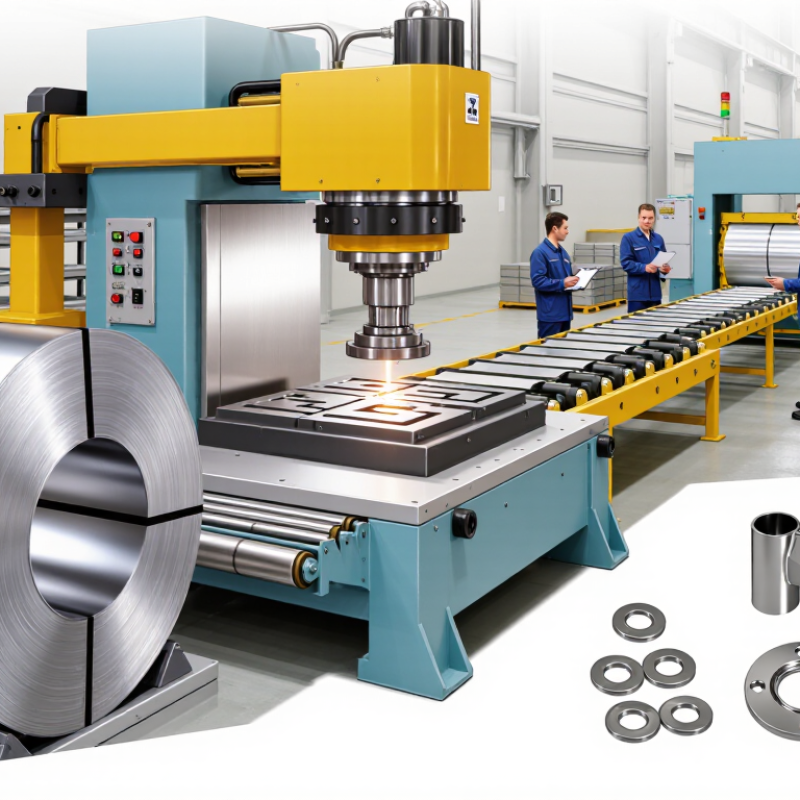
What Is Stainless Steel Stamping and How Does It Work?

What Is Stainless Steel Stamping?

Stainless steel stamping is a cold-forming process that shapes flat metal sheets into precise components. A press pushes the sheet between a die and a punch. The metal may be cut, bent, drawn, or embossed during this operation. Common grades include 304 and 316, chosen for their corrosion resistance and strength. This method supports parts such as brackets, covers, clips, and small housings. It also produces consistent results when the tooling and material are carefully matched.

The process begins with a technical drawing and material inspection. Operators check thickness, surface condition, and grain direction before production. The sheet then enters a stamping press, where controlled force creates the required shape. In production, springback can slightly change angles after forming. Burrs may also appear along cut edges. These issues require inspection, not guesswork. A good design can still need revision after the first trial run. That is normal. Tool wear, excessive force, or poor lubrication can reduce accuracy and damage the surface.

Tips: Keep bend radii practical for the selected stainless steel grade. Allow for springback in the engineering design. Inspect early samples with gauges and visual checks. Avoid assuming that thicker material is always better. It may increase forming force, cost, and tool stress. Small changes matter.

Which Stainless Steel Grades Are Used for Stamping?

Stainless steel stamping depends heavily on the grade selected. Each alloy reacts differently under pressure, especially around tight corners and deep draws. The wrong choice may crack near a punch radius or spring back after forming. In production, engineers usually compare strength, ductility, corrosion resistance, thickness, and surface requirements before approving a material.

Grade 304 is widely used because it offers balanced corrosion resistance and good formability. It suits housings, kitchen components, brackets, and many general industrial parts. Grade 316 and 316L provide better resistance in chloride-rich or chemical environments. However, they can require greater forming force. The “L” version also supports welding applications by reducing carbon-related risks near heat-affected areas. These grades are capable, but not automatically ideal.

Grade 301 develops higher strength through work hardening, making it useful for clips, springs, and thin stamped parts. It may need careful control because repeated forming can reduce ductility. Grade 430 offers magnetic behavior, reasonable corrosion resistance, and lower material cost, but it usually forms less easily than 304. Some applications also use ferritic grades such as 409 when heat resistance matters more than appearance. No grade wins every situation. A trial run with real tooling often reveals issues that specifications miss. Small changes in draw depth, lubrication, or punch clearance can determine whether a part survives stamping or fails at the edge.

How Does the Stainless Steel Stamping Process Work?

Stainless steel stamping begins with a carefully selected sheet or coil. Its thickness, grade, hardness, and surface condition affect every later operation. A technician checks the material before loading it into the press. Small variations can change forming pressure and final dimensions.

The process usually starts with blanking, which cuts flat shapes from the metal strip. The blank then moves through a die for bending, drawing, piercing, or embossing. The press applies controlled force between the punch and die. Lubrication reduces friction and limits surface scratches. It also helps prevent tearing during deep drawing. Press speed matters.

Not every part forms perfectly on the first attempt. Stainless steel can spring back after pressure is released, especially around sharp bends. Work hardening may also create cracks near stretched corners. Engineers adjust die clearance, punch radius, tooling alignment, and forming stages to correct these problems. A practical inspection checks dimensions, burrs, wrinkles, cracks, and surface marks. Some imperfections remain useful warnings. They show where the material, tooling, or process needs another review. After stamping, parts may receive trimming, cleaning, deburring, or additional finishing.

What Equipment and Dies Are Needed for Stamping?

Stainless steel stamping depends on the right press, feeding system, and die design. A mechanical press suits fast, repeated operations, while a hydraulic press offers better control for deeper forming. Press capacity must exceed the material’s forming force, not just its cutting force. That difference is easy to overlook.

A coil-fed setup usually includes an uncoiler, straightener, servo feeder, and safety sensors. The die set contains upper and lower shoes, guide posts, punches, die blocks, and a stripper plate. The punch pushes stainless steel into or through the die opening. The stripper then removes the formed part without damaging its edges. Progressive dies combine several operations, such as piercing, bending, and trimming, inside one tool.

Stainless steel work-hardens quickly. Die clearance, corner radius, and lubrication therefore require careful adjustment. Excessive pressure can cause cracks, while insufficient pressure may leave burrs or distorted profiles. Shop-floor experience shows that a small change in clearance can improve tool life noticeably. It can also create new alignment problems.

Inspection equipment is equally important. Operators commonly use calipers, height gauges, micrometers, and visual checks for scratches or tearing. Trial runs should examine springback, hole position, surface marks, and press noise. A common mistake is trusting the first acceptable sample. Tool wear may appear later, especially around piercing edges, so production records and scheduled die inspections remain essential.

What Products and Benefits Result from Stainless Steel Stamping?

Stainless steel stamping turns flat sheet into useful three-dimensional parts through controlled pressure and shaped tooling. A press can cut, bend, draw, or form stainless steel against a die. Operators select tooling carefully because excessive force can cause cracking, springback, or visible marks. A practical example is a 0.8-millimeter sheet becoming a small mounting bracket with clean holes and folded edges. The result depends on alloy, thickness, lubrication, and die condition.

These parts appear in appliance panels, kitchen sinks, medical trays, electrical enclosures, automotive brackets, and precision clips. Stainless steel provides corrosion resistance, structural strength, and a smooth surface that is easier to clean. This combination matters around moisture, heat, vibration, and frequent handling. Stamped parts also support repeatable dimensions, helping assemblies fit without constant adjustment. High-volume runs can reduce unit costs and material waste, especially when layouts use more of each sheet.

The process has limitations. Sharp edges, tool marks, or inconsistent bends may appear when maintenance is neglected. That is the less impressive side. Quality teams should check burr height, dimensions, surface finish, and corrosion requirements before shipment. Sampling alone may miss a gradual tooling problem. In my experience, simple checks after setup prevent expensive batches from reaching assembly. Engineers still need to balance design freedom against tooling cost, production volume, and realistic tolerances. A beautiful prototype may not remain economical at scale.

What Is Stainless Steel Stamping and How Does It Work? - What Products and Benefits Result from Stainless Steel Stamping?

Data Dimension Key Information Typical Examples or Results Practical Value
Definition Stainless steel stamping is a cold-forming process that uses a press, dies, and controlled force to cut or shape stainless steel sheet, strip, or coil. Flat blanks can be transformed into two-dimensional or three-dimensional components without melting the material. Supports repeatable production of accurate metal parts at medium and high volumes.
Basic Operating Principle A punch moves the stainless steel into or through a die. The clearance and tool geometry determine the cut or formed shape. The operation may include punching, blanking, bending, drawing, embossing, or coining. Combines forming and cutting operations in a controlled manufacturing sequence.
Material Feed Material may be supplied as individual sheets, narrow strips, or coil stock and positioned manually or by an automated feeder. Progressive-die lines commonly feed coil stock through multiple stations. Automated feeding improves throughput and part-to-part consistency.
Blanking Blanking cuts a desired outer profile from sheet or strip, while punching creates internal holes or openings. Washers, brackets, discs, mounting plates, and perforated panels. Produces repeatable profiles and openings with minimal secondary cutting.
Bending and Forming The sheet is bent or formed around a die to create angles, channels, ribs, flanges, or other contours. Clips, covers, brackets, supports, and structural housings. Adds rigidity and functional geometry without joining multiple pieces.
Deep Drawing A flat blank is drawn into a die to create a hollow part. Multiple drawing stages may be used for deeper shapes. Cups, cans, housings, containers, sinks, and cylindrical or box-shaped shells. Creates seamless hollow forms with reduced assembly requirements.
Embossing and Coining Embossing raises or recesses features, while coining applies high localized pressure to improve detail or flatten selected areas. Identification marks, stiffening ribs, locating features, and detailed impressions. Improves part identification, stiffness, alignment, or surface detail.
Common Stainless Steel Grades Austenitic, ferritic, and other stainless steel families may be selected according to corrosion resistance, strength, formability, and magnetic requirements. Common examples include 304 for general corrosion resistance, 316 for improved resistance in chloride-bearing environments, and 430 for ferritic applications requiring moderate corrosion resistance and magnetic response. Material selection aligns the part with its environment, forming demands, and service requirements.
Typical Products Stamped stainless steel components are used where corrosion resistance, cleanliness, durability, or dimensional repeatability is important. Electrical enclosures, appliance panels, automotive brackets, medical instrument components, kitchen hardware, filters, clips, terminals, and fastener-related parts. Supports applications across industrial, transportation, medical, food-service, construction, and consumer equipment sectors.
Production Methods The principal methods include single-hit stamping, progressive-die stamping, transfer stamping, and deep-draw stamping. Progressive dies perform several operations in sequence; transfer systems move separate blanks between stations. The method can be matched to part size, geometry, production volume, and allowable tooling investment.
Primary Benefits Stamping offers high repeatability, efficient material usage, fast cycle times, and the ability to produce complex shapes. Large quantities of uniform components can be produced after the tooling has been developed and validated. Can reduce labor per part, assembly steps, and unit cost in suitable production programs.
Material Performance Stainless steel provides useful corrosion resistance, strength, durability, and a cleanable surface when the correct grade and finish are selected. Components can remain functional in humid, corrosive, or high-cleanliness environments, subject to grade and service conditions. May extend service life and reduce replacement or maintenance requirements.
Quality Control Inspection commonly covers dimensions, hole position, burrs, cracks, surface condition, flatness, and formed geometry. Tools may include gauges, coordinate measurement equipment, optical inspection, and visual checks. Helps verify that parts meet engineering drawings and functional requirements.
Design Considerations Designers should account for bend radii, material direction, springback, draw depth, hole spacing, edge distance, burr direction, and access for tooling. Poorly positioned holes, sharp internal corners, or overly deep forms can increase cracking, distortion, or tooling wear. Early design-for-manufacturing review improves manufacturability and reduces tooling changes.
Potential Limitations Tooling can require significant upfront cost, and stainless steel may demand careful lubrication, die clearance, and control of work hardening. Small production runs or highly customized parts may not achieve the same economic advantage as stable, repeated production. A cost and feasibility review is important before committing to dedicated stamping dies.
Post-Stamping Operations Secondary operations may include deburring, cleaning, heat treatment, welding, tapping, polishing, passivation, or assembly. Finished parts may receive edge treatment, joining features, or surface conditioning before shipment or assembly. Completes functional and surface requirements that cannot be achieved in the stamping operation alone.