Choosing the right lyophilization equipment manufacturer is crucial for your business success. The quality of this equipment impacts product stability and shelf life. In an industry where precision matters, making informed choices can prevent costly mistakes.
When evaluating lyophilization equipment manufacturers, consider several factors. Look for their experience and technology offerings. Explore customer reviews and case studies for insights. Are they responsive to inquiries? This reflects their commitment to service.
Keep in mind that not all manufacturers are created equal. Some may prioritize cost over quality. You might face challenges if you choose based on price alone. This decision could cost you more in the long run. A well-rounded approach is essential. Aligning your needs with a reliable manufacturer fosters a better partnership.
Lyophilization, or freeze-drying, is crucial in pharmaceuticals and food preservation. The process removes moisture by freezing the product and then reducing the pressure, allowing ice to sublimate. This maintains the integrity of heat-sensitive compounds. Key concepts include primary drying, where ice turns into vapor, and secondary drying, removing residual moisture.
Recent industry reports indicate that the lyophilization market will reach $4.5 billion by 2027. This increase highlights the demand for efficient and reliable equipment. Manufacturers must understand parameters like shelf temperature and vacuum levels. These factors significantly affect product quality. Selecting appropriate equipment is essential for optimal performance. Missteps can lead to compromised product safety.
However, not all manufacturers meet industry standards. Some fail to provide accurate specifications for their equipment. This can result in inadequate drying or degradation of sensitive materials. It’s vital for companies to review performance data and user feedback. Reflecting on past purchasing experiences can help identify reliable suppliers. Good choices take time and careful consideration.
| Feature | Description | Importance |
|---|---|---|
| Equipment Type | Choose between various types such as freeze dryers, tray freeze dryers, and rotary freeze dryers. | Understanding the suitable type for your specific application can enhance efficiency and product quality. |
| Scale of Production | Identify if you need lab-scale, pilot-scale, or production-scale lyophilizers. | Choosing the correct scale affects manufacturing throughput and project timelines. |
| Temperature Control | Look for models with precise temperature control features for optimal freeze-drying. | Crucial for preserving the integrity of heat-sensitive materials. |
| Automation Features | Consider automation options that improve consistency and reduce manual intervention. | Improves reproducibility and reduces human error in production processes. |
| Regulatory Compliance | Ensure equipment complies with industry regulations, such as GMP standards. | Critical for regulated sectors like pharmaceuticals and biotechnology. |
| Service and Support | Look for manufacturers that offer robust service plans and technical support. | Ensures quick resolution of issues to minimize production downtime. |
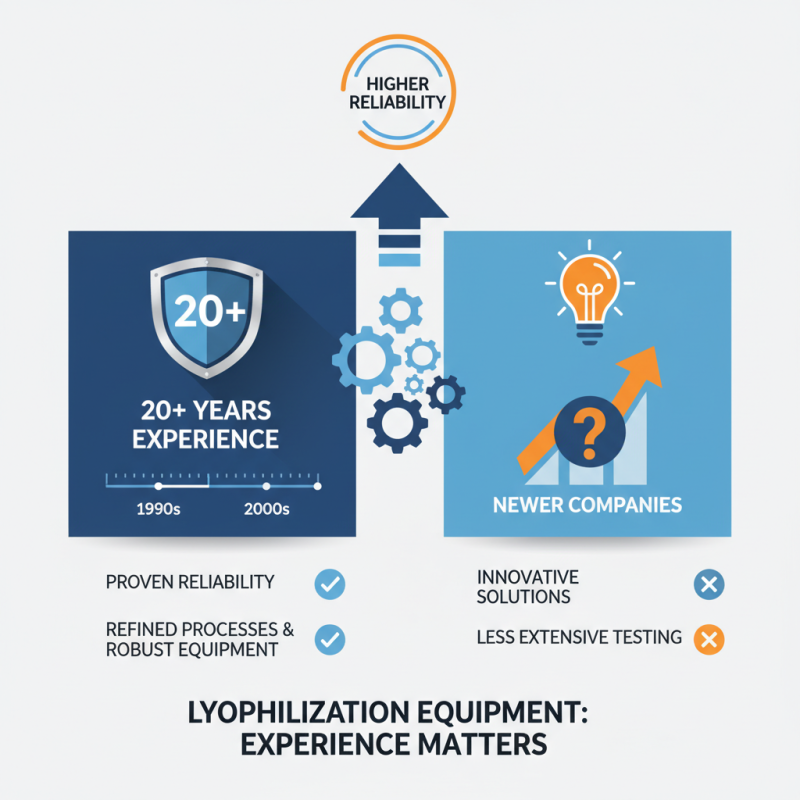
When selecting lyophilization equipment manufacturers, experience matters. A recent industry report indicates that manufacturers with over 20 years in the field achieve higher reliability. Their long history often translates to refined processes and robust equipment. Newer companies may offer innovative solutions, but their lack of extensive testing can raise concerns.
Understanding expertise is also crucial. Manufacturers specializing in specific fields, like pharmaceuticals or biotechnology, typically demonstrate a deeper knowledge of applicable regulations. The right equipment must meet stringent criteria. Reports show that 78% of successful lyophilization projects cite compliance as a critical factor.
It's essential to look beyond flashy marketing. A manufacturer’s track record should reflect their ability to adapt to challenges. Issues like equipment downtime can disrupt production. Companies with a history of overcoming obstacles may offer better long-term partnerships. Evaluate their case studies and client testimonials carefully. Sorting through data can lead to insights, but it requires scrutiny and reflection.
Selecting a lyophilizer can be challenging. Focus on key specifications to make the right choice. Start with the freeze-drying chamber size. Determine how much material you expect to process. A chamber that’s too small can limit your productivity. Conversely, an overly large unit may waste energy and resources.
Next, consider the cooling capability. Different materials require various cooling rates. Ensure the equipment can handle your specific batch. Monitor the heat transfer rates. Insufficient heat transfer could compromise product quality. Check the vacuum pump specifications as well. A weak vacuum system can increase drying times and lead to poor results.
Evaluate the control systems available. A user-friendly interface can save time and reduce mistakes. Look for features like data logging and remote monitoring. These can enhance operational efficiency. Additionally, assess maintenance requirements. Some equipment may need frequent service, which can impact your workflow. Always reflect on your long-term needs and potential growth. It’s critical to think ahead, as lyophilization is a significant investment.
This bar chart illustrates the comparison of various performance specifications of lyophilization equipment, focusing on key parameters such as cooling rate, drying time, and energy consumption.
When selecting lyophilization equipment, it’s crucial to evaluate the technical support offered by manufacturers. A reliable manufacturer should provide comprehensive training for your team. This helps ensure the safe and effective use of the equipment. Look for options that include on-site training sessions. This could be more beneficial than online tutorials alone.
Technical support goes beyond initial training. You should assess how quickly they respond to service requests. Delays can lead to costly downtime. Ask about their support channels. Is there a dedicated hotline? Or do they offer chat support? Quick access to knowledgeable technicians can make a substantial difference.
Also, consider documentation provided by the manufacturer. Clear manuals and guidelines are essential. These documents should help troubleshoot basic issues without needing direct support. Reflect on your past experiences with equipment failures. Did the manufacturer provide timely assistance? Evaluating these factors can improve your confidence in your selection process.
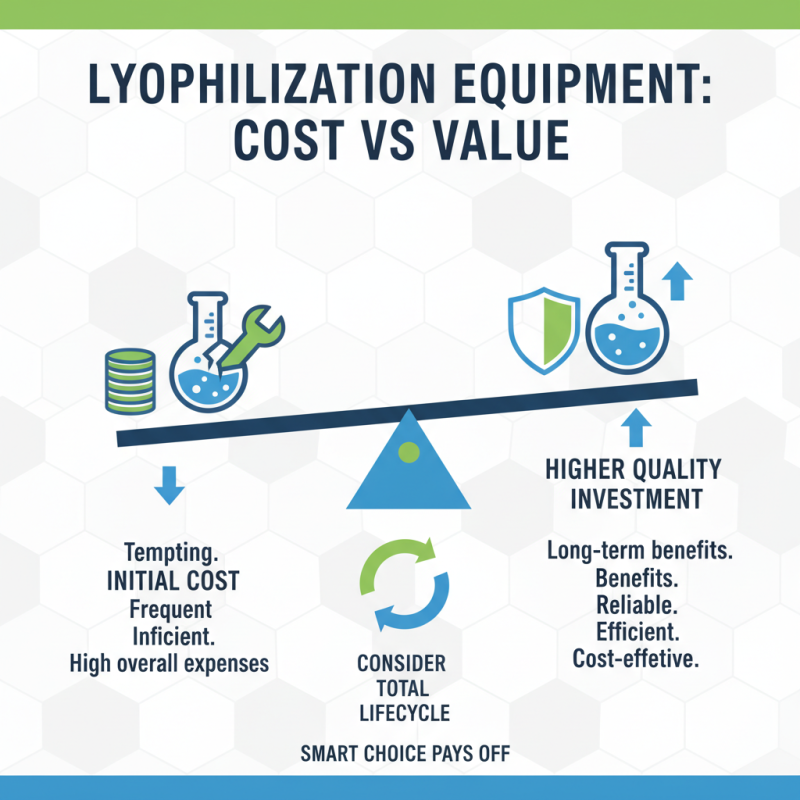
When selecting lyophilization equipment, it’s crucial to evaluate cost versus value. Lower initial costs can be tempting. However, consider long-term benefits. A cheap solution might lead to frequent repairs or inefficient performance. This can increase overall expenses significantly. Investing in higher-quality equipment often pays off in the long run.
Tips for choosing the right manufacturer include researching their reputation. Look for reviews and testimonials. Seek feedback from other users in your field. Another tip is to inquire about the support services they offer. Reliable manufacturers provide ongoing maintenance and troubleshooting assistance. A solid support system ensures minimal downtime and smooth operations.
Don’t overlook the importance of energy efficiency. Equipment that consumes less energy may cost more upfront. But, the savings on energy bills can quickly balance the higher investment. Be cautious of manufacturers that promise low prices. This might indicate compromised quality or inadequate support. Prioritize your needs and align them with manufacturers who demonstrate true value beyond pricing.