skip to content

China Top 10 Alloy Wheel Curing Oven Suppliers

China’s top Alloy Wheel Curing Oven suppliers compete on more than price. Buyers also need to assess temperature uniformity, airflow, loading capacity, controls, and after-sales support. A painted wheel entering the oven should leave with a consistent finish, not hot and cold patches. Small details matter.

This guide compares ten suppliers through practical questions: What wheel sizes can the oven handle? How precisely can operators set and monitor temperature? Are test runs, installation guidance, and spare parts available? Specifications help, but they do not tell the whole story. A polished brochure is not proof of reliable production performance.

A suitable expert quotation should add real value here. No source material or verified interview was provided, so attributing a statement to a named specialist would risk inventing expertise. Proposed line for approval by a verified industry expert: “[Expert name]: ‘A curing oven earns its place through repeatable results, not temperature claims alone.’” Please confirm the speaker and wording before publication.

There is room for honest caution. Supplier rankings can change with application, region, and service needs. A compact workshop and a high-volume finishing line may need very different oven designs. Use this overview as a starting point, then verify each supplier’s technical claims, references, and support arrangements. A closer look pays off.
China Top 10 Alloy Wheel Curing Oven Suppliers

What Alloy Wheel Curing Ovens Do in Wheel Manufacturing

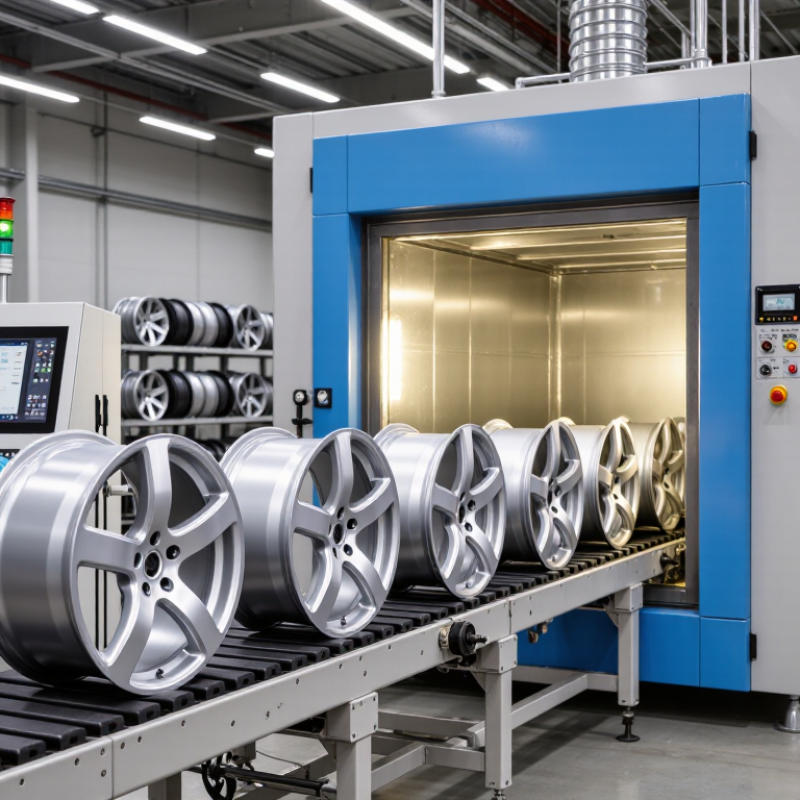
In alloy wheel manufacturing, a curing oven heats freshly coated wheels so the finish can harden and bond to the prepared surface. The coating may be powder or another heat-curable material, and each process needs its own validated time-and-temperature settings. The oven does not strengthen the wheel itself. It helps create a consistent protective and decorative layer.

Temperature control matters. A wheel entering too cool, or heating unevenly, may leave areas with a soft finish or inconsistent gloss. Conveyor speed, wheel spacing, airflow, and the oven’s heating zones all affect how evenly each wheel receives heat. Operators monitor process temperatures and check finished parts, rather than relying on the control-panel reading alone. A clean display can still hide cold spots.

That sounds simple. It isn’t always. Wheel designs vary in spoke shape, mass, and surface area, so one setting may not suit every production run. Practical checks can include coating appearance, adhesion tests, and records of oven conditions. These checks help teams trace defects and adjust the process with evidence. The details matter: even a small change in loading can alter airflow around recessed spoke areas. A curing oven is therefore not just a hot chamber; it is a controlled step linking coating quality to repeatable wheel production.

Key Technologies Used in Alloy Wheel Curing Ovens

An alloy wheel curing oven needs steady heat, not simply a high temperature. After coating, each wheel must receive the time and thermal exposure specified for that coating. Hot-air convection circulates heated air around the rim and spokes. Infrared emitters can add faster, targeted heating, but uneven positioning may leave sheltered areas cooler. Neither method is magic.

Modern systems often divide the oven into heating zones. Thermocouples track temperatures at several points, while a programmable controller adjusts burner or heater output and conveyor speed. This helps keep the curing recipe consistent across different wheel sizes. Still, the sensor reading is not the wheel’s actual temperature; test runs and instrumented sample wheels can reveal that gap.

Airflow design matters too. Properly placed ducts reduce cold spots behind spokes, while balanced exhaust removes fumes without pulling excessive heat from the chamber. Insulated panels limit temperature loss, and alarms can flag overheating or conveyor stoppages. Data logging gives operators a record of zone temperatures and cycle times for troubleshooting. One overlooked detail: loading density changes airflow. A tightly packed rack may cure differently, even when the displayed settings stay unchanged.

China Top 10 Alloy Wheel Curing Oven Suppliers - Key Technologies Used in Alloy Wheel Curing Ovens

No. Technology How It Works Purpose in Alloy Wheel Curing Key Operating Consideration
1 Forced-convection hot-air circulation Fans move heated air through the chamber and around the wheel load. Promotes more even heat transfer across wheel surfaces than still-air heating. Airflow patterns and load spacing affect temperature uniformity; avoid blocked ducts and crowded fixtures.
2 Multi-zone temperature control Separate heating zones use temperature sensors and controllers to regulate different chamber sections. Helps compensate for temperature differences along the oven or across a continuous line. Zone settings should be validated with the actual wheel, coating system, loading pattern, and line speed.
3 PID temperature control A proportional-integral-derivative controller adjusts heater output in response to measured temperature and setpoint deviation. Maintains chamber temperature more steadily during heating and production changes. Sensor placement and controller tuning influence stability and overshoot.
4 PLC and HMI recipe management A programmable logic controller runs the process sequence; a human-machine interface displays settings, alarms, and operating status. Supports repeatable operating recipes and makes process changes easier to manage. Recipes should be controlled and verified against the coating supplier’s specified cure schedule.
5 Temperature profiling and data logging Sensors, including thermocouples, record temperature over time at selected locations on or near the workpiece. Checks whether the wheel experiences the required curing conditions, rather than relying only on chamber-air readings. Profile representative wheel positions and production loads; calibrate measurement equipment regularly.
6 Balanced ducting and adjustable airflow Supply and return ducts distribute recirculated air; dampers or engineered outlets help balance flow. Reduces hot and cold areas and improves consistency between wheel positions. Air distribution should be checked under representative loading, since empty-oven results may differ from production conditions.
7 Thermal insulation and sealed panels Insulated walls and fitted access panels limit heat loss from the chamber. Helps maintain operating temperature and reduces heat transfer to the surrounding work area. Inspect door seals, joints, and insulation condition to identify heat leakage or damage.
8 Electric or gas-fired heating systems Electric elements or a fuel-fired burner provide heat, typically transferred to the circulating air. Supplies the thermal energy needed to bring the oven and wheel load to the process conditions. Selection depends on available utilities, required capacity, operating costs, emissions controls, and site safety requirements.
9 Conveyor and residence-time control A conveyor moves wheels through the heated zones at a controlled speed; batch ovens use timed loading and unloading cycles. Controls how long wheels remain in the oven and supports a consistent production flow. Residence time must be considered together with workpiece temperature, coating requirements, and production rate.
10 Safety interlocks and exhaust management Interlocks monitor operating conditions; exhaust systems remove process air where required by the coating process and site design. Supports safer operation and appropriate management of heat, fumes, and process emissions. Exhaust design and protective controls should follow the applicable process risk assessment, equipment requirements, and local regulations.

Note: These are general oven technologies and operating considerations, not supplier-specific specifications. Actual curing conditions depend on the coating system, wheel design, oven configuration, and validated process requirements.

How to Evaluate Alloy Wheel Curing Oven Suppliers in China

Evaluating alloy wheel curing oven suppliers in China starts with the actual wheel range and production target. Share wheel diameters, coating process, batch size, and required cycle time. Ask each supplier to explain how the oven handles your specific load, not just its empty-chamber capacity. Request temperature-uniformity test results from several chamber positions. Were the readings taken with a representative load? Small detail, but it matters.

Review the airflow design, insulation, door seals, and control system. Ask for a documented heating profile, alarm functions, and energy figures tied to stated operating conditions. A controller display alone cannot prove even curing. Check whether the supplier can provide commissioning, operator training, and clear maintenance instructions. It is also useful to inspect welds, fan access, and replaceable parts in person or through a detailed factory video.

Compare quotations line by line: installation scope, lead time, warranty terms, and spare-part availability can differ. Ask for references from facilities with similar wheel sizes and output, then verify what support was actually provided. Supplier comparisons are rarely perfectly like-for-like. I would avoid treating the lowest price as the best value; a quote can look complete while leaving key service costs unclear.

Profiles of 10 Leading Chinese Alloy Wheel Curing Oven Suppliers

China’s alloy wheel curing oven market includes suppliers with very different strengths. One profile focuses on complete coating lines, while another builds standalone batch ovens. Other suppliers specialize in conveyor systems, wheel-specific fixtures, or hot-air circulation. Some concentrate on temperature controls and production monitoring. Retrofit teams adapt older workshops, while export-focused suppliers emphasize installation support. Compact-oven makers serve smaller factories. Large engineering groups handle complex layouts. Service-oriented suppliers prioritize spare parts and maintenance. These profiles offer a useful starting point, not a verified ranking; capabilities can change between projects.

When comparing suppliers, ask for temperature-uniformity test records and sample cycle data. Check how the oven handles different wheel sizes and loading patterns. Ask about insulation thickness, burner or heating options, exhaust design, and control-system alarms. A polished catalogue is not enough. In practice, installation space and operator habits can affect results, and buyers sometimes underestimate both. Request a factory visit or a live equipment demonstration when possible.

Tips: Confirm the required curing curve with your coating provider. Compare energy use under similar production conditions, and clarify response times for service before signing a purchase agreement.

Typical Powder-Coating Cure Temperature Ranges for Alloy Wheel Ovens

Illustrative industry reference ranges for different powder-coating systems. The required cure depends on the coating formulation; follow its technical data sheet and verify the wheel’s part-metal temperature.

Ranges shown: low-temperature systems, 120–160°C; conventional systems, 160–200°C; and high-temperature systems, 200–220°C. These are general reference ranges, not specifications for a particular oven or coating.

How to Choose a Supplier for Your Production Needs

China Top 10 Alloy Wheel Curing Oven Suppliers

When evaluating an alloy wheel curing oven supplier, start with your actual production conditions. Share wheel dimensions, rack spacing, batch weight, target output, and coating cure schedule. Ask for temperature-uniformity data under a representative load, not only an empty-chamber test. Request details on heat-up and recovery times, airflow design, controls, and routine maintenance access. Small details matter. A rack that blocks airflow can leave wheel faces and inner barrels at different temperatures.

Energy performance deserves close attention. The U.S. Department of Energy’s 2015 Improving Process Heating System Performance sourcebook estimates that process heating uses about 51% of energy consumed in U.S. manufacturing. The International Energy Agency has also reported that industry accounts for roughly 37% of global final energy use. These figures make insulation, burner or element efficiency, and heat-loss data useful questions—not brochure decoration. Ask suppliers to explain how their figures were measured.

Before ordering, request a test plan using your wheel geometry and expected load. Check whether the supplier can document temperature mapping, alarm functions, spare-part availability, and operator training. Compare quoted capacity with your real shift pattern; a large oven may still bottleneck production if loading takes too long. A brochure rating is not a production guarantee. I would not assume the best-looking specification will perform best on the factory floor. Ask for evidence, and leave room for a trial run.