skip to content

China Best Laser Cladding Machine Manufacturer?

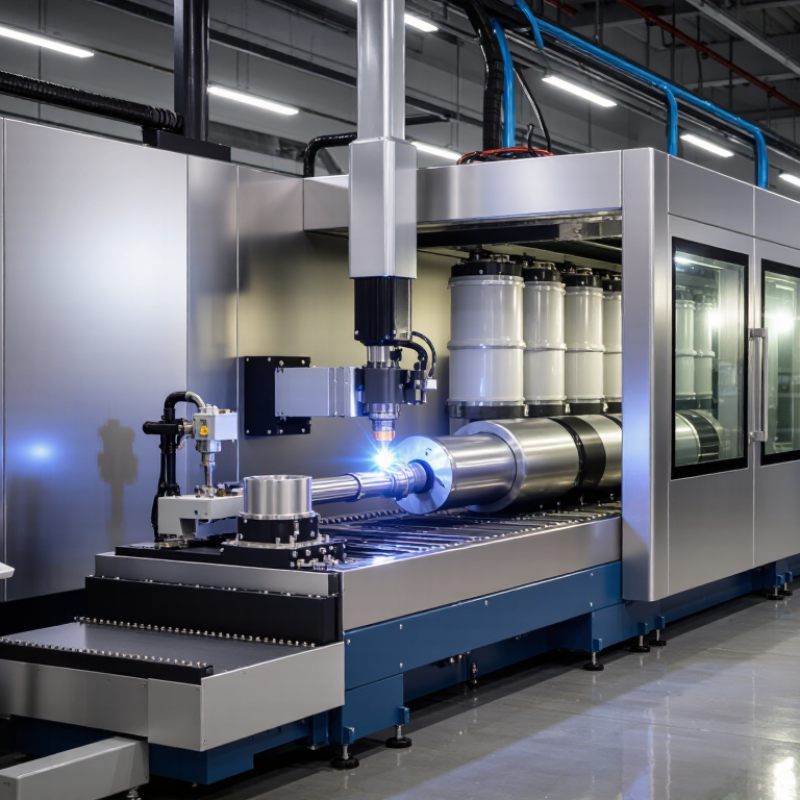
Choosing the China best Laser Cladding machine manufacturer requires more than comparing prices or polished factory photographs. A reliable evaluation should examine engineering experience, powder feeding stability, laser control, cooling design, and after-sales support. These details often decide whether a coating remains bonded after thousands of operating hours.

Professor Milan Brandt, a recognised authority in metal additive manufacturing, has stated, “Process control is the key to achieving repeatable results in laser-based manufacturing.” This principle applies directly to Laser Cladding. A capable manufacturer should provide stable energy density, accurate powder delivery, and consistent track geometry. Ask for measured results, not broad promises. Request sample reports showing hardness, dilution, porosity, and bonding strength. A close photograph of a repaired turbine blade can reveal uneven overlap, trapped powder, or excessive heat.

China has many experienced manufacturers, but quality varies. Some companies build complete systems, while others mainly integrate imported lasers and controllers. That distinction matters. It affects maintenance, software compatibility, and replacement-part availability. Factory testing is useful, yet it cannot replace production trials with your actual alloy and component shape. This is where many purchasing decisions become weak.

The better question is not simply, “Who is the best?” It is, “Who can prove repeatable performance for my application?” Consider carbide coatings, nickel-based repairs, stainless-steel restoration, and automated scanning requirements. Discuss operator training, calibration records, safety systems, and remote technical assistance. Even strong suppliers may have limitations. That should be acknowledged. A careful buyer compares evidence, visits the facility when possible, and treats performance claims as starting points rather than final conclusions.
China Best Laser Cladding Machine Manufacturer?

Laser Cladding Technology and Its Industrial Applications

China Best Laser Cladding Machine Manufacturer?

Laser cladding technology uses a focused laser to melt metal powder or wire onto a component surface. It creates a metallurgically bonded layer, unlike ordinary thermal spraying. The process can restore worn shafts, protect valves, and strengthen mining rollers. A 0.8-millimeter coating may repair a sealing surface without replacing the entire part. That saves material and reduces downtime.

Industrial adoption is expanding. MarketsandMarkets estimated the global laser cladding market at approximately USD 0.7 billion in 2023, with strong growth expected through 2028. The report identifies aerospace, energy, automotive, and heavy machinery as major application sectors. The 2024 Wohlers Report also recorded continued growth in metal additive manufacturing, including directed energy deposition systems related to laser cladding. These figures suggest practical momentum, not guaranteed success.

Process control remains difficult. Powder size, laser power, scanning speed, and shielding gas must work together. Poor settings can produce pores, cracks, or excessive dilution. In field trials, surface cleaning often matters more than expected. A technically advanced machine cannot compensate for contaminated steel. I would also question impressive efficiency claims without test records. Reliable evaluation needs hardness maps, cross-section analysis, dimensional checks, and repeated wear tests. Independent laboratories or qualified engineering teams should verify those results before production use.

Key Features of a High-Quality Laser Cladding Machine

A high-quality laser cladding machine begins with stable energy delivery. A precise laser source creates a controlled melt pool, while coaxial powder feeding improves coating uniformity. Powder flow should remain consistent during long repair cycles. Even small fluctuations can produce pores, uneven thickness, or weak bonding.

According to the 2024 Wohlers Report, the global additive manufacturing industry grew 13.5% in 2023, reaching 20.035 billion dollars. This growth increases demand for reliable repair and surface enhancement equipment. Key features should include closed-loop temperature monitoring, accurate motion control, adjustable spot size, and effective shielding gas management. Real-time data logging also supports process traceability and quality audits. A larger laser is not automatically better. Excessive heat may distort thin components. The perfect machine does not exist; application testing remains necessary.

Tips: Test the machine with your actual alloy and powder size. Check powder efficiency, layer thickness, and bond strength. Ask for metallographic evidence, not only polished samples. ISO 52900 terminology can help teams compare additive manufacturing systems clearly. Also inspect software usability. Operators may lose valuable production time through confusing settings. Some specifications look impressive, but shop-floor results can still disappoint.

China Best Laser Cladding Machine Manufacturer? - Key Features of a High-Quality Laser Cladding Machine

Evaluation Dimension Recommended Technical Range or Requirement Why It Matters What to Verify Before Purchase Importance
Laser Type Continuous-wave fiber laser, typically using a 1,000–6,000 W power class for industrial cladding applications. Fiber lasers generally provide high electrical efficiency, stable beam delivery, and low routine maintenance compared with many older laser technologies. Request the laser source specifications, rated output, wavelength, cooling requirements, and long-term power stability data. Critical
Cladding Power Control Closed-loop or accurately calibrated control of laser power, powder feed, travel speed, and shielding gas. Coordinated process control helps maintain consistent layer geometry, bonding quality, and dilution across the workpiece. Check whether the control system records process parameters and supports recipe storage for repeat production. Critical
Powder Feeding System Stable powder delivery with adjustable feed rate, commonly used for metal powders in approximately 45–150 μm particle-size ranges. Uniform powder flow improves deposition efficiency and reduces porosity, underfill, and variation in coating thickness. Verify feeder calibration, hopper capacity, powder compatibility, anti-bridging design, and ease of cleaning. Critical
Deposition Efficiency Often approximately 60%–90%, depending on material, nozzle design, powder size, laser power, and process parameters. Higher efficiency can reduce powder waste and operating cost, but it should not be evaluated separately from coating quality. Ask for test results using the intended alloy and substrate rather than relying only on general machine specifications. High
Layer Thickness Typical single-layer deposition may be about 0.3–2.0 mm; multilayer builds should be qualified for the specific application. Suitable layer thickness supports accurate dimensional restoration while limiting excessive heat input and post-machining work. Confirm minimum and maximum practical layer thickness, dimensional tolerance, and achievable surface finish. High
Heat-Affected Zone and Dilution Low and controlled dilution, commonly targeted in the range of approximately 5%–15% for many repair and wear-coating applications. Controlled heat input helps preserve substrate properties and reduces distortion, cracking risk, and excessive mixing between coating and base metal. Review cross-sectional metallographic samples, dilution measurements, hardness profiles, and distortion test results. Critical
Beam Delivery and Cladding Head Rigid optical path, suitable focal-length options, protective windows, and interchangeable nozzles for the intended geometry. Stable beam delivery and correct powder convergence directly affect spot quality, deposition uniformity, and nozzle life. Check focal adjustment, nozzle availability, protective-window replacement, optical alignment, and maintenance access. High
Motion System Multi-axis CNC, robotic, or hybrid positioning system with suitable repeatability for the component size and geometry. Accurate coordinated movement is essential for complex surfaces, consistent overlap, and repeatable repair paths. Verify working envelope, axis travel, positioning repeatability, payload, path-planning software, and workpiece fixturing. Critical
Shielding Gas Management Stable argon or another application-appropriate inert-gas supply with controlled flow and effective coverage of the melt pool. Proper shielding limits oxidation and contamination, which can otherwise cause porosity, inclusions, and reduced coating performance. Confirm flow monitoring, gas purity requirements, nozzle coverage, regulator specifications, and alarm functions. High
Process Monitoring Real-time or recorded monitoring of melt-pool temperature, optical emissions, powder flow, laser power, and protective-gas status. Monitoring makes it easier to identify defects early and maintain consistent quality during long or unattended production cycles. Check sensor calibration, data export options, alarm thresholds, traceability functions, and integration with quality records. High
Material Compatibility Compatibility with commonly used cladding materials such as stainless steels, nickel-based alloys, cobalt-based alloys, tool steels, and selected carbides. The correct material combination determines wear resistance, corrosion resistance, thermal performance, and metallurgical bonding. Request application-specific samples and verify powder certificates, chemical composition, particle-size distribution, and storage requirements. Critical
Cooling System Industrial water chiller or equivalent cooling system sized for the laser source, processing head, and duty cycle. Stable cooling protects optical and laser components and helps prevent power drift during continuous operation. Verify cooling capacity, temperature control accuracy, flow alarms, water-quality requirements, and maintenance intervals. High
Safety Compliance Enclosed Class 4 laser work area, interlocked access, emergency stop, beam shielding, warning indicators, and fume extraction where required. Laser cladding involves high-power optical radiation, hot metal, fumes, and moving equipment; engineered safeguards are essential. Review risk assessment, electrical safety documentation, laser classification, interlock testing, and applicable local compliance requirements. Critical
Machine Structure and Work Envelope Rigid frame and work area selected according to component dimensions, weight, rotary-axis needs, and access requirements. A stable structure minimizes vibration and supports accurate deposition on large or irregular components. Confirm maximum workpiece diameter, length, weight, table or chuck specifications, enclosure size, and loading method. High
Maintenance and Serviceability Modular access to filters, optics, nozzles, powder feeders, chillers, and electrical components, supported by clear maintenance procedures. Simple maintenance reduces downtime and helps preserve process stability throughout the machine’s service life. Ask for preventive-maintenance schedules, spare-parts lists, training materials, remote-support capability, and response procedures. High
Acceptance Testing Application-specific test coupon or production-part validation covering geometry, bonding, hardness, porosity, and repeatability. Performance depends strongly on the material, geometry, and process recipe; a practical acceptance test is more meaningful than brochure data. Define measurable acceptance criteria before ordering, including coating thickness, defect limits, hardness range, and dimensional accuracy. Critical

Note: Technical ranges are typical engineering reference values. Final specifications should be validated through application-specific trials using the intended substrate, alloy, component geometry, and production requirements.

How to Evaluate Chinese Laser Cladding Machine Manufacturers

How to Evaluate Chinese Laser Cladding Machine Manufacturers

China’s laser cladding industry is expanding with demand from mining, energy, aerospace, and heavy equipment repair. MarketsandMarkets’ 2024 Laser Cladding Market report forecasts annual growth of roughly 9% in the coming years. This growth attracts capable factories, but also inexperienced assemblers. Evaluate engineering evidence, not attractive catalog images. Ask for recorded results on your actual alloy, surface geometry, and target hardness. A reliable manufacturer should explain powder efficiency, dilution rate, layer thickness, and heat-affected depth in measurable terms.

Request a sample process before signing a large order. Send a worn shaft or valve seat, if practical, and inspect the cross-section afterward. Look for metallographic images, hardness mapping, adhesion testing, and dimensional records. ISO/ASTM 52900 provides useful additive manufacturing terminology, while a documented ISO 9001 quality system supports process control. It does not prove machine performance. That distinction matters. Check laser source traceability, powder feeding stability, motion accuracy, cooling design, and fume extraction. Ask whether technicians have installed comparable systems in real factories, not only laboratories.

Independent data can expose weak claims. The 2024 Wohlers Report shows continued growth in industrial additive manufacturing, yet broader market growth does not guarantee every cladding supplier’s competence. Compare three quotations using the same technical specification. Include commissioning, operator training, spare parts, software updates, and response time. I would also request references from users with similar materials. Some suppliers may provide excellent hardware but limited process support. That is an uncomfortable, but common, purchasing risk. A factory visit can reveal practical details: powder storage, calibration records, weld samples, and how operators handle failed trials.

How to Evaluate Chinese Laser Cladding Machine Manufacturers

This buyer-oriented evaluation framework prioritizes process capability, application experience, quality control, equipment integration, after-sales support, and delivery capability. The percentages represent recommended decision weights rather than market-share data or ratings for any specific company.

Manufacturing Standards, Customization, and After-Sales Support

Choosing the best laser cladding machine manufacturer requires more than comparing laser power or machine size. Manufacturing standards show how consistently a supplier controls quality. Look for documented inspections, material traceability, calibrated measuring tools, and practical laser safety procedures. Request a factory acceptance test with sample parts. The test should check coating thickness, bonding strength, surface finish, and repeatability.

Customization should reflect your actual production conditions. A reliable engineering team studies the substrate, powder material, cladding area, heat sensitivity, and expected production volume. It may adjust the laser source, powder feeder, nozzle, motion system, software, or cooling design. Ask for process trials using your parts, not generic metal coupons. No supplier gets every parameter right on the first trial. That is normal. What matters is how clearly the team records failures and improves the process.

Tips: Confirm warranty coverage, response times, remote diagnostics, spare optics, and technician training before ordering. Ask whether service records remain available after installation. Useful support includes setup guidance, operating videos, preventive maintenance schedules, and clear replacement procedures. A dependable manufacturer provides measurable service commitments, not vague promises. Still, buyers should review their own maintenance discipline. Even a well-built machine can lose accuracy when lenses are neglected, powder delivery becomes unstable, or calibration is postponed.

Selecting the Best Laser Cladding Machine Manufacturer in China

China Best Laser Cladding Machine Manufacturer?

Selecting the best laser cladding machine manufacturer in China requires more than comparing prices. Examine the manufacturer’s engineering experience, production records, and after-sales support. Ask for test results using your actual material, coating powder, and component shape. A serious supplier should explain laser power, spot size, powder efficiency, and layer thickness clearly. Vague promises deserve caution.

Inspect the machine in practical detail. Check the powder feeder, motion system, cooling unit, protective optics, and control software. Closed-loop monitoring can help maintain stable melt-pool conditions during long production runs. Request a sample cladding trial on a worn shaft, valve seat, or turbine component. Measure hardness, bonding strength, dilution, surface roughness, and heat-affected depth. Photos are not enough.

Technical documents should include maintenance schedules, calibration procedures, electrical specifications, and operator training plans. Confirm whether engineers can respond quickly after installation and provide replacement parts. Local service matters. Very much. I would not choose a supplier only because its factory looks impressive. Some demonstrations use ideal settings that do not match difficult production work. A better evaluation includes repeated trials, transparent data, and a clear acceptance standard. No manufacturer is perfect, so discuss known limitations before signing an agreement. That conversation often reveals more than a polished brochure.