skip to content

Why Choose Burr Oak Fin Press for Global Sourcing?

Global heat exchanger production is becoming more demanding. The International Energy Agency reports that buildings consume about 30% of global final energy and create roughly 26% of energy-related emissions. Efficient coils and compact fin designs therefore matter beyond the factory floor. They influence equipment size, operating costs, and long-term energy performance.

Burr Oak Fin Press offers a practical option for manufacturers sourcing forming equipment across borders. Its value should be judged through measurable production needs, not brand familiarity alone. Fin pitch, material thickness, press repeatability, tooling changeover, and line integration all affect output quality. A well-matched press can help produce consistent aluminum or copper fins, reduce dimensional variation, and support stable heat exchanger assembly. Small differences become expensive at scale.

The AHRI Standard 410 framework remains a useful reference for evaluating forced-circulation air-cooling and air-heating coils. Buyers should connect machine specifications with recognized coil-performance requirements, supplier testing, and documented quality controls. ISO 9001 certification, traceable components, operator training, and responsive after-sales service also deserve attention during global procurement. These details can reduce commissioning delays and clarify accountability between suppliers, integrators, and end users.

Still, no press is automatically the right choice. That is worth admitting. A global sourcing team should request sample runs, tooling data, maintenance records, spare-parts lead times, and references from comparable plants. Burr Oak Fin Press becomes compelling when its technical support, repeatable forming performance, and lifecycle economics match the buyer’s actual production conditions. The strongest decision is evidence-led, not promise-led.

Why Choose Burr Oak Fin Press for Global Sourcing?

What Is the Burr Oak Fin Press and What Does It Produce?

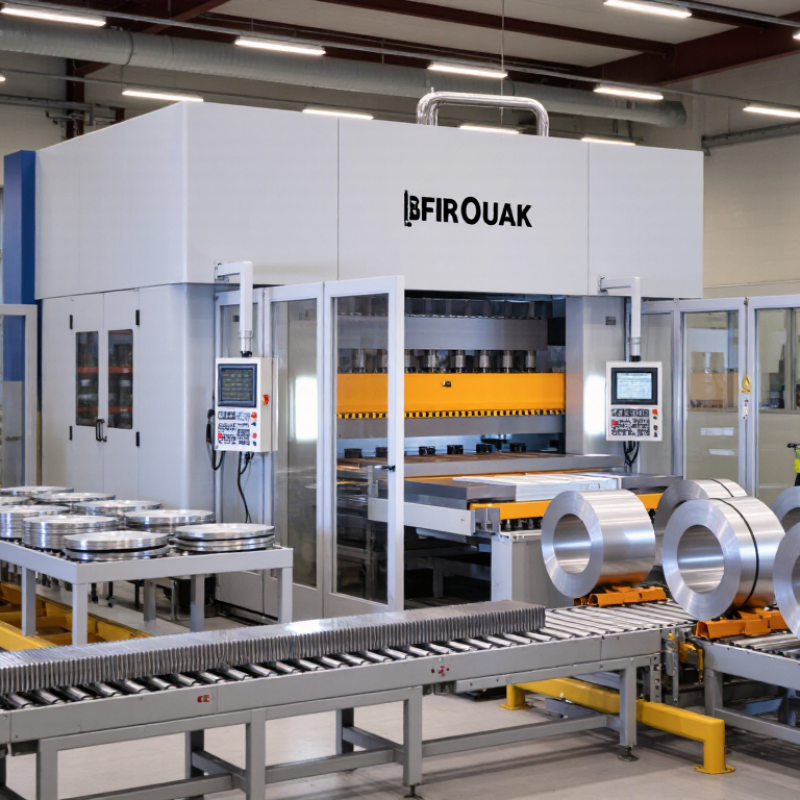
A fin press is a precision stamping machine for producing heat-exchanger fins. It feeds thin aluminum or copper strip through shaped dies. The dies create louvers, corrugations, collars, and controlled fin spacing. These parts later transfer heat inside air conditioners, chillers, refrigeration units, and vehicle cooling systems.

The equipment must hold tight tolerances across long production runs. Small pitch errors can restrict airflow or complicate tube assembly. Excessive burrs can damage operators, reduce contact quality, and increase scrap.

Practical sourcing checks should include feed accuracy, die-change time, press stability, lubrication control, and inspection records. Not glamorous, but important.

The International Energy Agency reports that buildings use about 30% of global final energy and create roughly 26% of energy-related emissions. The 2023 Global Status Report for Buildings and Construction places buildings and construction near 37% of global energy and process emissions. Efficient heat-transfer components therefore matter, although a fin press cannot guarantee system-level energy savings.

Design, assembly, airflow, and maintenance still decide performance. That limitation is easy to overlook.

A reliable supplier should provide sample parts, dimensional data, material traceability, and documented trial results before large-scale purchasing. (Sources: IEA, Energy Efficiency 2023; UNEP Global Status Report for Buildings and Construction 2023.)

How the Burr Oak Fin Press Works in Fin Manufacturing

A fin press turns thin metal coil into precise heat-exchanger fins. The process begins with decoiling and straightening. A servo feeder then advances the strip through a progressive die. Each stroke forms louvers, collars, slots, and the final fin profile. The press must control pitch, strip tension, and forming depth continuously. Even a small feed error can damage several meters of material.

The International Energy Agency reported that cooling used about 10% of global electricity demand in 2018. Its Future of Cooling report also projected cooling electricity demand could more than triple by 2050. These figures increase pressure on manufacturers to improve heat-transfer efficiency. Proper fin geometry helps reduce airflow resistance and material use. However, the process is not flawless. Tool wear can create burrs, uneven collars, or inconsistent fin spacing. A perfect first run is uncommon.

Tips: Check die clearance before production. Measure fin pitch, height, and burr size during the first coil. Keep material certificates and inspection records for global sourcing. Recycled aluminum can also reduce environmental impact; the International Aluminium Institute reports that recycling uses about 95% less energy than primary production. Still, energy savings depend on clean sorting and reliable supply. That detail is easy to overlook.

Key Advantages of Burr Oak Fin Press Technology

Fin press technology offers a practical route to consistent metal fin production for global sourcing. It forms thin sheets with controlled pressure, creating regular fin height and spacing. This consistency supports dependable airflow and heat transfer in cooling equipment. In production reviews, engineers can compare samples using gauges, visual checks, and dimensional records. Stable fin profiles also simplify assembly with tubes, plates, or frames. Small details matter.

The process can improve material utilization when feeding and cutting settings are properly controlled. A well-configured press reduces unnecessary deformation and limits avoidable scrap. It can also support different metals and thicknesses, depending on tooling design and application needs. For international purchasing teams, repeatable output makes supplier evaluation more practical. Clear process records help buyers track material batches, inspection results, and maintenance history. That builds trust.

Still, the technology is not automatically perfect. Tool wear, uneven lubrication, or incorrect feed settings can mark the fins. Early samples may look acceptable but fail dimensional checks later. That is where disciplined inspection earns its value. Teams should verify fin height, pitch, surface condition, and output stability across multiple batches. A realistic sourcing plan also allows time for setup changes. This may feel slower. It often prevents expensive rework, although every application needs its own testing.

Why Choose Burr Oak Fin Press for Global Sourcing? - Key Advantages of Burr Oak Fin Press Technology

Sourcing Dimension Relevant Technical Data Key Advantage of Fin Press Technology Global Procurement Benefit
Material Compatibility Common fin materials include aluminum and copper alloys. Typical thermal conductivity values at approximately 20°C are about 190–230 W/m·K for aluminum alloys and approximately 390 W/m·K for commercially pure copper. The process can form thin, high-surface-area fins from thermally conductive sheet or strip materials. Buyers can select the material according to thermal performance, corrosion resistance, weight, and cost requirements.
Heat-Transfer Surface Area Fin arrays increase the exposed surface area available for convection compared with a flat plate of the same footprint. Continuous forming supports closely spaced, repeatable fin patterns for compact heat exchangers, condensers, evaporators, and cooling assemblies. Higher surface-area density can help reduce package size or improve heat-dissipation capacity when the airflow and thermal design are suitable.
Fin Geometry Important design variables include fin height, fin pitch, material thickness, louver angle, strip width, and part length. Press tooling can be configured for application-specific geometries rather than relying only on standard flat surfaces. A documented geometry specification makes quotations, supplier comparisons, and repeat orders easier across regions.
Production Efficiency Press forming is a mechanical process that can produce repeated fin profiles from coil or sheet stock, subject to machine and tooling capacity. Automated feeding and repeatable forming reduce dependence on manual fabrication for medium- and high-volume production. Improved throughput can support shorter production schedules and more predictable capacity planning.
Dimensional Repeatability Critical characteristics normally include fin pitch, height, width, flatness, cut length, and mounting-hole position where applicable. Dedicated tooling and controlled feed systems help maintain consistent geometry from part to part. Stable dimensions reduce assembly variation and simplify incoming inspection using drawings, gauges, and sampling plans.
Material Utilization Fin pressing forms the profile directly from strip or sheet, while material yield depends on nesting, blank width, trim allowance, and part layout. A controlled strip layout can reduce unnecessary machining and secondary cutting operations. Lower processing waste and fewer secondary operations may improve total landed cost, although actual savings require a project-specific yield study.
Product Weight and Package Size Aluminum has a density of approximately 2.70 g/cm³, while copper is approximately 8.96 g/cm³ at room temperature. Thin formed fins can provide substantial heat-transfer area without requiring a solid block of material. Lower mass can reduce freight weight and support lighter assemblies, particularly when aluminum is thermally adequate for the application.
Secondary Operations Depending on the design, parts may require cutting, piercing, bending, joining, coating, cleaning, or brazing after forming. Fin forming can integrate selected operations into a progressive or automated production sequence. Fewer supplier handoffs can reduce logistics complexity, handling damage, and coordination effort.
Quality Verification A practical inspection plan may include material certificates, dimensional reports, visual checks, flatness measurement, burr inspection, and functional thermal testing where required. Repeatable tooling provides measurable process characteristics that can be monitored through first-article and in-process inspections. Clear acceptance criteria improve supplier qualification and make international quality claims easier to resolve.
Scalability and Customization Capacity depends on press tonnage, strip width, material thickness, tooling design, feed speed, and required production volume. The process can be adapted to different fin patterns and part configurations when the tooling and equipment are properly matched to the design. Purchasers can qualify a design for prototype, pilot, and production stages while keeping the core forming method consistent.

Technical values are typical reference data at room temperature. Final performance, tolerances, production rate, material yield, and cost should be confirmed through application-specific drawings, tooling reviews, and supplier validation.

Global Sourcing Factors: Quality, Capacity, and Compatibility

Why Choose Burr Oak Fin Press for Global Sourcing?

Global sourcing is not only a price exercise. Quality starts with stable strip handling and repeatable forming. The International Aluminium Institute reports that recycling aluminium can use up to 95% less energy than primary production. That makes efficient material use valuable, not decorative. A capable fin press should control pitch, burr formation, flatness, and scrap rates. Ask for material certificates, dimensional records, and sample parts from your actual alloy and thickness. ISO 9001 certification supports process discipline, but it does not guarantee perfect output. That distinction matters.

Capacity needs evidence beyond a quoted cycle rate. Review usable strokes per minute, coil-change time, die life, maintenance access, and tested uptime. A short factory acceptance test can expose feeding errors before shipment. Global logistics adds pressure. UNCTAD’s Review of Maritime Transport states that ships carry over 80% of world merchandise trade by volume. Delays therefore affect production planning, not just freight budgets. Spare dies, sensors, and documented troubleshooting should travel with the machine.

Compatibility is often underestimated. Confirm strip width, thickness range, fin geometry, electrical standards, safety interfaces, and factory communication protocols. Check whether operators can adjust tooling without specialized software. A press may perform well in one plant and struggle in another. That is an uncomfortable possibility. Compare measured samples, not promises. Local service coverage, remote diagnostics, calibration records, and clear acceptance criteria also reduce sourcing risk. A lower purchase price can become expensive when every changeover needs outside assistance.

How to Assess Burr Oak Fin Press Suppliers and Equipment Options

Assessing a burr oak fin press supplier requires more than comparing quoted prices. Start with documented experience in forming, pressing, and handling burr oak components. Ask for case evidence, process photos, and measurable tolerances from comparable projects. A credible supplier should explain tooling choices, press capacity, cycle times, and expected material variation. Details matter. Request sample parts before approving a production schedule. Inspect edge quality, surface marks, moisture response, and repeatability across several pieces.

When reviewing equipment, match the press design to your actual workload. A compact manual unit may suit prototypes, but it can slow consistent volume production. Hydraulic and servo-controlled systems offer different levels of force control, energy use, and maintenance complexity. Check platen size, pressure range, stroke accuracy, guarding, and spare-part availability. Ask how calibration is recorded. Reliable suppliers provide installation guidance, operator training, inspection records, and responsive technical support. You should also verify material compatibility under humid shipping and storage conditions.

One overlooked point is future expansion. A low-cost press may become expensive if tooling changes require a complete replacement. I would compare total ownership cost over five years, not only the purchase invoice. The assessment is not flawless. Supplier claims still need independent testing, and trial results may expose assumptions your team missed. That uncertainty is useful.