skip to content

10 Best Industrial Water Meters for Global Buyers?

Industrial water meters are becoming essential as factories face tighter water budgets, rising energy costs, and stronger reporting expectations. The United Nations World Water Development Report 2024 estimates that industry accounts for about one-fifth of global freshwater withdrawals. That figure is broad, but it shows the pressure clearly. Every cubic metre matters.

The International Energy Agency has also linked efficient water management with industrial energy performance, especially where pumping, heating, and treatment operate together. Meanwhile, recent reports from MarketsandMarkets and Grand View Research show expanding demand for smart water-management systems, including ultrasonic, electromagnetic, mechanical, and IoT-enabled meters. The technology is advancing quickly. Selection is not simple.

Water expert Peter H. Gleick has stated, “Water is the most precious resource on Earth.” His observation gives this comparison a practical foundation. A suitable meter should deliver stable readings, withstand vibration, tolerate temperature changes, and connect reliably with existing control systems. Accuracy alone is insufficient. A highly precise meter can still fail when installation is poor, pipes are partially filled, or maintenance is ignored.

This guide reviews 10 Best Industrial Water Meters for Global Buyers. It considers measurement accuracy, pressure tolerance, materials, communication protocols, calibration support, lifecycle cost, and supplier reliability. The shortlist is useful, but not perfect. A food plant, steel mill, and semiconductor facility may need very different instruments. Buyers should verify local standards, water chemistry, pipe conditions, and after-sales service before purchasing. The best choice is rarely the most expensive one. It is the meter that keeps reporting trustworthy when production becomes difficult.
10 Best Industrial Water Meters for Global Buyers?

Industrial Water Meter Types and Their Core Measurement Principles

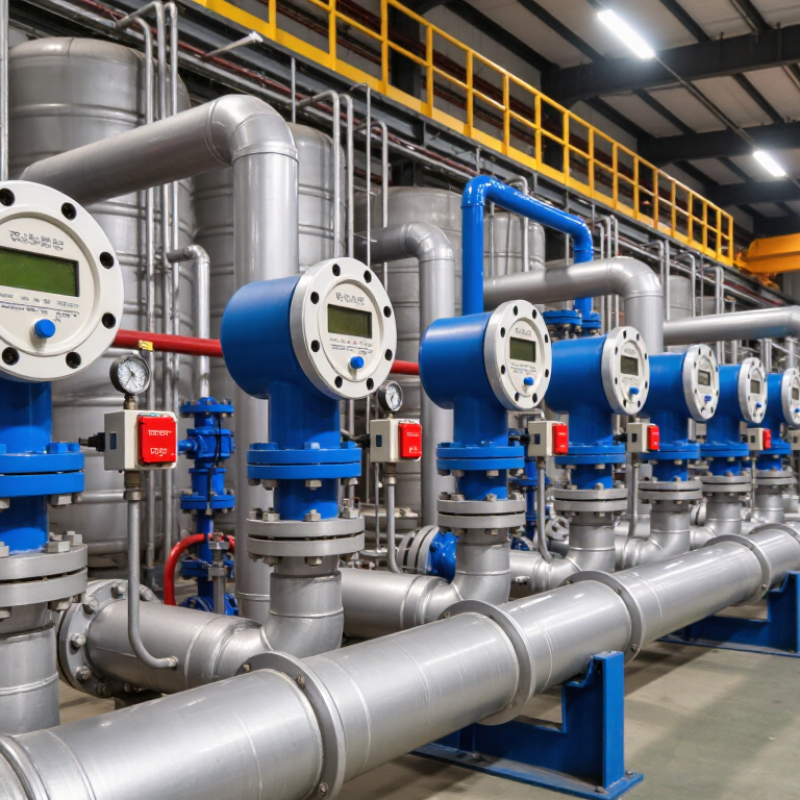
Industrial water meters differ by their measurement principle, installation needs, and fluid conditions. Electromagnetic meters measure voltage generated as conductive water moves through a magnetic field. They have no moving parts, so they suit wastewater, cooling water, and water containing suspended solids. Ultrasonic meters calculate flow from transit-time differences between sound signals. Clamp-on models can measure without cutting the pipe, which is useful during audits or temporary checks.

Turbine meters use flowing water to spin a rotor. They can provide strong repeatability, but debris and low flow may reduce accuracy. Vortex meters detect pressure pulses created behind an internal obstruction. They are more common for steam and process fluids than dirty water. The UNESCO World Water Development Report 2024 states that agriculture represents about 70% of global freshwater withdrawals, while industry accounts for roughly 20%. This pressure makes reliable sub-metering more valuable, not optional. Yet no meter is perfect. Poor grounding, air pockets, or incorrect sizing can distort impressive specifications.

Tips: Match the meter to conductivity, temperature, solids, pipe diameter, and expected flow range. Verify installation lengths and calibration records. A smaller meter is not automatically better. Include leak alarms and remote data logging when water costs or downtime are significant.

Key Selection Criteria for Global Industrial Water Meter Buyers

Selecting an industrial water meter starts with the process, not the product catalogue. The UNESCO World Water Development Report 2024 estimates that industry accounts for about 20% of global freshwater withdrawals. That figure hides major differences between cooling systems, chemical plants, and food facilities. Buyers should define pipe size, fluid temperature, pressure, conductivity, suspended solids, and expected flow range before comparing prices.

Accuracy must be tested at both peak and minimum flow. A meter that performs well at 500 m³/h may under-register during night operation. ISO 4064 and OIML R49 provide useful measurement frameworks, but local verification rules still matter. Check the permitted error, calibration method, legal metrology requirements, and traceable test certificates. For remote sites, IP68 protection, battery life, pulse output, and Modbus or other industrial communication protocols deserve equal attention. Cybersecurity is often overlooked.

Installation conditions can defeat excellent specifications. Straight-pipe requirements, grounding, air pockets, vibration, and nearby pumps should be reviewed by an experienced technician. Ultrasonic meters may suit large pipes with limited shutdown time, while electromagnetic meters require conductive liquids and careful earthing. I would not choose by accuracy alone. Lifecycle cost includes calibration, cleaning, data integration, and unplanned removal. No meter is perfect; field data may expose assumptions made during procurement. The best choice is the one that remains reliable in actual operating conditions.

Ten Leading Industrial Water Meters for Different Applications

10 Best Industrial Water Meters for Global Buyers?

Ten Leading Industrial Water Meters for Different Applications

Industrial water meters must match the fluid, pipe, pressure, and measurement purpose. A single design rarely performs well everywhere. Electromagnetic meters suit conductive water, wastewater, and large pipelines. Ultrasonic transit-time meters work well with clean water and stable flow. Clamp-on ultrasonic meters measure without cutting the pipe, which helps during plant upgrades. Doppler ultrasonic meters handle suspended solids, but air bubbles may reduce accuracy. Turbine meters provide responsive readings in clean, filtered water systems.

Positive displacement meters are useful for precise batch control and lower flow rates. Vortex meters fit some process-water lines with steady velocity and limited vibration. Variable-area meters support simple local monitoring, especially around treatment skids. Insertion electromagnetic meters reduce installation costs on large pipes. Open-channel radar meters measure streams, channels, and partially filled conduits without touching the water.

Material selection deserves attention. Stainless steel bodies resist many industrial environments, while suitable liners protect against abrasion and chemicals. Check pressure loss, temperature limits, output signals, and calibration records before purchasing. Field verification matters more than attractive specifications. No meter is perfect. A low-cost turbine meter may fail quickly in gritty water, while an expensive ultrasonic model may struggle with poor pipe conditions. I have found that installation quality often changes results more than the advertised accuracy. Allow straight pipe sections, remove trapped air, and inspect the sensor regularly.

10 Best Industrial Water Meters for Global Buyers? - Ten Leading Industrial Water Meters for Different Applications

No. Meter Type Recommended Application Typical Pipe Size Typical Accuracy Suitable Water Conditions Main Advantages Key Limitations Common Output and Standards
1 Full-Bore Electromagnetic Flow Meter Municipal transmission, process-water lines, cooling-water systems and wastewater with conductive liquids Approximately DN15 to DN3000 and larger Typically ±0.2% to ±1.0% of reading, depending on configuration Conductive water; commonly requires conductivity above about 5 µS/cm No moving parts, negligible permanent pressure loss, bidirectional measurement and good performance with dirty water Cannot measure non-conductive liquids; pipe must remain full; grounding and correct liner selection are important Pulse, frequency, 4–20 mA, Modbus or HART; commonly specified to ISO 4064, OIML R49 or local requirements
2 Inline Ultrasonic Transit-Time Meter Clean-water distribution, energy-plant cooling loops, boiler feedwater and custody or submetering applications Approximately DN25 to DN2000, with larger sizes available Typically ±0.5% to ±1.0% of reading Relatively clean liquid with limited suspended solids and entrained air No moving parts, low pressure loss, wide turndown and useful for large pipelines Accuracy can decline with bubbles, heavy solids, poor pipe lining or inadequate straight-pipe conditions Pulse, 4–20 mA, RS-485/Modbus and data logging; installation should follow the manufacturer’s acoustic-path requirements
3 Clamp-On Ultrasonic Transit-Time Meter Temporary surveys, retrofit projects, leak studies and installations where pipe cutting is not permitted Approximately DN15 to DN6000, depending on transducer type Typically ±1% to ±3% of reading in favorable field conditions Clean or moderately clean water in sound, accessible pipework Non-invasive installation, no process shutdown, no pressure loss and easy relocation Sensitive to pipe-wall condition, lining, mounting position, air bubbles and incorrect sound-speed settings Portable displays, totalizers, pulse, 4–20 mA and digital communications; site verification is recommended for critical measurements
4 Ultrasonic Doppler Flow Meter Raw water, sewage, sludge-bearing water, stormwater and liquids containing suspended particles or bubbles Approximately DN25 to DN3000 for inline or insertion designs Typically ±2% to ±5% of reading, depending on solids concentration and installation Water containing sufficient suspended solids, particles or air bubbles to reflect the ultrasonic signal Works where transit-time meters may fail; available in clamp-on and insertion configurations Requires stable scatterers; performance is affected by changing solids concentration and flow profile 4–20 mA, pulse, relay and digital outputs; best suited to process monitoring rather than high-accuracy billing
5 Insertion Electromagnetic Flow Meter Large-diameter cooling-water, irrigation, raw-water and distribution pipelines where a full-bore meter is costly Commonly DN100 to DN3000 and larger Typically ±1% to ±2% of reading after correct installation and calibration Conductive water with a full pipe and reasonably developed flow profile Lower purchase and installation cost for large lines; no significant obstruction in the main pipe Point-velocity measurement is more installation-sensitive than full-bore designs; hot-tap work requires safety controls 4–20 mA, pulse and Modbus are common; straight-run and insertion-depth requirements must be followed
6 Turbine Flow Meter Filtered process water, chemical dosing skids, utility-water monitoring and batch filling Approximately DN15 to DN300 Typically ±0.5% to ±1.5% of reading within the calibrated range Clean water with low solids content and controlled viscosity Good repeatability, compact construction, broad availability and suitable response for batch processes Moving parts wear; debris can damage the rotor; pressure loss and upstream/downstream straight-run requirements apply Pulse, frequency, 4–20 mA or digital signal; filtration and periodic verification are normally required
7 Positive Displacement Oval-Gear or Piston Meter Low-flow batching, laboratory utilities, high-value process-water dosing and metering with frequent start-stop cycles Approximately DN10 to DN100 Typically ±0.1% to ±1.0% of reading, depending on flow range and calibration Clean water with low particulate content and suitable lubrication characteristics Strong low-flow performance, direct volumetric measurement and good repeatability Moving parts create pressure loss and maintenance requirements; solids can cause jamming or wear Pulse, reed switch, digital totalizer or 4–20 mA; strainers and periodic calibration are commonly used
8 Mechanical Multi-Jet or Woltmann Water Meter Plant utility submetering, irrigation branches, commercial water service and general non-corrosive water measurement Multi-jet: approximately DN15–DN50; Woltmann: approximately DN50–DN500 Commonly accuracy class 2 or better under applicable water-meter standards Clean, treated or moderately clean water within the specified temperature and pressure limits Simple operation, no external power for basic totalization and comparatively low initial cost Mechanical wear, pressure loss, orientation restrictions and reduced accuracy at very low flow may occur Register, pulse output or wireless module; commonly evaluated against ISO 4064 or OIML R49 requirements
9 Vortex Flow Meter Pressurized utility water, cooling-water systems and applications requiring a meter that can also handle steam or gas duties Approximately DN15 to DN300 Typically ±0.7% to ±2.0% of reading, depending on Reynolds number and configuration Clean or lightly contaminated water with stable flow and sufficient velocity No rotor or bearings, moderate temperature capability and possible multi-fluid platform use Requires minimum velocity; vibration, pulsation and two-phase flow can affect the signal Pulse, 4–20 mA, HART or fieldbus; proper support and straight pipe are important for stable vortex shedding
10 Open-Channel Area-Velocity Meter Wastewater channels, stormwater conduits, partially filled pipes, drainage networks and irrigation canals Channels and pipes from approximately DN150 upward, subject to sensor design Typically ±2% to ±5% of reading after site-specific level and velocity calibration Partially full or open-channel flow containing suspended solids; sensor must remain correctly positioned Measures flow where conventional full-pipe meters cannot operate; suitable for variable water levels Requires accurate channel geometry, reliable level measurement and protection from fouling or debris 4–20 mA, pulse, telemetry and data logging; commonly integrated with weirs, flumes or calibrated channel profiles

Note: Accuracy, size range and communication options are typical industry ranges rather than guaranteed values. Final selection should be confirmed against the meter’s datasheet, water quality, pressure, temperature, flow range, installation geometry and applicable local regulations.

Comparing Accuracy, Durability, Connectivity, and Total Ownership Cost

A credible top-ten comparison should weigh more than dial readability. Accuracy matters during low-flow periods, sudden surges, and changing water temperatures. ISO 4064 provides internationally recognized requirements for metering performance and verification. AWWA M6 guidance also stresses routine testing, calibration, and proper installation.

Accuracy comes first.

Durability depends on pipe vibration, suspended solids, pressure shocks, and outdoor exposure. Select a meter with a suitable pressure rating, corrosion-resistant materials, and replaceable components. Connectivity can reduce manual readings through pulse output, cellular networks, or industrial communication protocols. However, wireless systems add battery, signal, and cybersecurity costs.

Not always.
UNESCO’s United Nations World Water Development Report 2024 states that agriculture represents roughly 70% of global freshwater withdrawals. Reliable consumption data therefore supports allocation, leak detection, and process control.

For total ownership cost, compare purchase price, installation, calibration, software, energy use, battery replacement, and downtime over ten years. A cheaper meter can become expensive after repeated service visits. This is where many comparisons remain incomplete.

Tips: Test it onsite. Confirm the minimum flow range before purchasing. Request independent accuracy certificates and a five-year maintenance estimate. Check whether local technicians can service the unit. For remote facilities, calculate communication fees and battery replacement separately. I would also challenge optimistic payback claims; real savings depend on disciplined monitoring, not connectivity alone.

Installation, Calibration, Maintenance, and International Compliance Considerations

Choosing among the 10 best industrial water meters requires more than comparing flow ranges and display features.

Installation conditions often decide measurement quality. Confirm the pipe diameter, pressure rating, fluid temperature, and expected flow range before purchase. Keep the meter full of water. Avoid placing it near pumps, elbows, or partially closed valves. Follow the specified straight-pipe distance.

It may seem minor, but turbulence can create persistent errors.

Calibration should use a traceable reference system, preferably from a laboratory operating under ISO/IEC 17025 practices. Record the meter’s serial number, flow points, test temperature, uncertainty, and adjustment results.

A factory certificate is useful, but it does not replace site verification. Actual water quality, vibration, and installation stress can change performance.

Field technicians sometimes discover that a perfectly calibrated meter reads poorly after careless grounding or trapped air.

Maintenance needs a written schedule.

Inspect seals, cable glands, display panels, strainers, and communication connections. Compare readings with a trusted reference during planned shutdowns. Keep service records accessible to auditors.

For global projects, check local legal metrology rules, electrical safety requirements, environmental ratings, and approved materials. Standards such as ISO 4064 or OIML R49 may support acceptance, but national rules can differ.

Smart meters may also require radio approvals and data protection controls.

Compliance paperwork is not glamorous. Missing one document can delay commissioning for weeks.