skip to content

10 Best Electric Cargo Tricycles for Global Buyers

For global buyers, choosing an Electric Cargo Tricycle is a practical decision, not a simple product comparison. It affects delivery speed, operating costs, rider comfort, and daily reliability. A small bakery may need a sealed box for bread. A city gardener may require an open bed, strong brakes, and low step-in height. Different work creates different priorities.

Urban mobility expert Mikael Colville-Andersen has called the bicycle “the most efficient mode of transportation ever invented.” His observation also helps explain the value of electric cargo vehicles. Electric assistance can make heavier loads and longer routes more manageable, especially on hills or during repeated deliveries. Still, electric power does not solve every problem. Battery range changes with payload, weather, road surface, and riding style. That detail is easy to overlook.

This guide reviews 10 Best Electric Cargo Tricycles for Global Buyers through practical buying criteria. These include motor performance, battery capacity, frame stability, cargo dimensions, braking systems, charging time, warranty support, spare-parts access, and rider ergonomics. We also consider maintenance realities in different markets. A low purchase price may become expensive when replacement parts are difficult to obtain. A powerful motor may be unnecessary for flat urban routes. Sometimes, the “best” model is simply the one a local technician can repair.

Specifications matter. Real working conditions matter more. Expect trade-offs. No tricycle fits every business. The following selection aims to make those trade-offs clearer, while encouraging buyers to verify local safety requirements, road-use rules, and after-sales coverage before ordering.
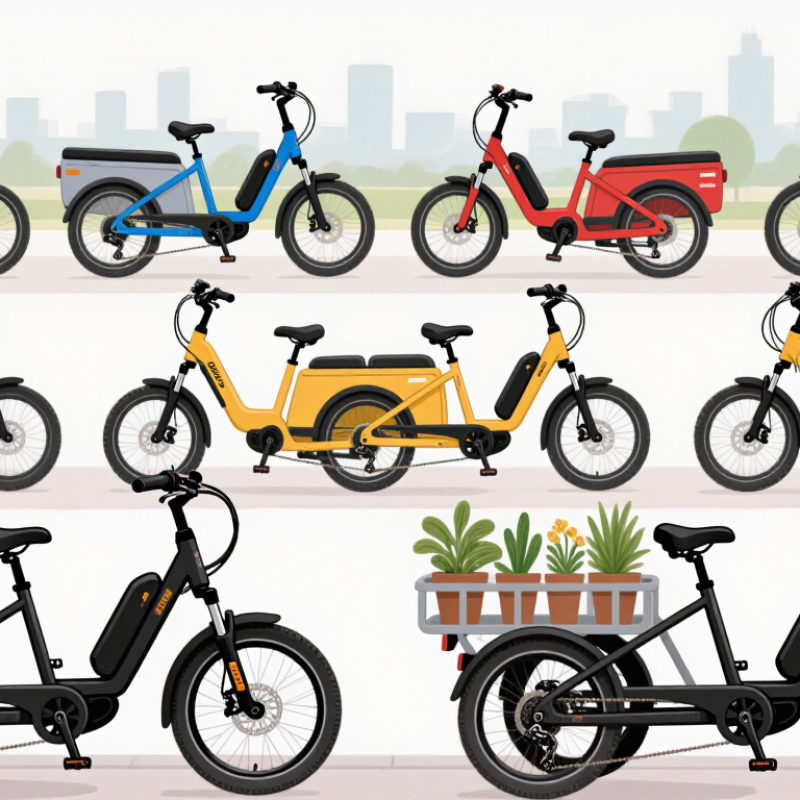
10 Best Electric Cargo Tricycles for Global Buyers

What Makes an Electric Cargo Tricycle Suitable for Global Buyers

An electric cargo tricycle suits global buyers when it performs reliably across different roads, climates, and working routines. Payload capacity matters, but published figures need careful checking. A rated load may change on hills, rough surfaces, or wet roads. Ask for tested capacity, braking distance, and stability data.

Battery performance also deserves practical attention. Buyers should compare usable range, charging time, battery protection, and replacement access. Local electricity standards can differ, so compatible charging equipment is essential. A removable battery helps small businesses with limited parking. However, frequent removal may increase connector wear. Small detail, big consequence.

Frame strength, tire size, lighting, mirrors, and weather protection affect daily safety. The cargo box should match common goods without blocking the rider’s view. Serviceable brakes and widely available components can reduce downtime in distant markets. Clear manuals, spare-parts support, and documented quality inspections show stronger reliability. Independent testing is helpful, but certificates alone do not prove real-world durability. Buyers should request maintenance records, load tests, and trial rides on local roads. No model fits every country perfectly. That is worth admitting. Teams may also need to review local registration, road-use, and electrical requirements before ordering.

Key Specifications to Compare Across Electric Cargo Tricycles

When comparing electric cargo tricycles, start with payload capacity, not battery size. A model rated for 500 kilograms may perform poorly on steep roads or uneven ground. Check whether the rating includes the rider, cargo box, and accessories. Frame material, weld quality, and axle design also affect long-term reliability.

Battery capacity is usually listed in watt-hours. Higher capacity can extend range, but added weight may reduce efficiency. Compare motor power, torque, controller limits, and climbing ability together. A claimed range of 80 kilometers may fall sharply with heavy loads, cold weather, frequent stops, or hills. Real delivery routes matter more than laboratory figures. Charging time matters too. A removable battery can help small warehouses, although it may increase handling risks.

Do not overlook dimensions. Measure the turning radius, ground clearance, tire width, and cargo-bed length before ordering. Narrower vehicles fit alleys better, while wider beds may carry bulky cartons safely. Hydraulic or mechanical brakes should match the loaded weight, and lighting, mirrors, reflectors, and parking brakes deserve close inspection. Suspension improves comfort, but it can add maintenance points. A three-year warranty sounds useful only when service parts are available near the operating area. Specification sheets are imperfect. Ask for load-test records, battery cycle data, spare-part lead times, and independent safety documentation before comparing the final ten models.

10 Best Electric Cargo Tricycles for Global Buyers - Key Specifications to Compare Across Electric Cargo Tricycles
Rank Configuration Motor Output Battery Capacity Claimed Range Maximum Payload Cargo Box Capacity Maximum Speed Charging Time Braking System Best Use Case
1 Long-tail rear cargo tricycle 750 W peak / 500 W nominal 48 V, 20 Ah
960 Wh
50–70 km 250 kg 1.1 m³ enclosed box 25 km/h 6–8 hours Hydraulic disc brakes with parking lock Urban delivery routes and mixed road conditions
2 Front-box commercial tricycle 1,000 W peak / 750 W nominal 48 V, 30 Ah
1,440 Wh
60–85 km 300 kg 1.5 m³ weather-resistant box 25 km/h 7–9 hours Hydraulic disc brakes on all wheels Parcel delivery and food distribution
3 Heavy-duty flatbed tricycle 1,500 W peak / 1,000 W nominal 60 V, 30 Ah
1,800 Wh
55–75 km 500 kg 2.0 m² flatbed 25 km/h 8–10 hours Hydraulic drum or disc brakes with mechanical parking brake Construction supplies and industrial loads
4 Compact urban cargo tricycle 500 W peak / 350 W nominal 48 V, 15 Ah
720 Wh
35–55 km 180 kg 0.8 m³ lockable box 25 km/h 5–7 hours Mechanical disc brakes with parking brake Dense city centers and narrow streets
5 Refrigerated cargo tricycle 1,000 W peak / 750 W nominal 48 V, 40 Ah
1,920 Wh
60–80 km 280 kg 1.2 m³ insulated compartment 25 km/h 8–10 hours Hydraulic disc brakes with regenerative braking Fresh food, medicines and temperature-sensitive goods
6 Passenger-and-cargo utility tricycle 750 W peak / 500 W nominal 48 V, 25 Ah
1,200 Wh
50–75 km 300 kg including passengers 0.9 m³ rear cargo area 25 km/h 6–8 hours Hydraulic front disc and rear drum brakes Campus transport, family use and local services
7 Low-step access tricycle 500 W peak / 350 W nominal 48 V, 20 Ah
960 Wh
45–65 km 220 kg 1.0 m³ open or covered box 25 km/h 6–8 hours Mechanical disc brakes with automatic motor cut-off Frequent stop-and-go delivery work
8 All-weather enclosed tricycle 1,000 W peak / 750 W nominal 60 V, 25 Ah
1,500 Wh
55–80 km 350 kg 1.6 m³ enclosed cargo compartment 25 km/h 7–9 hours Hydraulic disc brakes with electronic parking brake Rainy climates and year-round commercial operation
9 Solar-assisted delivery tricycle 750 W peak / 500 W nominal 48 V, 30 Ah
1,440 Wh
60–90 km 250 kg 1.3 m³ cargo box with roof panel 25 km/h 6–9 hours Hydraulic disc brakes with regenerative braking Long routes where auxiliary solar charging is practical
10 Modular cargo tricycle 1,000 W peak / 750 W nominal 48 V, 25 Ah
1,200 Wh
50–75 km 300 kg 1.0–1.8 m³ interchangeable modules 25 km/h 6–8 hours Hydraulic disc brakes with mechanical parking brake Fleet operators requiring flexible cargo layouts

Ten Leading Electric Cargo Tricycles and Their Main Features

10 Best Electric Cargo Tricycles for Global Buyers

Ten Leading Electric Cargo Tricycles and Their Main Features

Global buyers increasingly need compact vehicles for urban deliveries, farms, and industrial sites. The IEA’s Global EV Outlook 2024 reports that electric two- and three-wheelers exceeded nine million sales in 2023. That growth reflects lower operating costs, not just environmental interest. The leading cargo tricycle configurations include the open-bed hauler with removable side panels, the lockable box trike with weather protection, and the refrigerated trike with insulated cargo space. A narrow alley model offers a small turning radius, while a heavy-duty model adds hydraulic brakes, reinforced axles, and higher payload capacity. The flatbed version suits construction materials. The tipper body helps with soil and recyclable waste. A modular passenger-cargo design changes quickly between seats and freight space. The long-range delivery trike typically uses dual batteries. The solar-assisted model can support auxiliary charging, but sunlight rarely replaces grid charging.

Specifications need careful checking. The claimed range may fall sharply with hills, cold weather, heavy loads, and frequent stops. It happens often. The cargo-bike market report from Cycling Industries Europe identifies last-mile delivery as a major growth area, yet real productivity depends on loading time and route density. Buyers should compare usable payload, battery chemistry, charging hours, water resistance, spare-part access, and braking performance. A 500-kilogram payload sounds attractive, but local road surfaces may expose frame weakness. In my assessment, a reliable 60-kilometer working range can be more useful than an optimistic 120-kilometer claim. Reflective markings, lights, mirrors, and stable parking supports also matter during daily operations.

10 Best Electric Cargo Tricycles for Global Buyers

Ten Leading Electric Cargo Tricycles and Their Main Features

The chart compares ten representative electric cargo tricycle configurations using two practical buying criteria: rated payload capacity and advertised operating range. Payload values generally range from 500 to 1,000 kg, while typical operating range varies according to battery size, load, terrain, speed, and weather conditions.

Values are representative benchmark figures based on commonly published specifications for comparable electric cargo tricycle configurations. Actual performance depends on the final vehicle configuration and operating conditions.

Choosing the Right Cargo Tricycle for Different Business Needs

Choosing the Right Cargo Tricycle for Different Business Needs

An electric cargo tricycle should match the daily route, load, and working environment. A bakery may need an enclosed box with shelves and easy cleaning. A market vendor may prefer an open platform for quick loading. Measure the heaviest usual load, not only the average order. Overloading damages brakes, tires, and battery performance.

For short urban deliveries, a model with moderate range and a tight turning radius is often practical. A delivery team covering steep streets needs stronger climbing power, stable braking, and a larger battery. Range claims can change with payload, temperature, hills, and stop frequency. Real testing matters. I would request a loaded trial before purchasing several units.

Frame strength and service access deserve close attention. Check weld quality, suspension movement, tire availability, charging time, and replacement costs. An operator should reach the controls comfortably, even after long shifts. Rain protection helps, but sealed electrical parts still require inspection. I once underestimated loading height; workers lost time lifting heavy boxes. That mistake changed the purchasing checklist. A slightly slower tricycle may serve better if it reduces fatigue and prevents unstable loads. Also review local operating requirements, parking limits, and charging conditions before final selection.

International Buying Factors: Safety, Service, Shipping, and Compliance

For international buyers, the best electric cargo tricycles must survive real delivery work, not showroom inspection. The IEA’s Global EV Outlook 2024 reports strong growth in electric two- and three-wheelers, especially across Asian markets. This growth increases choice, but also increases quality differences. Check payload certificates, frame welds, braking distance, lighting, mirrors, and battery protection. Test a loaded vehicle on a wet slope.

Safety cannot be treated as an accessory. The WHO Global Status Report on Road Safety 2023 records about 1.19 million annual road deaths worldwide, with vulnerable road users facing serious exposure. Select hydraulic or mechanical brakes with documented testing, stable three-wheel geometry, speed control, and rollover-resistant cargo boxes. Ask for user manuals in your operating language. Small omissions matter.

Service and shipping often decide the true purchase cost. Require a parts list, diagnostic process, warranty response time, and at least one trained local technician. For lithium batteries, confirm UN 38.3 test summaries, proper packaging, dangerous-goods declarations, and current air or sea freight rules. The International Air Transport Association’s Dangerous Goods Regulations provide the practical framework for air shipments. Road approval remains local; verify lighting, dimensions, VIN requirements, noise limits, and charger certification with the destination authority. Customs classification can still become unclear. That needs written confirmation before payment.