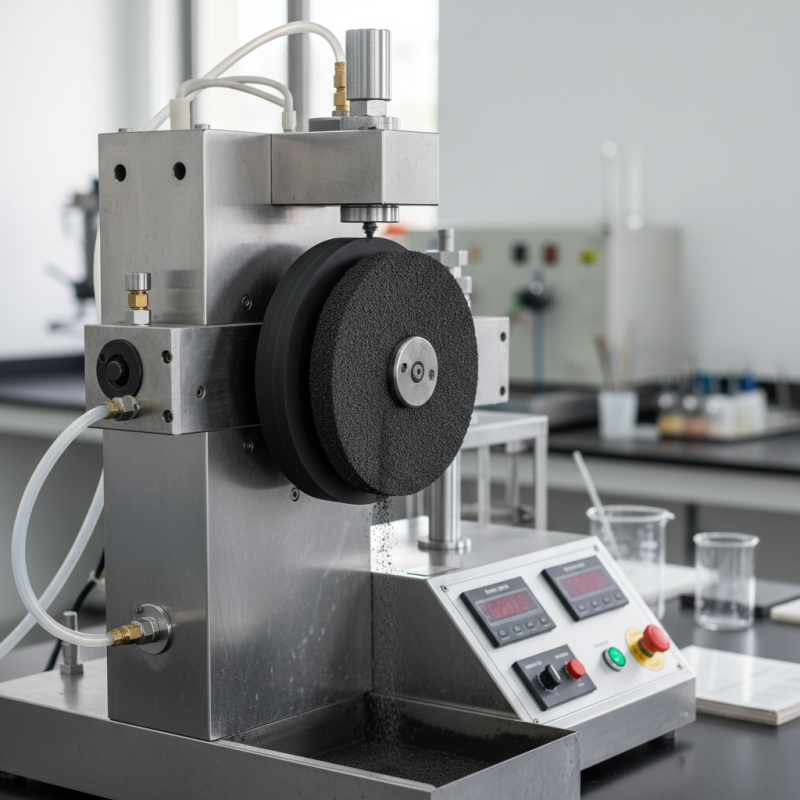
What is an Akron Abrasion Tester and How Does it Work?
The Akron Abrasion Tester is a crucial tool in material testing. It measures the abrasion resistance of various materials. Understanding how this device operates is essential for industries reliant on durability.
In essence, the Akron Abrasion Tester simulates real-world wear and tear. It uses a standardized abrasive medium to evaluate how materials hold up under stress. This process involves precise measurements and controls, highlighting its reliability in assessing performance.
Yet, it's important to recognize that no testing method is flawless. Factors such as sample preparation and environmental conditions can impact results. Reflecting on these elements ensures a more accurate interpretation of findings and better material selection.
What is an Akron Abrasion Tester?
An Akron Abrasion Tester is a significant tool in materials testing. It evaluates the wear resistance of various materials under abrasive conditions. This device simulates real-world use, helping manufacturers understand how their products will perform over time. The test provides valuable insights into the durability of surfaces such as rubber, plastics, and coatings.
During testing, a sample is placed against a rotating abrasive wheel. The wheel uses a controlled environment and specified materials to create consistent wear patterns. This method reveals how resistant a material is to wear over time. The results are crucial for industries that rely on long-lasting materials. Understanding abrasion resistance can be a game-changer in product design.
However, results from the Akron Abrasion Tester are not always straightforward. Variability in test conditions can lead to different outcomes. Factors like temperature and humidity can influence results. Testing must be carefully managed to ensure reliability. A lack of consistent parameters may raise questions about durability claims. This creates a need for continuous evaluation and improvement in testing methods.
Principles of Akron Abrasion Testing Methodology
The Akron Abrasion Tester is crucial in evaluating the wear resistance of materials. This method measures how materials perform under abrasive conditions. The principle revolves around the use of a rotating drum. Inside, an abrasive material, often a mix of standardized particles, is constantly exposed to a specimen. The tester simulates real-world wear over time.
Data from ASTM standards indicate that testing with the Akron method can yield results crucial for industries like automotive and textiles. For instance, the abrasion loss of rubber compounds can directly impact tire longevity. Reports show a significant 25% difference between tested materials, highlighting the importance of precise methodology.
While the Akron Abrasion Tester is reliable, its setup requires careful calibration. Factors like specimen thickness and drum speed can influence results. Some studies suggest that small variations can lead to large discrepancies in wear rates. Acknowledging these variables is essential for achieving accurate and consistent results in testing.
What is an Akron Abrasion Tester and How Does it Work? - Principles of Akron Abrasion Testing Methodology
| Parameter | Description | Typical Value |
| Sample Material | Material subjected to abrasion testing | Rubber, Plastics |
| Test Method | Type of method used to perform abrasion testing | Rotating Discs |
| Measurement Unit | Unit for reporting abrasion resistance | mm³ lost |
| Standard Duration | Length of time for the test | 1000 cycles |
| Typical Loss | Expected material loss in the test | 40-200 mm³ |
| Use Case | Industry applications for abrasion testing | Automotive, Aerospace |
Components and Design of Akron Abrasion Tester
The Akron Abrasion Tester is widely used in evaluating the wear resistance of materials. Understanding its components and design is crucial for accurate testing. The primary element is a rotating drum where the material sample is placed. The drum's surface is often equipped with abrasive materials. This setup simulates real-world conditions under which materials undergo abrasion.
Another important component is the weight system. It applies a specific load on the sample, ensuring consistent pressure during tests. This pressure significantly affects wear rates, which can vary widely based on the applied force. Data from recent industry studies highlight that increasing load by just 10% can lead to a wear increase of up to 25%. Precision in setup is essential for reliable results.
Tips for users: Always ensure the drum is clean before testing. Contamination can skew results. Regularly calibrate the weight system to maintain accuracy. Additionally, consider varying the abrasive types used, as different materials will yield unique wear characteristics. Understanding these components helps ensure reliable and repeatable testing outcomes, critical in many industrial applications.
Step-by-Step Operation of the Akron Abrasion Tester
The Akron Abrasion Tester is a critical tool for assessing wear resistance in materials. Understanding its operation is vital for ensuring accurate results. Start by placing the sample in the testing chamber. The machine operates on a solid surface and specifies a set abrasive material.
Next, initiate the test. The sample rotates against the abrasive under controlled pressure. This simulates real-world wear conditions that materials may face. Monitoring the speed and duration is essential. After testing, analyze the wear pattern carefully. Measurement of weight loss is crucial for determining durability.
Ensure proper calibration of the device to obtain reliable data. Maintaining consistency in sample preparation can lead to more precise results. Users often overlook minor adjustments, affecting accuracy. Regular maintenance of the tester itself cannot be neglected. Such steps can lead to improvements in testing outcomes and result reliability.
Applications and Importance of Akron Abrasion Testing in Industries
The Akron Abrasion Tester is a vital tool in various industries where material durability is crucial. Many manufacturers rely on this device to measure how materials withstand wear and tear. This testing allows companies to ensure that their products can endure harsh conditions. For instance, rubber components used in automotive or industrial applications must resist abrasion. Akron testing provides valuable data on their performance over time.
Industries such as textiles, automotive, and construction heavily depend on Akron Abrasion Testing. In textiles, ensuring fabric strength against friction is essential. By using this tester, manufacturers can improve the quality of fabrics. This leads to longer-lasting products, which in turn affects customer satisfaction. Similarly, in the automotive sector, components must maintain integrity under constant use. This testing method helps prevent costly failures.
Despite its advantages, the Akron Abrasion Test is not flawless. Testing conditions may not replicate real-world environments perfectly. Manufacturers should consider this when interpreting results. Relying solely on test data without practical insights can be misleading. Continuous evaluation and adjustment of testing protocols are necessary to ensure relevance. Hence, while Akron testing is important, it must be part of a larger quality assurance strategy.