skip to content

2026 Best Pipe Swaging Machine Buying Guide

A Pipe Swaging Machine can shape tubing cleanly and consistently, but only when its capacity matches the work. This 2026 buying guide helps you compare machines against real production needs, not just attractive specifications. Start with the tube material, outside diameter, wall thickness, and forming profile. Then check whether the machine’s tooling supports those dimensions. Fit matters.

A useful manufacturing principle often associated with Taiichi Ohno, a pioneer of the Toyota Production System, is: “Where there is no standard, there can be no improvement.” Applied to swaging, that principle makes repeatability worth checking. Ask suppliers how they document setups, control stroke and pressure, and verify finished parts. A sample run can reveal marks, uneven ends, or setup changes that a brochure may not show. Small details count.

The right machine also depends on your shift pattern, operator experience, available floor space, and maintenance resources. Compare manual, hydraulic, and automated options only after defining the parts and production volume. Inspect tooling changes, guarding, controls, spare-part access, and service response. Request test pieces made from your material, then measure them against your drawings. A neat specification sheet is helpful, but it is not proof. Even careful buyers can miss a mismatch between sample conditions and daily production. Use this guide to build a shortlist, ask better questions, and judge each claim against evidence from your own application.
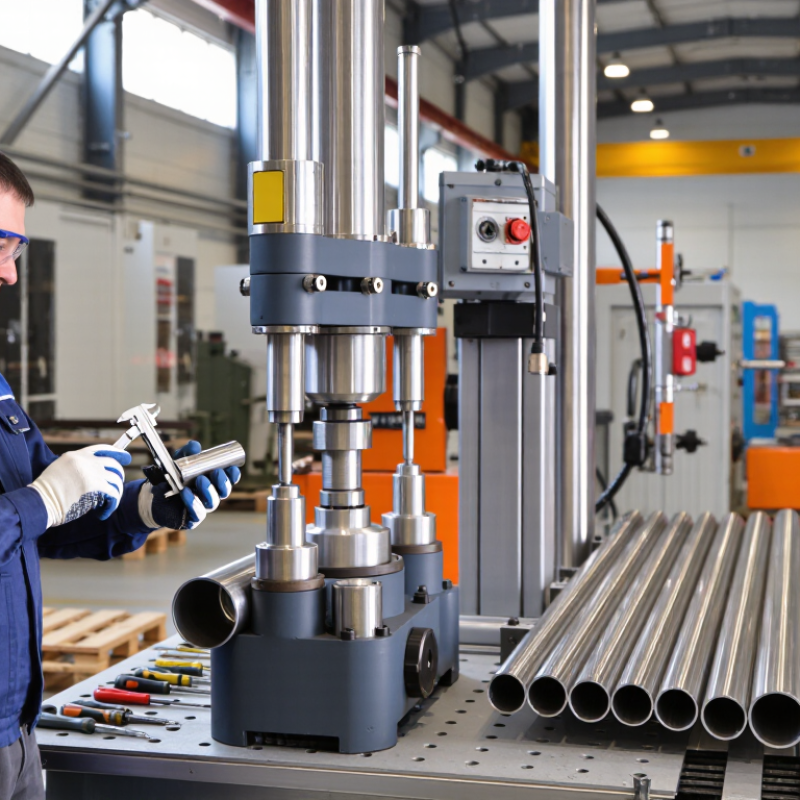
2026 Best Pipe Swaging Machine Buying Guide

What a Pipe Swaging Machine Is and How the Process Works

A pipe swaging machine reshapes a pipe end by compressing its wall with shaped dies. Unlike machining, the process usually forms the metal rather than removing it. The dies close around the pipe, reducing its diameter or creating a taper so the end can fit into another component. Some machines use rotating dies and repeated radial pressure; others use a press-style action. The exact motion depends on the machine and the shape required. No cutting is involved.

To begin, an operator selects dies suited to the pipe’s material, diameter, and target profile. The pipe is aligned and secured, then advanced into the forming area. Dies apply pressure in controlled steps, and the operator checks the finished end with gauges or a sample fitting. Small changes matter. Too much reduction can thin or mark the wall, while poor alignment may leave the end uneven. Results also vary with material hardness and springback, so a test piece can reveal issues before a full run. A setup may appear correct and still need adjustment; measurement is more dependable than appearance alone.

How Pipe Swaging Works: A Typical Process Sequence

Swaging forms or reduces a pipe end by applying repeated radial force with dies. The chart shows a general workflow; feeding, rotation, and inspection methods vary with the machine, material, and required result.

Common Pipe Swaging Machine Types and Their Applications

Rotary swaging machines use rapidly moving dies to reduce tube ends, form tapers, or create stepped profiles. They suit repeat production of fittings, automotive tubing, and hydraulic-line components. The repeated impacts can leave visible tool marks, so inspect sample parts before committing to a setup.

Radial or press-type swagers close dies around the workpiece and are useful for controlled reductions, short runs, and heavier sections. Manual bench models can handle repair work and small batches. Small batches? Manual wins. CNC-controlled machines help repeat complex profiles and multiple diameter changes, though programming and setup add time. A buying chart can make these choices look cleaner than they are; actual tube material, wall thickness, and tolerances can change the result.

For context, Grand View Research estimated the global machine-tools market at about US$96.8 billion in 2023, with forecast growth through 2030. That broad figure is not specific to swaging, but it reflects sustained investment in forming equipment. Match the machine to the part: thin stainless tubes may need carefully controlled force, while larger exhaust or structural tubes require suitable capacity and robust tooling. Trial a representative tube first. It can expose springback, surface marking, or setup issues that specifications alone may miss.

2026 Best Pipe Swaging Machine Buying Guide - Common Pipe Swaging Machine Types and Their Applications

Machine Type or Configuration How It Works Typical Applications Key Advantages Buying Considerations
Rotary (Radial) Swaging Machine Multiple dies repeatedly strike or press the workpiece from the outside while it rotates or advances. The radial action reduces or shapes the tube end. Reducing tube ends, forming tapers and points, preparing tubing for insertion into another component, and shaping round metal stock. Can produce concentric reductions and tapered forms; suitable for repeat production when the machine and tooling match the workpiece. Check the permitted material, tube diameter and wall thickness, reduction range, tooling options, and whether the process requires lubrication or special workholding.
In-Feed Rotary Swager The workpiece is fed into the die zone for a set distance. The die action shapes a selected section rather than continuously processing the full length. Local end reductions, shoulders, stepped transitions, tapered ends, and other features formed on a defined section of a tube or bar. Offers control over the length and location of the formed area; useful for parts with a distinct formed end or section. Confirm the maximum in-feed length, part-stop and feeding arrangements, required profile tolerances, and changeover time between tooling sets.
Through-Feed Rotary Swager Long stock passes continuously through the swaging zone while the dies form it. The resulting profile is generally consistent along the processed length. Continuous or long-length reduction of rod, wire, and compatible tubular stock; production of tapered or reduced sections where the process setup permits. Can support efficient processing of long material and repeated operations with suitable feeding and take-up equipment. Check feed and take-up capacity, straightness requirements, stock-length limits, and whether the machine is designed for tube, solid bar, or both.
Hydraulic Die Swaging Press A hydraulic system drives shaped dies together around the workpiece. The dies apply controlled compressive force to form or reduce the selected area. Tube-end reduction, fitting preparation, localized forming, and production tasks that use dedicated matched dies. Press force and stroke can be controlled within the machine’s specifications; the die design can be tailored to a particular part profile. Verify rated force, stroke, die opening, cycle rate, guarding, and compatibility between the press, dies, and material. A press-based process may not suit every profile or production rate.
CNC or Programmable Swaging System Programmable controls coordinate machine settings and, where equipped, workpiece feeding or positioning. The forming action depends on the underlying swaging mechanism. Repeat production of parts with multiple forming steps, controlled part positioning, or frequent changeovers between established programs. Can improve process repeatability and reduce manual setup variation when programs, tooling, and material conditions are properly controlled. Assess the actual automated functions, programming and setup requirements, sensor package, safety provisions, maintenance support, and data or production-system integration needs.
Manual or Bench Swaging Tool A hand-operated tool or compact bench mechanism closes shaped dies around a small workpiece. Capacity is limited by the tool design and operator input. Light-duty, low-volume work such as small tube-end shaping, repair tasks, and workshop prototyping when the material and dimensions are suitable. Compact setup and comparatively simple operation for occasional work; can be practical where powered production equipment is unnecessary. Check the stated material and size limits, handle force, repeatability, die availability, and whether a powered machine is needed for consistent output or larger workpieces.

Selection note: Swaging capacity depends on the machine design, die geometry, workpiece material, outside diameter, wall thickness, and required reduction. Confirm these limits with the machine supplier and validate the process using representative samples before production.

Key Specifications to Compare Before Choosing a Machine

Compare a swaging machine against your actual tube range, not its maximum capacity alone. Record outer diameter, wall thickness, material, and required end profile. Then check rated force, stroke, and tooling limits for that combination. Ask for repeatability data across multiple cycles, not just a best-case sample. Small differences matter when a fitting must seat squarely. Check the die. A fast cycle time is useful only if loading, tool changes, and inspection do not erase the gain. Request a sample run using your own tube and measure the finished ends.

Power requirements deserve attention too. The U.S. Department of Energy’s Improving Compressed Air System Performance sourcebook reports that compressed-air systems account for about 10% of electricity used in manufacturing, with higher shares in some facilities. If the machine uses pneumatics, include air demand and compressor capacity in your comparison. For hydraulic models, review motor power, oil temperature limits, and service access. Check guarding, emergency stops, and the visibility of the work area before approval. Ask suppliers for noise and maintenance figures, and confirm what each test includes. Specifications can look tidy on paper. Real production is less tidy. A trial can reveal awkward loading or inconsistent results that a brochure misses.

How to Assess Build Quality, Safety, and Supplier Support

2026 Best Pipe Swaging Machine Buying Guide

How to Assess Build Quality, Safety, and Supplier Support

A swaging machine should feel stable before it ever forms a pipe. Inspect welds, frame alignment, guarding, and hydraulic connections; look for leaks, loose fasteners, or sharp edges. Ask for documented capacity limits and repeatability data for the pipe materials and dimensions you actually use. Then run sample parts. Measure them with appropriate gauges, and check for consistent dimensions, clean finishes, and signs of cracking. A thick frame helps, but it is not proof of quality. I have seen polished surfaces distract buyers from awkward adjustments and hard-to-reach maintenance points.

Safety deserves the same close attention. Check that guards prevent access to moving tooling, emergency stops are reachable, and controls behave predictably during setup. OSHA’s FY 2024 Top 10 violations report recorded 1,541 machine-guarding citations, a useful reminder that guarding problems remain common in workplaces. The figure does not measure swaging machines specifically, so assess the actual equipment and task. Ask suppliers for risk-assessment documentation and clear instructions for setup, cleaning, and fault recovery.

Supplier support matters after installation. Confirm whether manuals include diagrams, lubrication points, and troubleshooting steps, and ask how quickly replacement seals or tooling can be supplied. Request operator training and a written warranty with explicit coverage terms. Speak with a comparable user if possible. One weakness in many buying checks: they test a machine on day one, not after repeated production cycles. Ask for a sustained-run demonstration, then inspect the samples and machine again.

How to Match a Machine to Your Production Needs and Budget

Start with the pipe, not the machine specifications. Record the material, outside diameter, wall thickness, and end shape you need. Then estimate daily output and peak demand. A machine sized for occasional repairs may struggle with repeated production runs. Too much capacity can also tie up budget and floor space. That matters.

Compare machines using a sample of your actual work. Ask whether the standard tooling handles your dimensions, or whether extra dies are required. Check setup time, adjustment range, and how easily operators can repeat a setting. A few seconds saved on each cycle can add up across a shift. But published cycle times rarely include loading, measuring, or changeovers.

Set a budget for the complete working setup, not just the machine. Include tooling, installation, operator training, maintenance, and likely downtime. Ask how routine wear parts are replaced and what service support is available. Small details count. If possible, run several of your own pipes through a demonstration and inspect the finished ends for consistency. I would not choose the fastest option on paper without checking that result; it is easy to overbuy when production forecasts are uncertain. A little spare capacity is useful, but only when the shop can use it.