
2026 Best Lithium Vacuum Cleaner Types for Global Buyers
The 2026 market offers more Lithium Vacuum Cleaner choices than ever. Global buyers now face several designs, battery capacities, filtration systems, and charging methods.
This guide compares cordless stick, handheld, canister, wet-dry, and robotic models. Each type serves a different household. A lightweight stick model suits apartments and daily crumbs. A handheld unit works well inside cars, drawers, and narrow corners. Canister designs often provide stronger cleaning for large homes. Wet-dry models add convenience, but they require more careful maintenance.
Small details matter.
A 2026 buying decision should consider real floor conditions, not only advertised suction power. Thick rugs can drain batteries quickly. Pet hair may expose weak brush designs. Fine dust can challenge ordinary filters. Buyers should check runtime, removable battery access, charging compatibility, noise levels, warranty coverage, and local repair support. Regional voltage systems and replacement-part availability also deserve attention.
James Dyson, founder of Dyson, has repeatedly discussed the value of learning through product development: “The key to success is failure.” That idea remains useful here. A technically advanced Lithium Vacuum Cleaner may still disappoint if its battery is difficult to replace or its dustbin is uncomfortable to empty. Honest comparison is necessary.
No single model fits every country or home.
This article uses practical ownership factors, manufacturer specifications, and common user needs to identify suitable 2026 vacuum types. Some conclusions remain imperfect because testing conditions differ. A quiet showroom cannot represent a dusty apartment, a long hallway, or a family with shedding pets. Careful buyers should match technology with daily habits, floor surfaces, climate, and after-sales service.
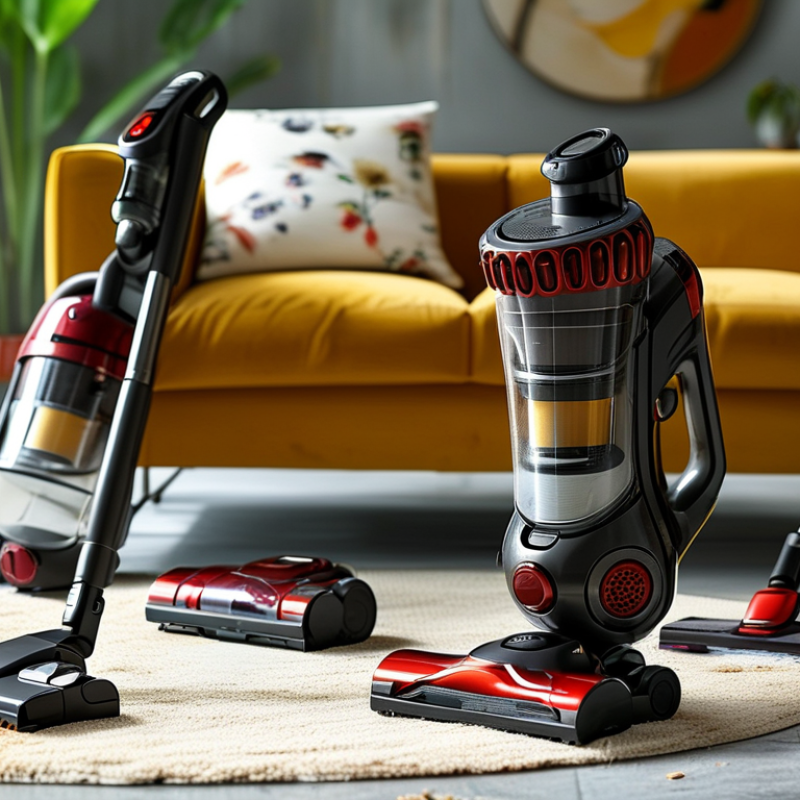
Lithium Vacuum Cleaner Basics and How the Technology Works
Lithium vacuum cleaners use rechargeable lithium-ion cells to store electrical energy. When the trigger is pressed, the battery sends current to a compact motor. The motor spins an impeller, which creates low pressure inside the dust path. Air then moves through the nozzle, carrying dust into the collection chamber.
Battery capacity is measured in watt-hours, not only milliamp-hours. Higher capacity usually supports longer cleaning, but it can add weight. A control circuit monitors temperature, voltage, and charging conditions. This battery management system helps reduce overheating and deep discharge risks. Still, protection electronics cannot repair a damaged cell.
In practical use, suction power changes with the floor head and filter resistance. A clogged filter makes the motor work harder and shortens runtime. I have found that a “long runtime” claim can feel misleading on maximum power. The number may describe low-power testing. Charging temperature also matters. Let the pack cool after heavy cleaning before charging it. Avoid storing the cleaner completely empty for long periods. Lithium technology is efficient, but it is not maintenance-free. Some design choices remain imperfect, especially when manufacturers balance battery size, noise, airflow, and hand comfort.
2026 Best Lithium Vacuum Cleaner Types for Global Buyers - Lithium Vacuum Cleaner Basics and How the Technology Works
| Vacuum Type | Typical Lithium Battery Configuration | Typical Runtime | Typical Charging Time | Best Use | Main Advantages | Important Limitations |
|---|---|---|---|---|---|---|
| Handheld | Usually a compact 10.8–21.6 V lithium-ion pack | Approximately 10–30 minutes | Approximately 2–5 hours | Cars, furniture, stairs, spills and spot cleaning | Lightweight, portable and quick to deploy | Small dust capacity and limited cleaning width |
| Cordless Stick | Commonly a 14.4–29.6 V lithium-ion pack | Approximately 20–60 minutes, depending on power mode | Approximately 3–6 hours | Daily cleaning of hard floors, rugs and low-pile carpets | Cord-free operation, easy storage and flexible accessories | Maximum-power mode reduces runtime; battery replacement may be model-specific |
| Cordless Upright | Often a higher-capacity 21.6–36 V lithium-ion pack | Approximately 30–60 minutes | Approximately 3–6 hours | Medium-sized homes and mixed floor surfaces | Larger floor head, stronger cleaning performance and bigger dust bin | Heavier than handheld or stick formats and may cost more |
| Cordless Canister | Usually a medium-to-high-capacity lithium-ion pack | Approximately 30–90 minutes | Approximately 3–6 hours | Large homes, upholstery, stairs and above-floor cleaning | Flexible hose reach and generally larger dust capacity | Less compact and less convenient to carry between rooms |
| Robot Vacuum | Typically a 14.4–21.6 V lithium-ion battery system | Approximately 60–180 minutes per cleaning cycle | Approximately 3–6 hours | Scheduled maintenance cleaning on hard floors and low-pile carpets | Automated operation, return-to-dock charging and regular cleaning | Small dust bin, navigation limitations and weaker performance on thick carpets |
| Wet-and-Dry Cordless | Commonly a 21.6–36 V lithium-ion pack | Approximately 20–45 minutes | Approximately 3–5 hours | Sealed hard floors, liquid spills and combined vacuum-mopping tasks | Combines debris pickup and liquid cleaning in one device | Usually unsuitable for unsealed floors and requires cleaning after use |
Lithium Vacuum Cleaner Basics and How the Technology Works
| Technology or Specification | How It Works | Why It Matters to Buyers |
|---|---|---|
| Lithium-ion cell | Lithium ions move between the anode and cathode during charging and discharging, producing electrical energy for the motor. | Provides high energy density in a relatively compact and lightweight package. |
| Battery voltage | Multiple cells are connected in series to increase the pack voltage available to the motor. | Higher voltage can support stronger motor output, but actual cleaning performance also depends on motor, airflow and brush design. |
| Battery capacity | Capacity is commonly expressed in ampere-hours (Ah) or watt-hours (Wh); watt-hours are calculated as voltage multiplied by ampere-hours. | A higher Wh rating generally indicates more stored energy, although runtime changes with suction level and accessory load. |
| Battery management system | Electronic controls monitor cell voltage, temperature, charging current and discharge conditions. | Supports overcharge, over-discharge, over-current and overheating protection. |
| Brushless motor | Electronic commutation replaces physical brushes to rotate the motor more efficiently. | Can improve efficiency, service life and noise control, subject to the overall vacuum design. |
| Suction and airflow | The motor creates a pressure difference that moves air and debris through the nozzle, filter and dust container. | Airflow, sealed suction, nozzle design and filtration should be considered together rather than relying on voltage alone. |
| Charging system | A dedicated charger controls the charging profile, typically using a constant-current and constant-voltage process. | Buyers should verify input voltage, plug type, charging time and regional electrical compliance. |
| Thermal management | Temperature sensors and airflow paths help control heat generated by the battery and motor. | Important for performance, battery longevity and safe operation in different climates. |
| Filtration | Filters capture dust particles before exhaust air leaves the vacuum; washable and replaceable filter designs are common. | A well-sealed, properly maintained filtration system helps reduce dust recirculation. |
Note: Runtime, voltage, capacity and charging figures are typical market ranges for lithium-powered vacuum cleaners. Actual specifications vary by model, power mode, floor type, battery age, temperature and attachment.